


BTEC Level 3 Health & Social Care Unit 14 Physiological Disorders & Their Care | 50-Page Editable Workbook
Description
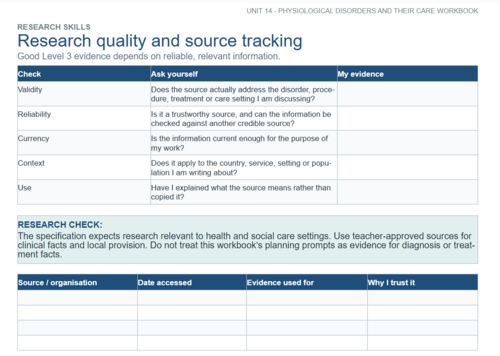
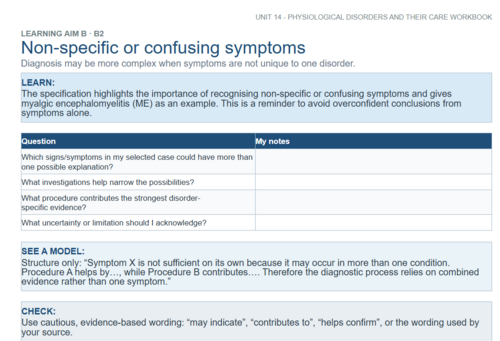
Comprehensive 50-page editable student workbook for Pearson BTEC Level 3 Health & Social Care Unit 14: Physiological Disorders and Their Care. Designed to support learners across Learning Aims A–D with clear explanations, structured activities, research guidance, comparison tasks, treatment planning and Pass-to-Distinction scaffolding.
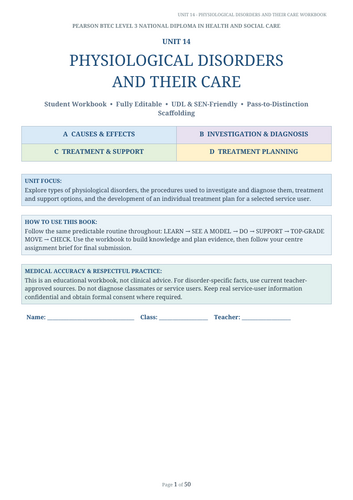
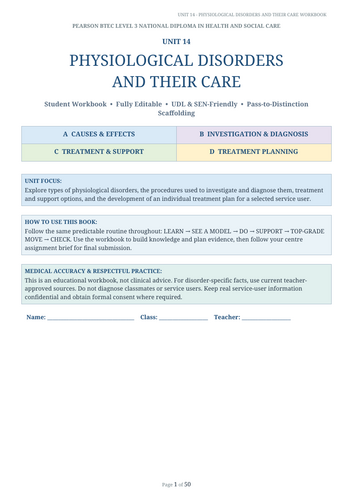
The workbook is fully editable and designed to help students progress from core knowledge into stronger analysis, assessment, evaluation and justification. The front cover identifies the four main areas as A: Causes & Effects, B: Investigation & Diagnosis, C: Treatment & Support and D: Treatment Planning, with a consistent approach to helping learners understand what higher-grade responses require.
Topics covered include: physiological disorders, endocrine disorders, diabetes, hypo- and hyperthyroidism, nervous system disorders, Parkinson’s disease, Alzheimer’s disease, musculoskeletal disorders, rheumatoid arthritis, osteoporosis, respiratory disorders, asthma, COPD, circulatory disorders, coronary heart disease, leukaemia, cancer, bowel cancer, prostate cancer, causes of disease, risk factors, signs and symptoms, effects on body systems, effects on physical wellbeing, effects on emotional wellbeing, effects on social wellbeing, investigation, diagnosis, medical history, physical examination, blood tests, imaging, scans, functional tests, diagnostic procedures, treatment options, medication, surgery, rehabilitation, therapy, lifestyle change, professional support, informal support, care needs, individual preferences, person-centred care, treatment planning, reviewing care, monitoring progress, treatment outcomes, comparison of disorders, research skills, source reliability, validity, currency, context, evidence tracking, assessment language, explain, compare, analyse, assess, evaluate, justify, plan and review.
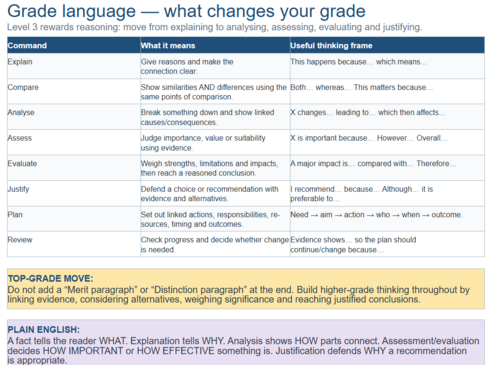
A strong feature of the workbook is its assessment-language support. Students are shown exactly how command words change the level of response expected, with guidance for Explain, Compare, Analyse, Assess, Evaluate, Justify, Plan and Review. The workbook also makes clear that higher grades come from stronger reasoning throughout a response rather than simply adding a “Merit paragraph” or “Distinction paragraph” at the end.
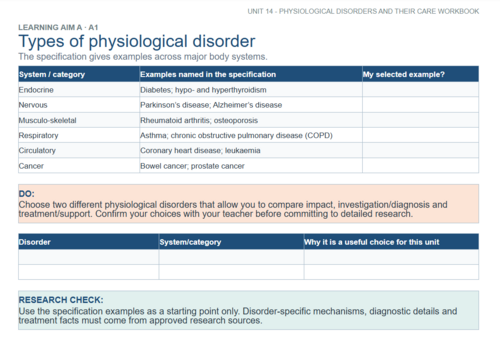
The workbook also supports students in selecting and comparing physiological disorders across major body systems. Examples shown in the workbook include diabetes, thyroid disorders, Parkinson’s disease, Alzheimer’s disease, rheumatoid arthritis, osteoporosis, asthma, COPD, coronary heart disease, leukaemia, bowel cancer and prostate cancer.
Key words:
assessment language, BTEC command words, explain compare analyse assess evaluate justify, plan and review, Pass Merit Distinction, Pass to Distinction, BTEC assessment support,
Something went wrong, please try again later.
This resource hasn't been reviewed yet
To ensure quality for our reviews, only customers who have purchased this resource can review it
Report this resourceto let us know if it violates our terms and conditions.
Our customer service team will review your report and will be in touch.
£4.99