


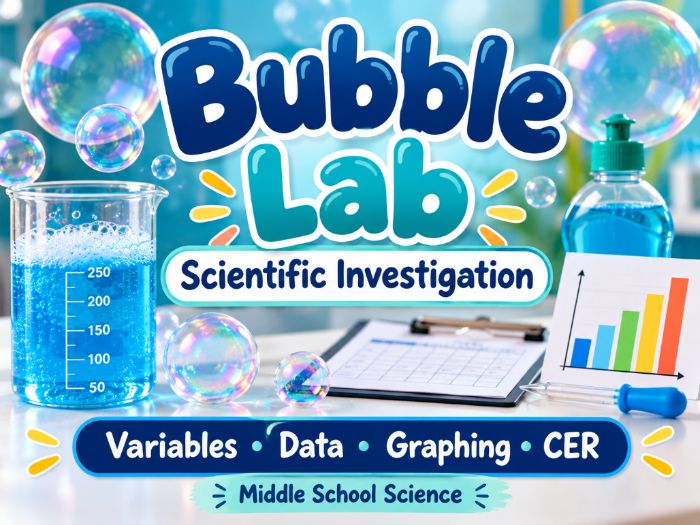
Engage students in a hands-on investigation while reinforcing essential scientific inquiry skills.
In this Bubble Lab, students investigate:
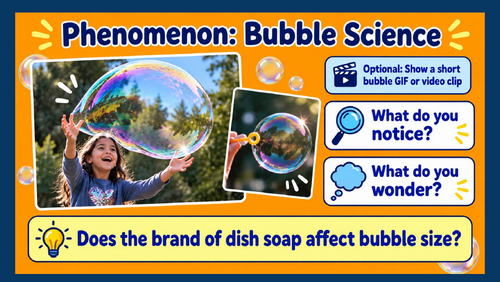
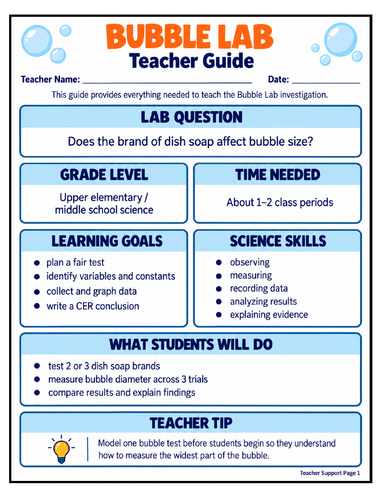
Does the brand of dish soap affect bubble size?
Students work through the scientific investigation process from hypothesis to conclusion. The activity provides an accessible, high-interest way to practice variables, constants, measurement, repeated trials, data analysis, graphing, and evidence-based reasoning.
Students will practice:
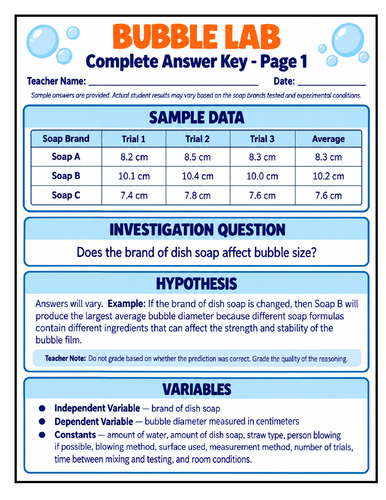
- Writing a testable hypothesis
- Identifying the independent and dependent variables
- Identifying constants
- Following an experimental procedure
- Measuring bubble diameter
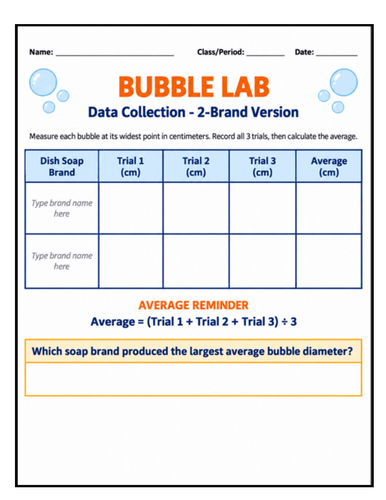
- Recording quantitative data
- Completing multiple trials
- Calculating and comparing results
- Graphing experimental data
- Analyzing patterns in results
- Using evidence to support a conclusion
- Applying CER-style scientific reasoning
Included in this resource: - Bubble Lab instructional slides
- Teacher Guide
- Student Data Sheet
- Complete Answer Key
The investigation compares different brands of dish soap to determine whether soap brand affects the size of bubbles produced.
This resource works well for: - Scientific method units
- Experimental design
- Variables and constants
- Data collection and analysis
- Measurement practice
- CER/conclusion practice
- Beginning-of-year science skills
- Review of scientific investigations
The files are provided as PDFs and are ready to print or display.
Recommended for: Middle school science / approximately Grades 5–8.
Something went wrong, please try again later.
This resource hasn't been reviewed yet
To ensure quality for our reviews, only customers who have purchased this resource can review it
Report this resourceto let us know if it violates our terms and conditions.
Our customer service team will review your report and will be in touch.
$8.00