chalcopyrite
Subject: Chemistry
Age range: Infinity - -Infinity
Resource type: Visual aid/Display


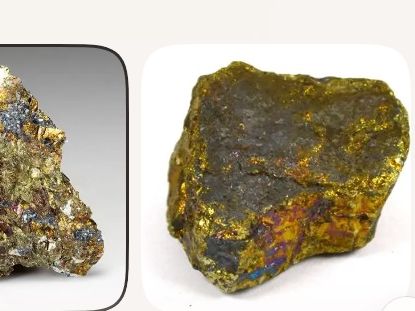

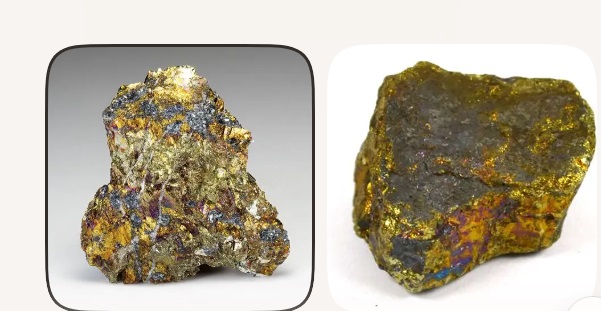
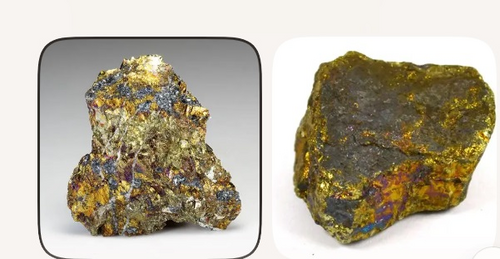
Chalcopyrite is a copper–iron sulfide mineral (CuFeS₂) and the single most abundant copper ore on Earth. It’s brassy yellow, metallic, and often confused with pyrite or even gold — but its properties make it easy to identify.
What Chalcopyrite Is
Chemical formula: CuFeS₂
Mineral class: Sulfide
Crystal system: Tetragonal
Color: Brass‑yellow, sometimes with purple/blue iridescent tarnish
Luster: Metallic
Streak: Greenish‑black (a key diagnostic)
Hardness: 3.5–4 (softer than pyrite)
Density: 4.1–4.3 g/cm³
Tenacity: Brittle
How to Tell It Apart
Chalcopyrite is often mistaken for pyrite or gold, but:
It is softer than pyrite (can be scratched with a knife).
It is harder and brittle, unlike gold which is soft and malleable.
Its streak is green‑black, not black (pyrite) or yellow (gold).
Where It Forms
Chalcopyrite appears in many copper‑bearing environments, especially:
Porphyry copper deposits (the world’s main copper source)
Hydrothermal veins
Massive sulfide deposits
It is commonly associated with bornite, chalcocite, covellite, malachite, azurite, and occasionally cuprite.
Why It Matters
According to the U.S. Geological Survey, chalcopyrite is the world’s most abundant copper source, essential for electrical wiring, electronics, and renewable‑energy technologies.
It weathers easily at the surface, contributing to acid rock drainage when exposed in mine waste — an important environmental consideration.
Name & History
The name comes from Greek:
chalkos = copper
pyrites = “striking fire”
Something went wrong, please try again later.
This resource hasn't been reviewed yet
To ensure quality for our reviews, only customers who have downloaded this resource can review it
Report this resourceto let us know if it violates our terms and conditions.
Our customer service team will review your report and will be in touch.