


Cold War Interpretations Enquiry – Who Was to Blame for the Cold War?
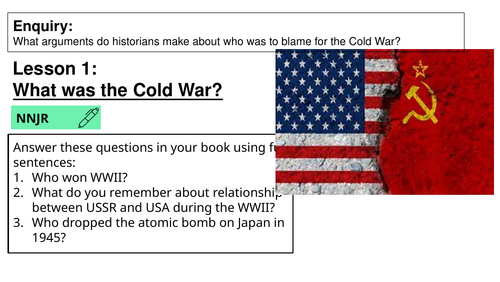
Enquiry question: What arguments do historians make about who was to blame for the Cold War?
This is a 5-lesson, reading-rich Year 9 historical enquiry designed to develop students’ understanding of historical interpretations through the origins and development of the Cold War.
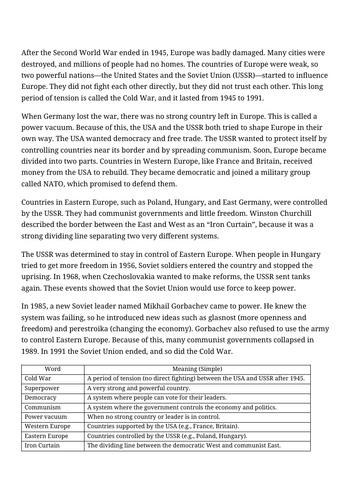
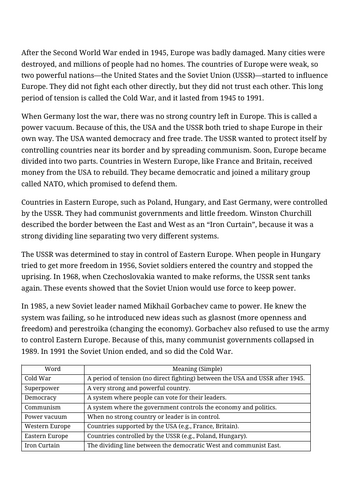
Rather than simply learning a narrative of Cold War events, students investigate how historians have interpreted responsibility for the conflict differently. The enquiry introduces three contrasting arguments: Thomas Bailey, who places responsibility primarily on the USSR; William Appleman Williams, who emphasises the role of the USA; and John Lewis Gaddis, whose interpretation explores fear, misunderstanding and actions on both sides.
Lessons included
- What was the Cold War? – introduction to the Cold War and the concept of historical interpretation.
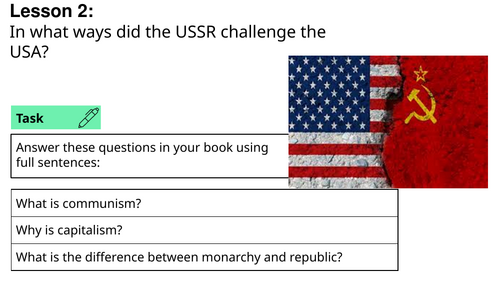
- In what ways did the USSR challenge the USA? – exploring evidence supporting the interpretation that Soviet actions contributed to the Cold War.
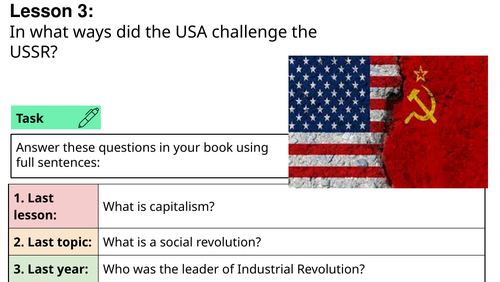
- In what ways did the USA challenge the USSR? – examining the alternative argument that American policies and economic ambitions contributed to tensions.
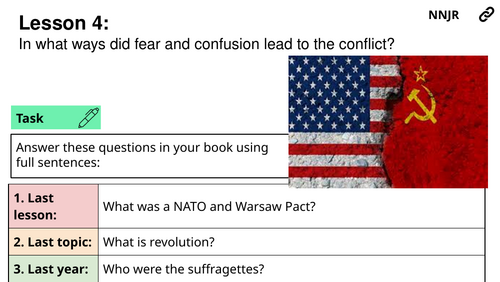
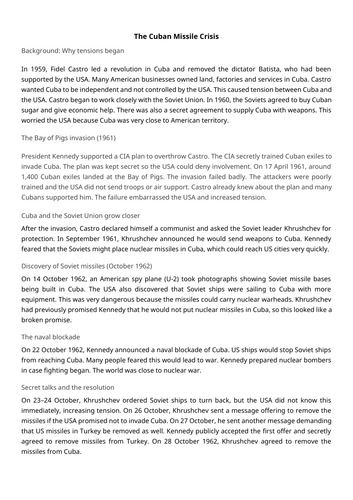
- In what ways did fear and confusion lead to the conflict? – exploring the argument that fear, misinformation and misunderstanding on both sides intensified the Cold War, including a detailed investigation of the Cuban Missile Crisis.
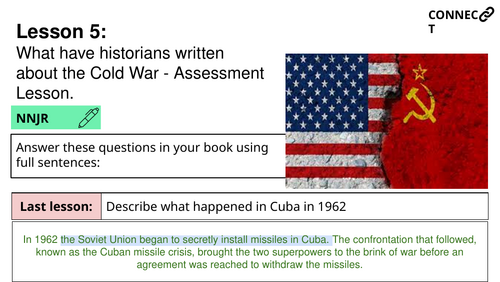
- What have historians written about the Cold War? – assessment and extended writing lesson in which students compare the interpretations and reach their own supported judgement.
Throughout the enquiry, students work with substantial historical reading and a wide range of Cold War events, including the division of Europe, the Iron Curtain, Stalinisation, the Truman Doctrine, Marshall Plan, NATO and Warsaw Pact, the atomic arms race, Korea, Vietnam, Cuba and the Cuban Missile Crisis.
Students repeatedly test historians’ arguments against historical evidence. For example, they identify and chronologically organise evidence supporting Bailey’s interpretation of Soviet responsibility, before completing a written judgement on how far they agree with his view. The following lesson applies the same process to Williams’s interpretation of American responsibility.
The enquiry culminates in an extended assessment in which students explain the three interpretations, select relevant historical evidence, evaluate each argument and reach their own judgement about responsibility for the Cold War.
Key historical concepts: interpretation, causation, evidence, judgement
Suitable for: Year 9 / KS3 History
Main skill:analysing and evaluating contrasting historical interpretations
Assessment: extended interpretations essay – Who should be blamed for the Cold War?
Something went wrong, please try again later.
This resource hasn't been reviewed yet
To ensure quality for our reviews, only customers who have purchased this resource can review it
Report this resourceto let us know if it violates our terms and conditions.
Our customer service team will review your report and will be in touch.
£1.50