


This lesson introduces students to the key concepts of crime and punishment in Britain today.
Designed to encourage discussion, critical thinking, and historical enquiry, students explore what makes an act a crime and why societies punish offenders.
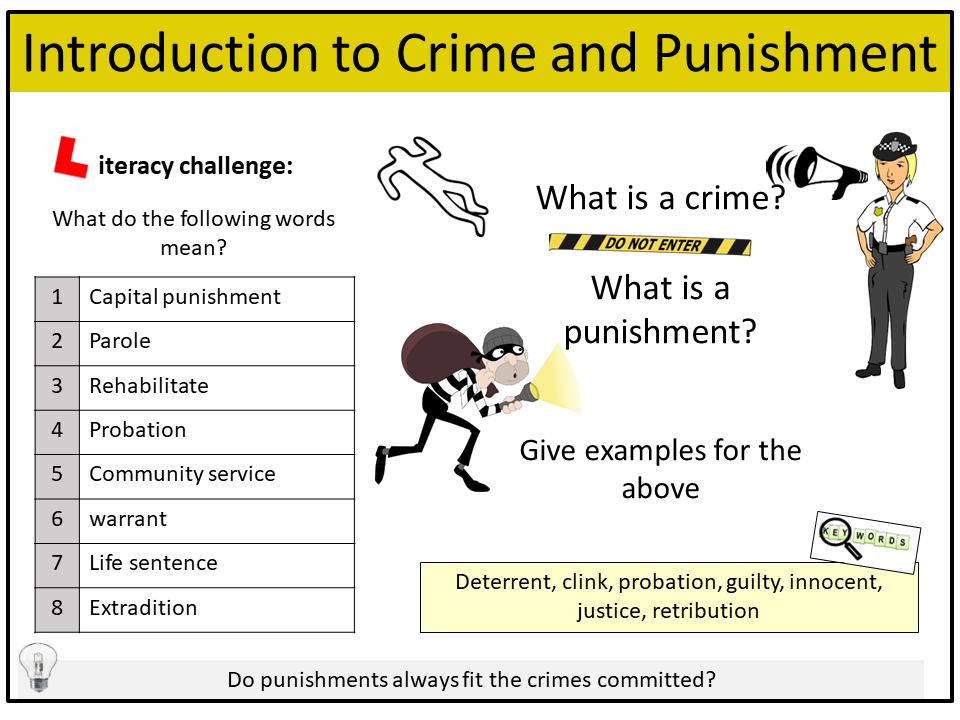
Students begin by developing their understanding of the terms crime and punishment before applying their knowledge to a range of realistic scenarios, matching appropriate punishments to different crimes.
They then analyse and evaluate a selection of infamous case studies, considering the effectiveness and purpose of different forms of punishment.
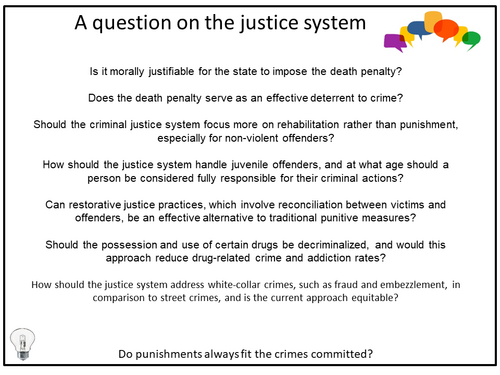
Throughout the lesson, students debate key questions, justify their opinions and examine different viewpoints.
An enquiry question is introduced at the start of the lesson and revisited regularly, helping students track their progress and build a deeper understanding of the topic.
The lesson concludes with an extended writing task that allows students to consolidate their learning and demonstrate their understanding.
Included in this lesson:
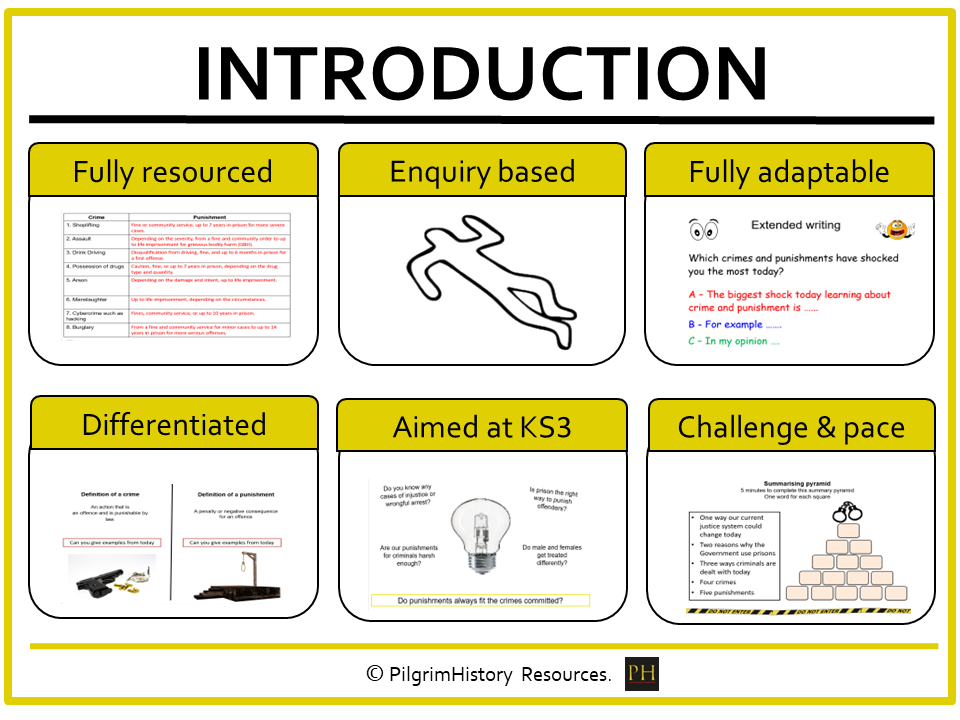
Fully resourced
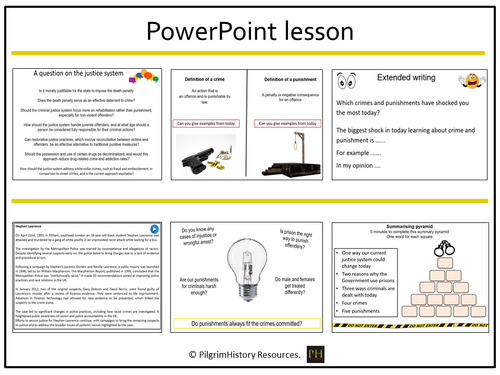
Editable PowerPoint
Crime and punishment matching activity
Discussion and debate opportunities
Analysis of famous criminal case studies
Extended writing task
Differentiated tasks and questioning
Suggested teaching strategies
Suitable for KS3 History and introductory GCSE Crime and Punishment units
Please consider leaving a review on TES as it really helps my future planning.
Something went wrong, please try again later.
This resource hasn't been reviewed yet
To ensure quality for our reviews, only customers who have downloaded this resource can review it
Report this resourceto let us know if it violates our terms and conditions.
Our customer service team will review your report and will be in touch.
£0.00