


Designing the Next Great Bridge – STEM Project
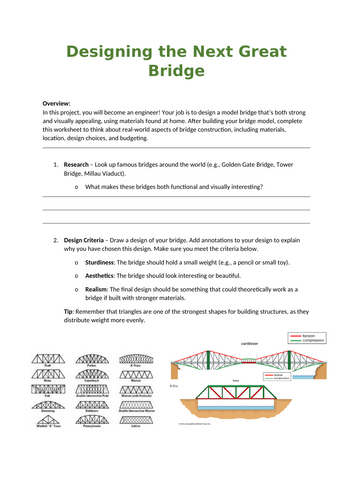
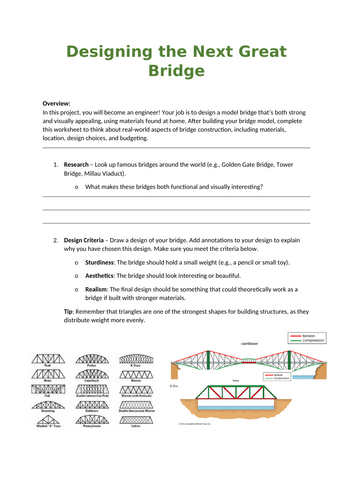
An exciting and hands-on STEM challenge where students become engineers and design their own bridge using household materials. This project encourages learners to combine research, design, creativity, and problem-solving as they create a bridge that is both visually appealing and strong enough to withstand gentle shaking, inspired by real-world earthquake-resistant structures.
Students begin by researching famous bridges from around the world, considering what makes them both functional and visually striking. They then apply this understanding to design their own bridge, using annotations to explain their choices and showing how their structure meets key design criteria such as sturdiness, realism, and aesthetics.
Using simple materials found at home, students build and test a bridge model, exploring how shapes and structural features can improve strength and stability. A reflection section encourages them to evaluate their final design, identify challenges, and think like real engineers about how bridges of the future can be built to withstand earthquakes.
In this resource, students will:
- research famous bridges and explore what makes them effective and visually interesting
- consider the features that help bridges withstand earthquakes
- draw and annotate their own bridge design
- apply design criteria linked to strength, aesthetics, and realism
- build a bridge model using household materials
- test the stability of their model by holding a small weight and surviving gentle shaking
- reflect on the success of their design and identify possible improvements
- write about what future bridge designs need in order to stand up to earthquakes
This resource is ideal for promoting engineering thinking, creativity, resilience, and real-world application of maths and design principles. It works well as an independent homework project, STEM challenge, or enrichment task.
Great for:
- STEM learning
- design and technology links
- maths in real-world contexts
- engineering projects
- independent or home learning
Please leave a review if you find this resource helpful.
Something went wrong, please try again later.
This resource hasn't been reviewed yet
To ensure quality for our reviews, only customers who have downloaded this resource can review it
Report this resourceto let us know if it violates our terms and conditions.
Our customer service team will review your report and will be in touch.
£0.00