

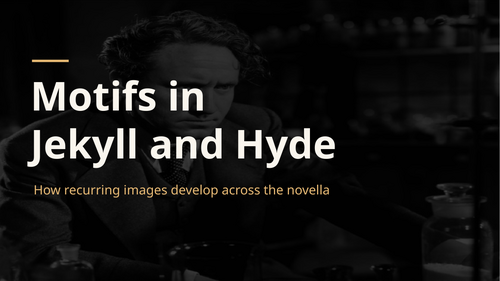

Dr Jekyll and Mr Hyde Motifs | GCSE English Literature PowerPoint
Why does Hyde have a key to Jekyll’s door? What does Jekyll recognise in the mirror? And how does the final confession change the meaning of clues Stevenson planted in the opening chapters?
This 29-slide PowerPoint helps GCSE English Literature students trace 12 recurring motifs across The Strange Case of Dr Jekyll and Mr Hyde. Students explore how Stevenson uses doors, fog, handwriting, mirrors and other recurring details to build suspense and develop ideas about secrecy, reputation and the divided self.
What’s included
- A clear explanation of the difference between a motif and a theme, using examples from the novella.
- Chapter-by-chapter quotation analysis covering 12 motifs, including doors and keys, windows, light and darkness, sealed documents, physical appearance, hands, mirrors, animal imagery, science, clothing, voices and sleep.
- Essay links that show students how to connect evidence from different chapters and explain how a motif develops across the novella.
- Relevant Victorian context, including anxieties about degeneration and beliefs about reading character from appearance.
- A model analytical paragraph tracing the door motif from Hyde’s first appearance to the breaking down of the cabinet door and Jekyll’s final confession.
Suitable for KS4 classroom teaching, tutoring and GCSE revision, this resource helps students build whole-text arguments and explain how Stevenson controls what readers see, suspect and ultimately discover.
Something went wrong, please try again later.
This resource hasn't been reviewed yet
To ensure quality for our reviews, only customers who have purchased this resource can review it
Report this resourceto let us know if it violates our terms and conditions.
Our customer service team will review your report and will be in touch.
£3.00