


Develop student vocabulary and emotional literacy with this visually structured Emotions Word Wheel activity, designed to support the reformed 2026 exam framework from AQA.
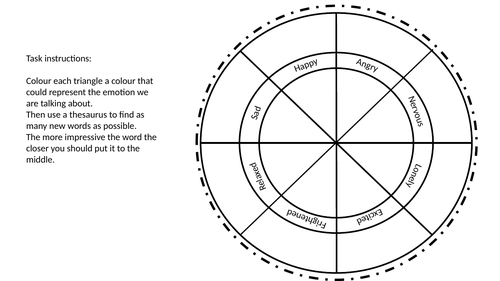
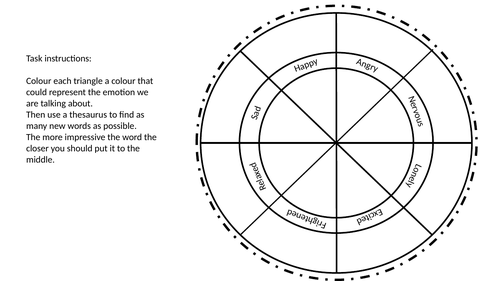
Learners first colour each triangle a shade that represents one of the key emotions:
Happy, Sad, Angry, Frightened, Relaxed, Lonely, Nervous, Excited
Students then use a thesaurus to generate ambitious synonyms, placing their new vocabulary on the wheel with the most impressive words positioned closest to the centre. This ranked vocabulary approach encourages students to think about connotation, tone and impact—core skills for the new Paper 1 and Paper 2 writing requirements.
Emotions-word-wheel
Skills Developed
Vocabulary generation using a thesaurus
Ranking vocabulary by ambition and impact
Understanding connotation and emotional tone
Increased literacy confidence through independent word selection
Improved ability to apply emotional vocabulary in transactional or creative writing
Supporting the 2026 writing emphasis on ambitious vocabulary and semantic precision
What Teachers Receive (PowerPoint resource)
Word wheel template divided into triangles
Clear list of emotions and task instructions
Guidance for vocabulary generation and ranked placement
Easily editable slides for starters, homework, intervention, or display-based vocabulary learning
Designed for minimal preparation and maximum student engagement
Classroom Uses
English lesson starter or vocabulary consolidation task
Literacy intervention sessions with ranking and word discussion
Writing preparation for AQA GCSE English Language exam-style responses
Cross-curricular vocabulary development activity
Homework set to encourage independent thesaurus use
Vocabulary display creation to reinforce emotional tone in writing
Suitable For
Secondary English learners (KS3–KS5)
Schools embedding vocabulary into writing practice
EAL and SEN cohorts developing emotion-linked word banks
College or adult literacy groups working on tone and ambitious vocabulary
Curriculum-wide vocabulary development
Why This Resource Works
Visual structure aids memory and participation
Competitive ranked word placement motivates students
Encourages high-ambition vocabulary, not everyday synonyms
Creates talk opportunities around emotions, tone and word choice
Low-prep and classroom-ready
Reinforces the link between word choice, tone, intent and audience—essential for the 2026 writing assessment objectives
Something went wrong, please try again later.
This resource hasn't been reviewed yet
To ensure quality for our reviews, only customers who have purchased this resource can review it
Report this resourceto let us know if it violates our terms and conditions.
Our customer service team will review your report and will be in touch.
£1.00