

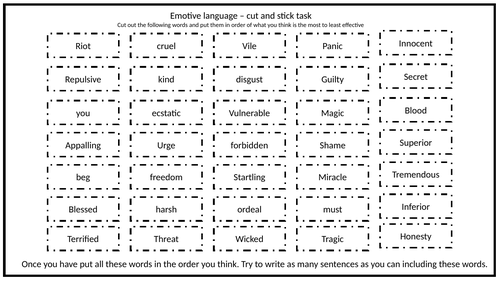

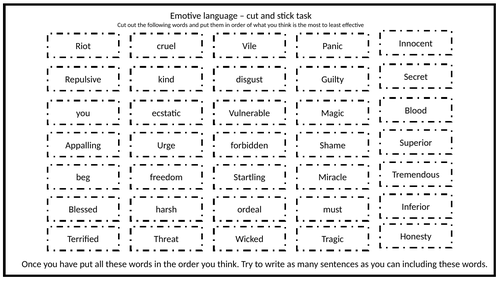
Strengthen student understanding of emotive language, semantic impact and word effectiveness, using a structured cut-and-stick ranking challenge designed to support the updated 2026 writing objectives from the examination board.
In this activity, students cut out a bank of carefully selected emotive words and rank them from most to least effective based on impact. The word list includes age-appropriate but powerful vocabulary such as: riot, repulsive, appalling, appalling, terrified, cruel, kind, ecstatic, urge, vile, disgust, forbidden, ordeal, tragic, magic, miracle, blood, superior, inferior, honesty, and more.
Once ranked, students apply their chosen vocabulary to writing practice by generating original sentences that include as many of the emotive words as possible, reinforcing:
how emotive language shapes tone and reader response
how vocabulary choices differ in impact and effectiveness
how ambitious words can be embedded into creative or transactional writing
This resource mirrors the new 2026 framework’s emphasis on precise vocabulary and writing for effect, making it ideal for both writing development and literacy discussion.
Emotive-language-task
Skills Developed
Identifying and evaluating emotive vocabulary by impact
Ranking words based on connotation and persuasive strength
Applying ambitious vocabulary within original sentence creation
Adapting tone for creative and transactional writing
Independent literacy confidence through word choice discussion
Alignment with the 2026 writing assessment focus on semantic precision and linguistic effect
What Teachers Receive (PowerPoint resource)
Full emotive language cut-and-stick ranking task
Extensive emotive word bank for student sorting and discussion
Sentence writing challenge for vocabulary application
Editable slide format for easy use in lessons or intervention sessions
Minimal preparation required – ready for print, share, or display
Classroom Uses
English lesson starter or vocabulary consolidation task
Writing skills preparation for exam-style responses aligned to the GCSE reformed objectives
Literacy intervention activity encouraging discussion around impact, tone and word choice
Homework task targeting ambitious vocabulary use
Independent writing rehearsal through repetitious sentence crafting
Display creation to reinforce emotive tone in writing
Suitable For
Secondary English (KS3–KS5)
Literacy or vocabulary intervention groups
EAL and SEN cohorts building emotive language banks
College and adult literacy learners exploring tone
Writing preparation across the curriculum
Something went wrong, please try again later.
This resource hasn't been reviewed yet
To ensure quality for our reviews, only customers who have purchased this resource can review it
Report this resourceto let us know if it violates our terms and conditions.
Our customer service team will review your report and will be in touch.
£1.00