

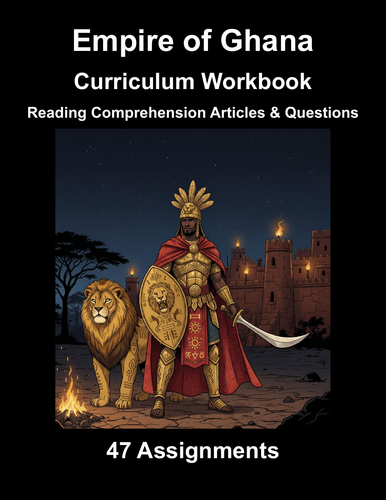

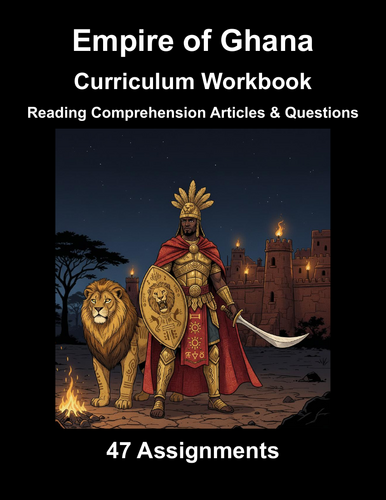


The Empire of Ghana Curriculum Workbook takes students on a fascinating journey through the history, culture, and legacy of West Africa’s first great empire. Each article explores key topics such as Geography, Government, Religion, Trade, and Daily Life, helping learners understand how the Empire of Ghana rose to greatness around 300 CE. Students will read about the Soninke rulers, the bustling capital city of Koumbi Saleh, and the vital gold-salt trade routes that linked West Africa to the wider world. The workbook also covers major events like the reign of King Tenkamenin, conflict with the Almoravids, and the eventual decline of Ghana’s power. With clear passages, vocabulary support, and guided comprehension questions, this resource helps students build strong reading and historical analysis skills. It’s ideal for general education, special education, and ADHD learners, offering structure, engagement, and meaningful understanding of Africa’s rich past.
47 Assignments:
Overview
Geography
Government
Culture
Daily Life
Religion
Social Classes
Food & Agriculture
Education
Arts & Entertainment
Clothing
Technology & Science
Trade & Commerce
Military & Warfare
Literature
Men’s Roles
Women’s Roles
The Founding of the Empire of Ghana around 300 CE
The Rise of the Soninke People as Rulers
Early Trade Routes Connect Gold Fields to the Sahara
Koumbi Saleh Becomes the Capital City
The Growth of Gold-Salt Trade Across the Desert
Introduction of Camel Caravans for Desert Commerce
Ghana Expands Territory Through Early Conquests
Establishment of Tribute System Over Neighboring Lands
Strengthening the King’s Central Authority
Construction of Towns and Trading Centers
Formation of a Powerful Ghanaian Army
First Recorded Arab Muslim Accounts of Ghana
Influence of Islam on Trade and Administration
Cultural Blending Between Soninke and Arab Traders
Reign of Tenkamenin, One of Ghana’s Greatest Kings
Expansion of the Empire Under Tenkamenin
Defense Against Nomadic Raids from the North
Battle with the Sosso People
Increased Control of Trans-Saharan Trade Routes
Development of Strong Ironworking and Agriculture
Establishment of Legal and Court Systems
Alliances with Neighboring Tribes
Conflict with Almoravid Forces
Invasion by the Almoravid Empire around 1076 CE
Decline of Central Authority After Tenkamenin
Loss of Trade Dominance to Mali
Internal Revolts and Civil Strife
Fall of Koumbi Saleh in the Late 11th Century
Migration of Soninke People to Other Regions
Legacy
Something went wrong, please try again later.
This resource hasn't been reviewed yet
To ensure quality for our reviews, only customers who have purchased this resource can review it
Report this resourceto let us know if it violates our terms and conditions.
Our customer service team will review your report and will be in touch.
$29.99