



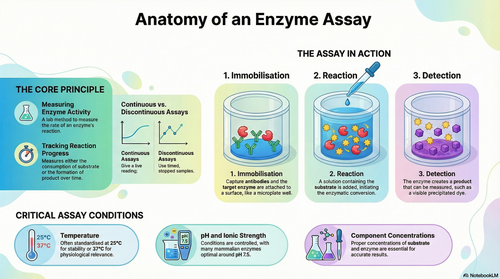

A clear and engaging visual resource that breaks down how enzyme assays work in biological investigations. This infographic-style poster helps students understand the principles behind measuring enzyme activity and the steps involved in a typical enzyme assay.
The resource explains:
• The core principle of enzyme assays and how enzyme activity is measured
• The difference between continuous and discontinuous assays
• The three key stages of an enzyme assay: immobilisation, reaction and detection
• Important experimental conditions such as temperature, pH and substrate concentration
Students learn how scientists track enzyme reactions by measuring substrate use or product formation over time, making it ideal for introducing enzyme practical work or supporting revision.
Perfect for:
• GCSE Biology – Enzymes topic
• A Level Biology practical skills
• Display posters in science classrooms or laboratories
• Supporting lessons on enzyme activity and experimental methods
This resource helps students connect theory with practical laboratory methods, making enzyme experiments easier to understand.
Best for: KS4–KS5 Biology, enzyme practicals, revision displays, and lab skills development.
Something went wrong, please try again later.
This resource hasn't been reviewed yet
To ensure quality for our reviews, only customers who have purchased this resource can review it
Report this resourceto let us know if it violates our terms and conditions.
Our customer service team will review your report and will be in touch.
£1.00