




Book Snapshot
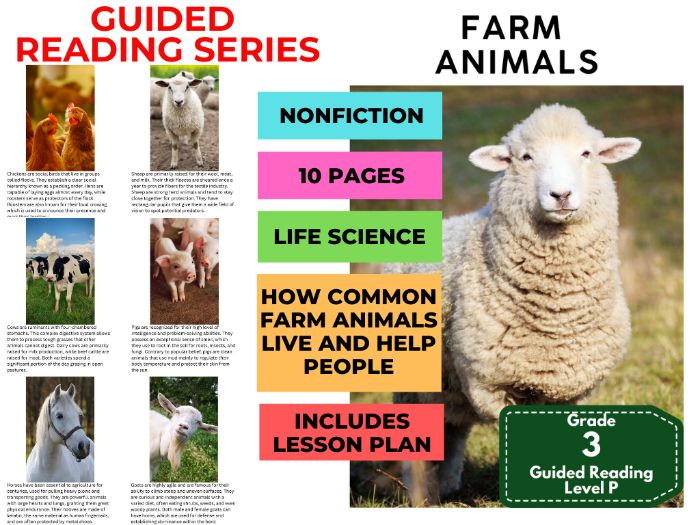
• Title: Farm Animals
• Genre: Nonfiction (informational)
• Subject: Life Science
• Primary Topic: How common farm animals live and help people
• Estimated Guided Reading Level (A–Z): P
What This Book Teaches Best
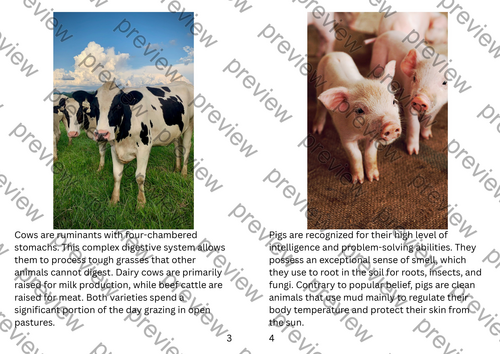
• Describes key traits and behaviors of farm animals (for example, cows digest tough grasses; pigs use mud to regulate temperature; goats climb steep surfaces).
• Explains how different farm animals support people, such as animals raised for milk, meat, eggs, wool, or work (pulling plows, transporting goods).
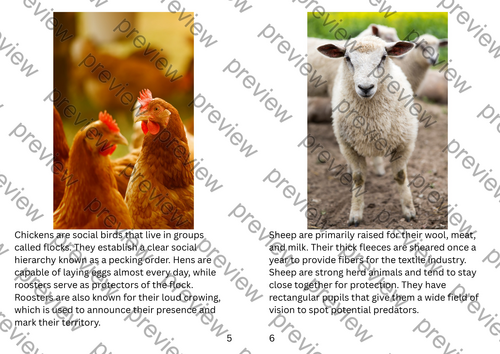
• Builds understanding of animal groups and social behavior, including flocks and a “pecking order” (social hierarchy).
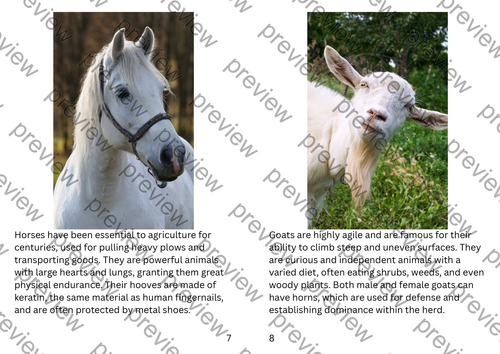
• Highlights physical features linked to survival, such as sheep’s wide field of vision to spot predators and donkeys’ large ears helping them stay cool and hear well.
• Introduces science vocabulary tied to the text’s concepts, including domesticated, ruminants, keratin, descendants, and hierarchy.
Learning Goals
• Students can describe how at least three farm animals are raised or used, using details from the text.
• Students can explain what the text says makes cows ruminants and what their digestive system allows them to do.
• Students can explain why the text says pigs use mud and what mud helps them do.
• Students can describe how chickens live in groups and what “pecking order” means in the text.
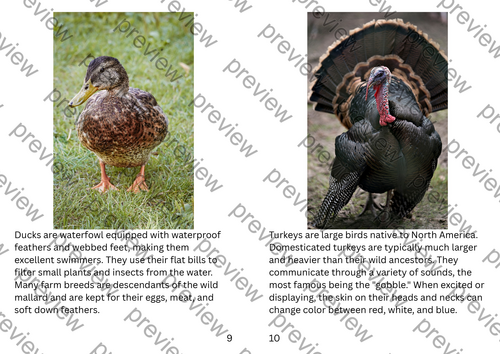
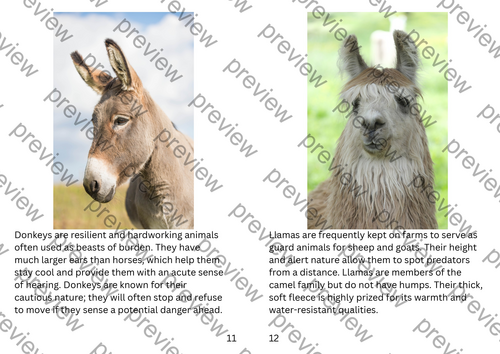
• Students can identify animal body parts mentioned (hooves, feathers, webbed feet, horns) and describe what the text says they help the animal do.
• Students can compare two animals from the book by stating one similarity and one difference based on text evidence.
Key Vocabulary From the Text
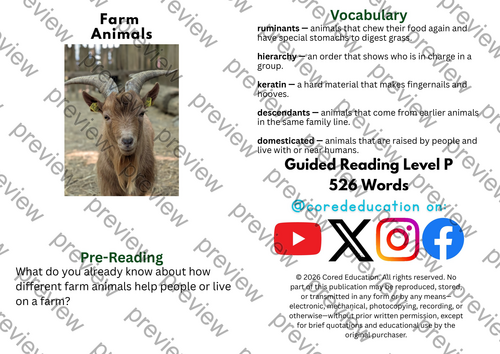
• ruminants — animals that chew food again and digest grass.
• hierarchy — an order that shows who is in charge.
• keratin — a hard material that makes hooves and fingernails.
• descendants — animals that come from earlier animals in a family line.
• domesticated — animals raised by people, living with or near humans.
Discussion Prompts
• Pre-reading question: What farm animals do you already know, and what do you think they do on a farm?
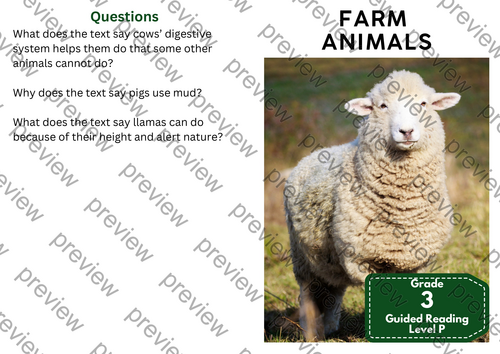
• Comprehension questions: What does the text say cows’ digestive system helps them do that some other animals cannot do?
• Comprehension questions: Why does the text say pigs use mud?
• Comprehension questions: What does the text say llamas can do because of their height and alert nature?
- If “Booklet” Printing Is NOT Available
You can still print this correctly with manual duplex printing.
Step-by-step: - Open the PDF.
- Choose Print.
- Set:
o Orientation: Landscape
o Pages per sheet: 1
o Print on both sides: Yes
o Flip on: Short edge - Print all pages.
Because each PDF page already contains two facing book pages, the result will still fold cleanly into a book.
Something went wrong, please try again later.
This resource hasn't been reviewed yet
To ensure quality for our reviews, only customers who have purchased this resource can review it
Report this resourceto let us know if it violates our terms and conditions.
Our customer service team will review your report and will be in touch.
£1.25