


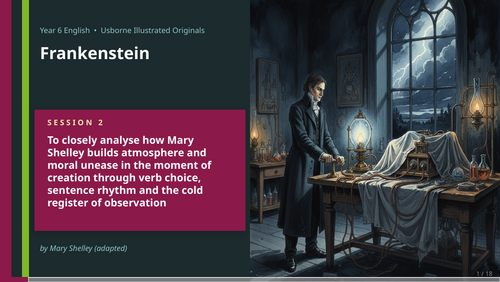
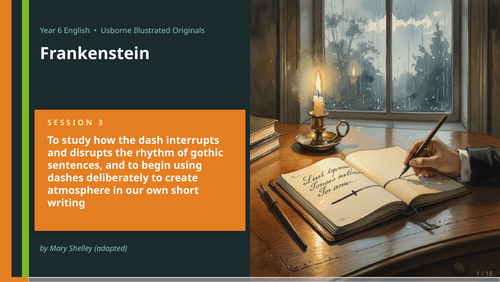
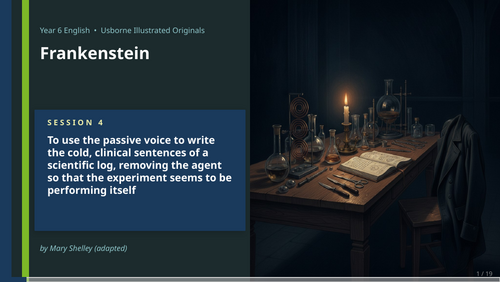
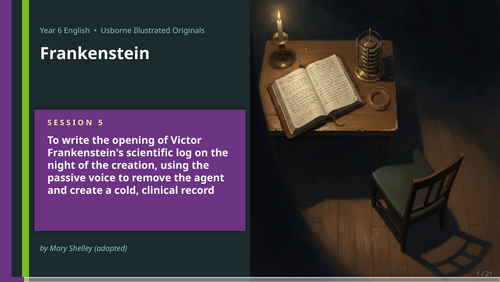
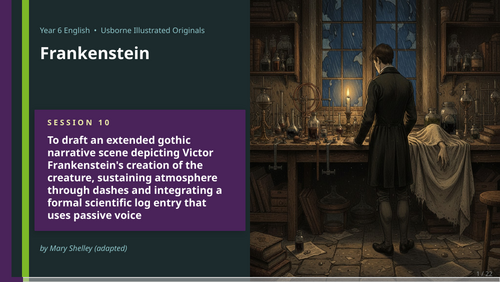
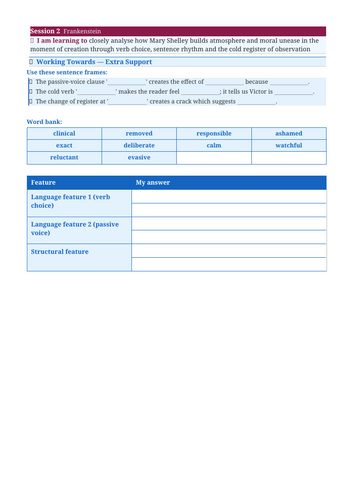
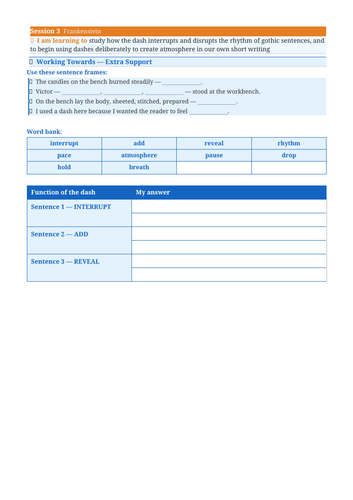
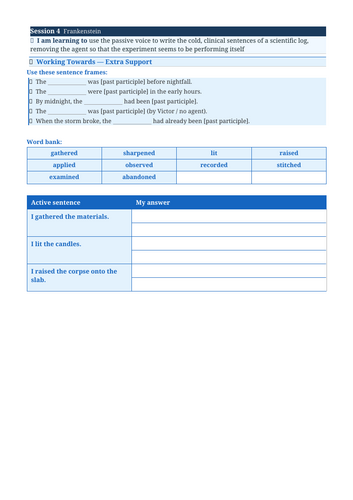
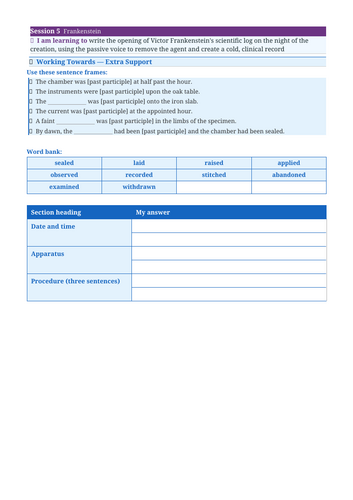
A 3-week, fully resourced primary literacy unit based on Frankenstein by Mary Shelley (adapted). KS2 Fiction. National-Curriculum-aligned grammar, WT/ARE/GD differentiation, and ready to teach.
What’s inside (35 files)This complete English unit gives you everything for three weeks of high-quality teaching, designed to match the standard of leading primary schemes (Literacy Tree, Write Stuff, Power of Reading).
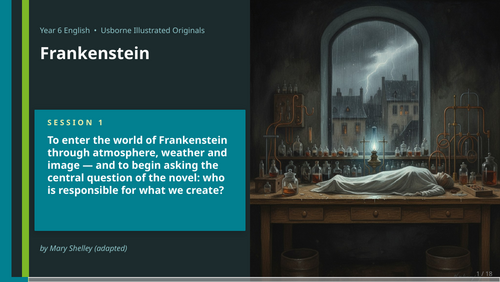
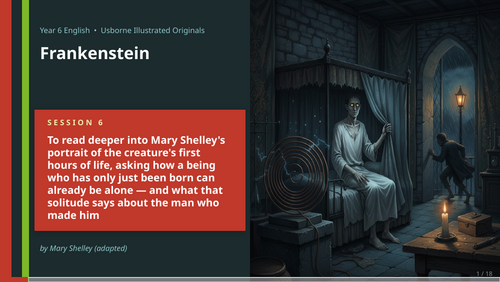
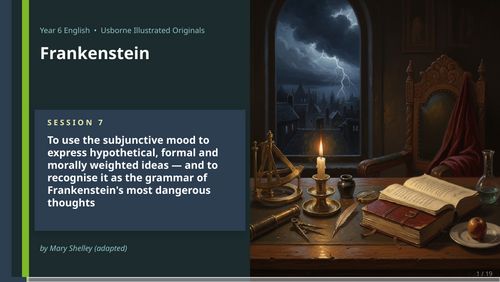
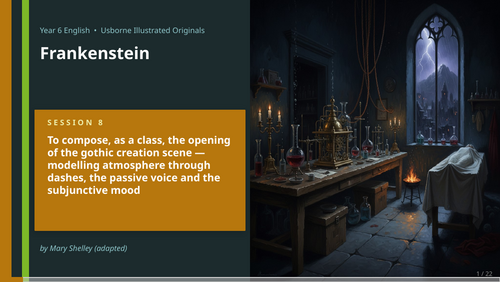
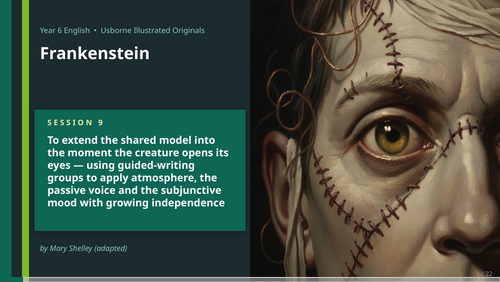
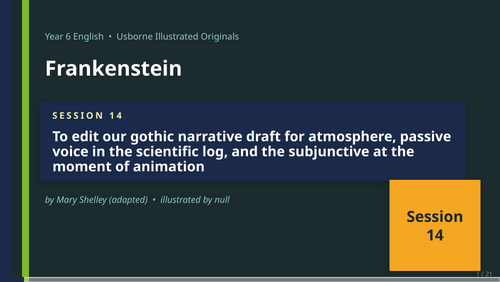
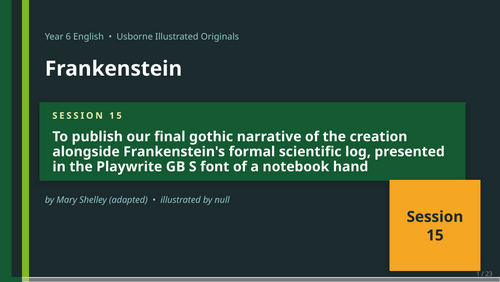
- 15 lesson PowerPoints — illustrated cover slides, success criteria, vocabulary previews, modelled writing, “big questions” (Bloom’s-laddered), differentiation tiers, plenary, and reflection.
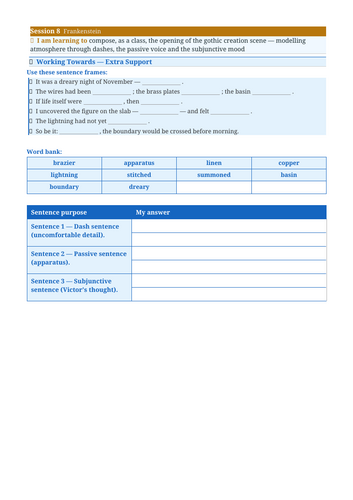
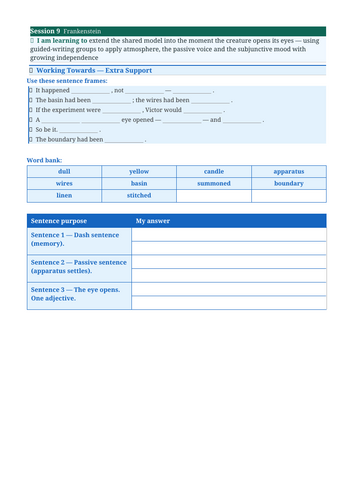
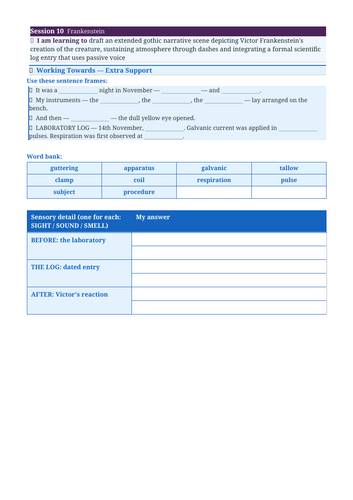
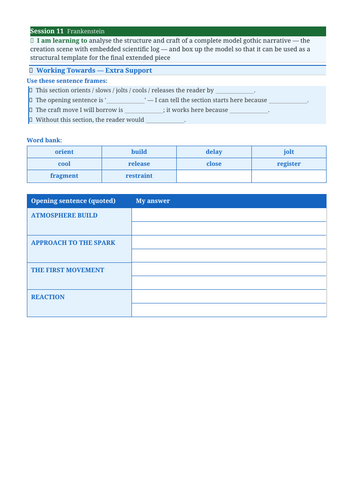
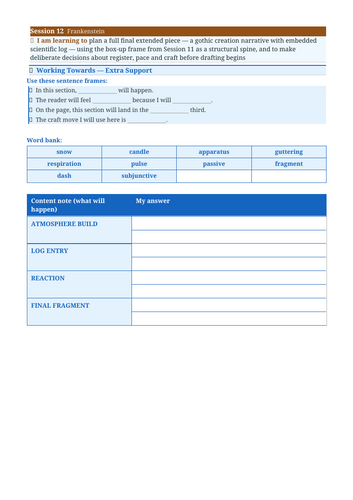
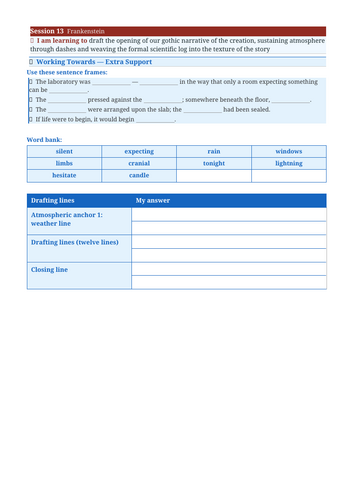
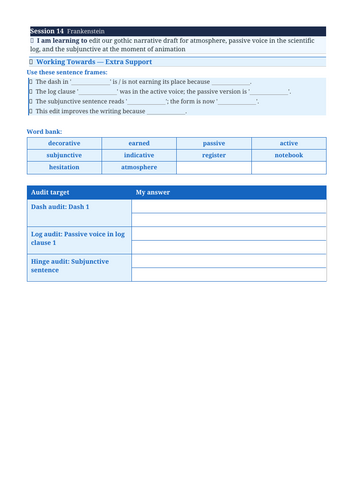
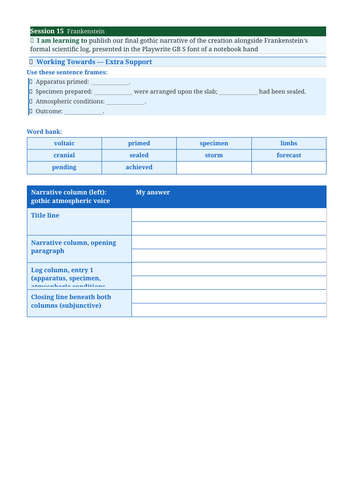
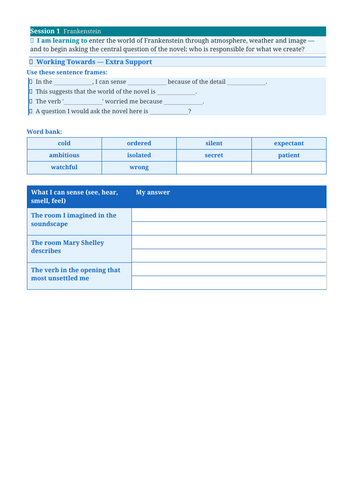
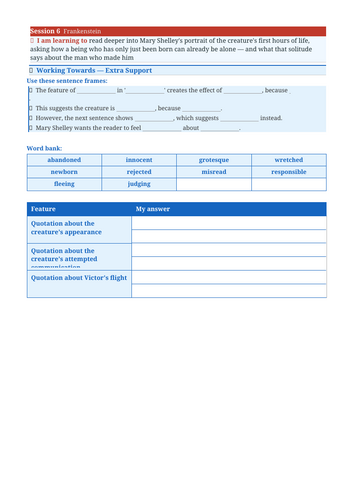
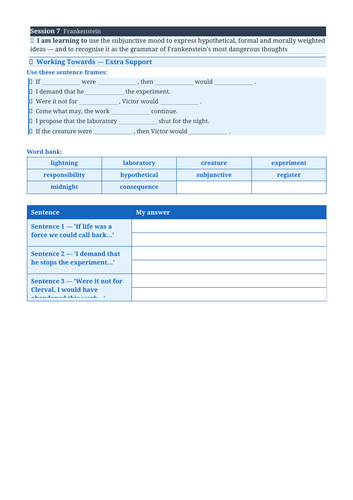
- 15 differentiated resource sheets — Working Towards, Age-Related Expectations, and Greater Depth, with sentence frames, word banks, and writing frames.
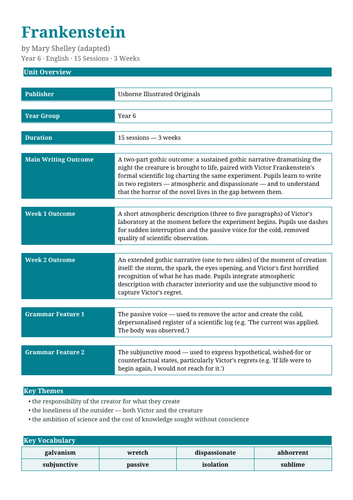
- Complete teacher unit plan — unit overview, key themes, model texts (WT/ARE/GD), full session-by-session plans, key questions, assessment focus, and vocabulary focus.
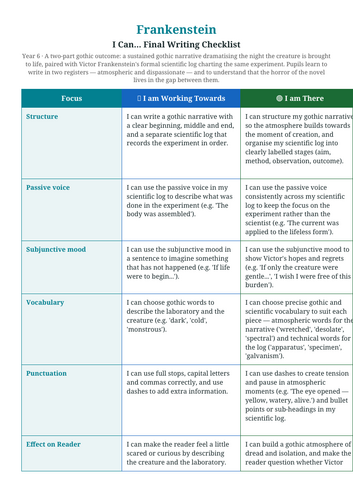
- Child-friendly mark scheme — “I can…” success criteria for the final writing piece, ready for self- and peer-assessment.
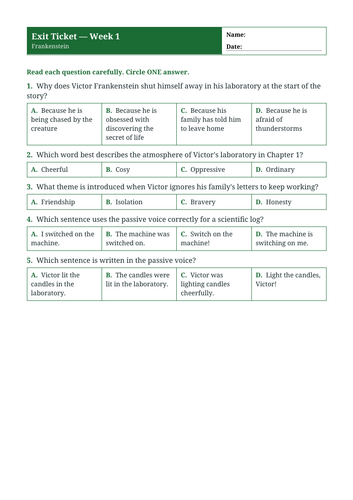
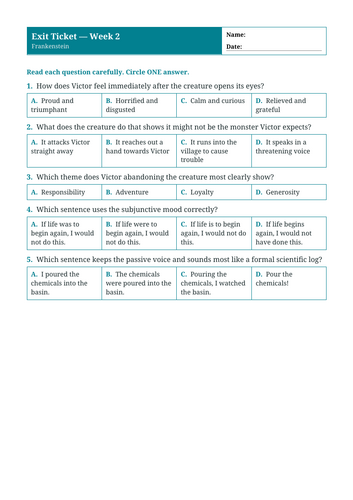
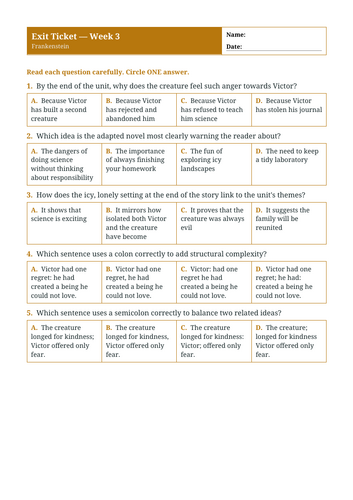
- 3 weekly exit tickets — 5 multiple-choice questions per week, with teacher answer keys.
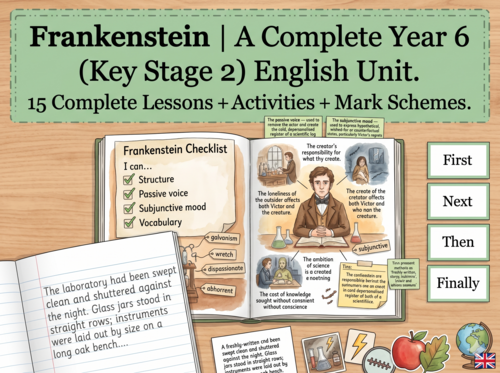
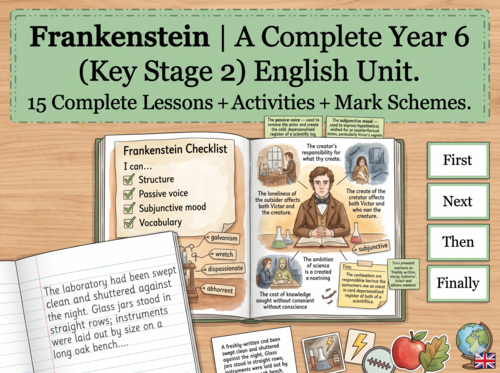
A two-part gothic outcome: a sustained gothic narrative dramatising the night the creature is brought to life, paired with Victor Frankenstein’s formal scientific log charting the same experiment. Pupils learn to write in two registers — atmospheric and dispassionate — and to understand that the horror of the novel lives in the gap between them.
Grammar features (Year 6 NC-aligned)- The passive voice — used to remove the actor and create the cold, depersonalised register of a scientific log (e.g. ‘The current was applied. The body was observed.’).
- The subjunctive mood — used to express hypothetical, wished-for or counterfactual states, particularly Victor’s regrets (e.g. ‘If life were to begin again, I would not reach for it.’).
The responsibility of the creator for what they create, the loneliness of the outsider — both Victor and the creature, the ambition of science and the cost of knowledge sought without conscience.
Key vocabularyGalvanism, wretch, dispassionate, abhorrent, subjunctive, passive, isolation, sublime.
Format & compatibility- Editable PowerPoint (.pptx) and Word (.docx) files.
- UK English spelling.
- One printer-friendly A4 page per resource sheet.
- Compatible with Literacy Tree, Write Stuff, and Power of Reading planning approaches.
- Year 6 (KS2).
- 15 sessions over 3 weeks (≈45–60 minutes per lesson).
KS2, Year 6, English, fiction, Mary Shelley (adapted), reading and writing, complete unit, differentiated, NC-aligned, lesson plans, resources, frankenstein
Something went wrong, please try again later.
This resource hasn't been reviewed yet
To ensure quality for our reviews, only customers who have purchased this resource can review it
Report this resourceto let us know if it violates our terms and conditions.
Our customer service team will review your report and will be in touch.
£10.00