


A classroom-ready, teacher-created PowerPoint lesson that explicitly teaches students how to structure and write an email for different audiences and purposes, while reinforcing key English Language skills including linking ideas using sentence connectives, register awareness (formal vs informal tone) and planning content for transactional writing.
This resource includes interactive sorting activities, clear explanations of email layout conventions, and two modelled writing tasks that allow students to apply tone, structure and content effectively.
Lesson Content & Annotation/Teaching Focus:
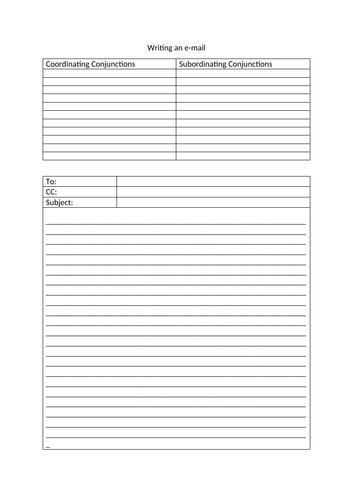
Sentence Connectives Identification Task:
Students sort key connectives (e.g. for, although, because, unless, while, if, so) under appropriate headings to build cohesion and reasoning in emails.
Connective groups support:
cause and effect
contrast
sequencing
conditions
Email Structure Modelling:
Clear instructor notes explain and model the conventions of:
To (recipient address requirement)
CC (copied in for information, no action required)
Subject line (brief summary of purpose)
Body (greeting, main content, closing salutations)
Tone & Register Teaching:
Formal vs informal email indicators discussed and modelled
Guidance on adapting language for clients vs friends
Character and narrative examples are teacher-annotated on slides to model thinking and planning
Scaffolds embedded to support mixed-ability learners and allow GCSE-level extension
Application Writing Tasks:
Task 1 — Formal Client Email
Students write an email to a client explaining a new or improved product/service offering, considering:
formality
type of service
cost
whether it is new or an improvement
clear purpose and persuasive clarity
Task 2 — Informal Email to a Friend
Students write an email asking a friend to help organise a group trip to a zoo, including required logistical content:
date and time
meeting point
travel arrangements
ticket cost
lunch plans
zoo choice
weather considerations
Skills Developed:
Writing transactional emails with clear purpose
Selecting and applying appropriate tone/register
Sequencing, reasoning and contrasting using connectives
Understanding layout conventions used in professional and personal emails
Planning and including required content (audience/purpose awareness)
Building cohesion in transactional writing, transferable to GCSE English Language exams
Perfect For:
KS3 English lessons
GCSE English Language transactional writing and cohesion skill transfer
Literacy interventions and adult learners practising formal/informal register
Functional writing units, classroom modelling, or homework tasks
Email writing skill development for mixed-ability secondary learners
Something went wrong, please try again later.
This resource hasn't been reviewed yet
To ensure quality for our reviews, only customers who have purchased this resource can review it
Report this resourceto let us know if it violates our terms and conditions.
Our customer service team will review your report and will be in touch.
£2.00