


Lesson Summary
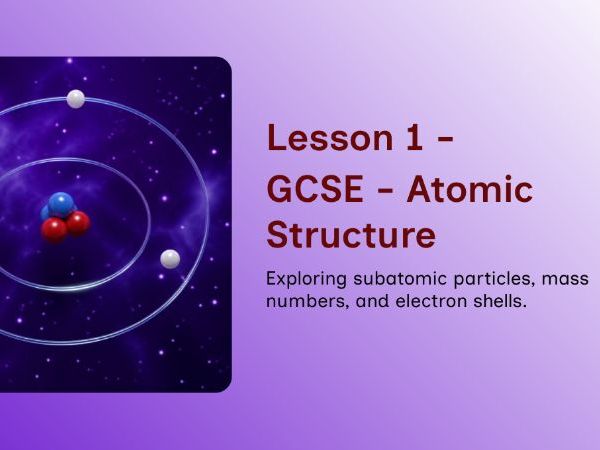
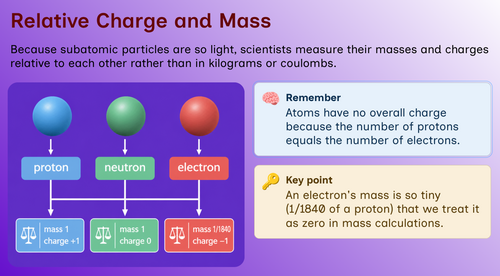
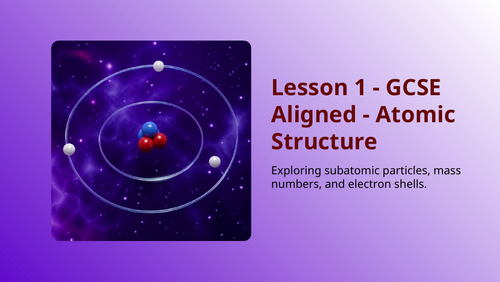
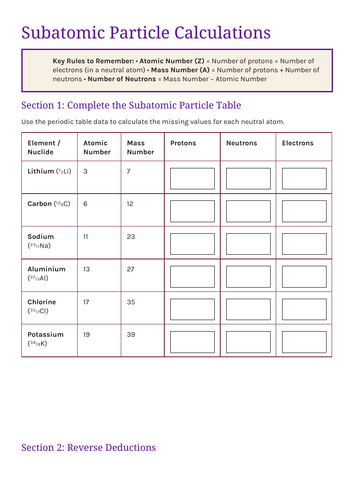
Students are introduced to the basic structure of the atom and learn how subatomic particles determine an element’s identity. They identify the relative masses and charges of protons, neutrons, and electrons, understand how electrons occupy energy levels (shells), and use atomic and mass numbers to calculate proton, neutron, and electron counts.
This lesson establishes the core knowledge needed for isotopes, ions, and nuclear radiation later in the unit.
- Teacher PowerPoint (KS4‑ready and fully editable)
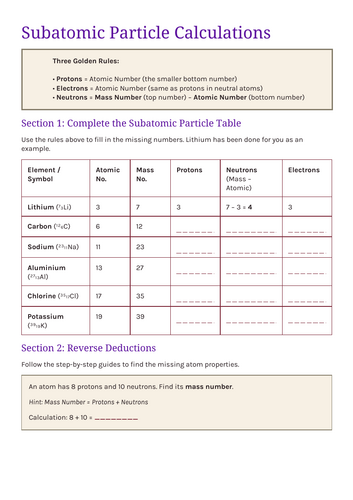
- Worksheet – Subatomic Particle Calculations
- Adapted worksheet focusing on calculating proton, neutron, and electron counts using periodic table data
- Key vocabulary list
- Peer/group discussion opportunity
- Short retrieval quiz
- Clear, structured introduction to GCSE atomic structure
- Strong modelling and scaffolded calculations
- Worksheet supports independent practice and homework
- Ideal for mixed‑ability Year 10 groups
- Builds confidence before isotopes, ions, and nuclear radiation
- Includes some AI‑enhanced imaging, all of which has been checked and approved by myself — a qualified teacher with many years of classroom experience
Something went wrong, please try again later.
This resource hasn't been reviewed yet
To ensure quality for our reviews, only customers who have purchased this resource can review it
Report this resourceto let us know if it violates our terms and conditions.
Our customer service team will review your report and will be in touch.
£2.00