

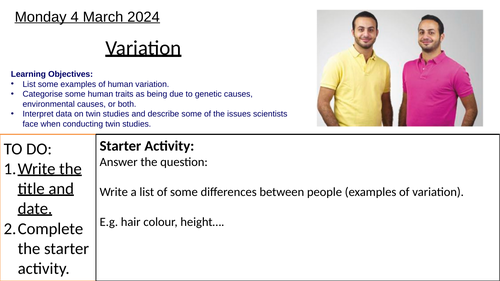

This PowerPoint resource provides an engaging and comprehensive lesson on the factors influencing variation within species, focusing on genetic inheritance and environmental effects. Designed for high school biology classes, this lesson incorporates real-world examples and data analysis to deepen understanding.
Key learning objectives:
- Defining variation and categorizing human traits as inherited, environmental, or a combination of both.
- Exploring examples of variation within a species, such as hair color, height, and weight.
- Interpreting data from twin studies to differentiate the influences of genetics and the environment.
- Understanding the challenges scientists face when studying identical twins and long-term human development.
Resource features:
The lesson begins with a starter activity prompting students to list differences between individuals, such as eye color and body weight, to activate prior knowledge about variation. Key concepts include:
- Inherited Characteristics: Traits passed from parents to offspring through genes, such as blood type and natural hair color.
- Environmental Characteristics: Traits influenced by external factors, such as scars and spoken language.
- Combination of Factors: Characteristics affected by both genetics and the environment, such as height or intelligence.
Students engage with practical activities, such as sorting traits into categories and analyzing case studies involving identical twins raised together versus apart. The lesson highlights real-world challenges in conducting twin studies, including ethical concerns, rare case availability, and the extended timescales required for observation.
Interactive tasks include data interpretation, answering reflective questions, and completing gap-fill exercises about twin studies. Students also explore the implications of these studies for understanding human development.
File details:
This editable ‘.pptx’ file aligns with biology curricula and supports classroom discussions and independent analysis. It features clear visuals, real-world examples, and guided activities, making it an essential resource for teaching variation and its causes.
Something went wrong, please try again later.
This resource hasn't been reviewed yet
To ensure quality for our reviews, only customers who have purchased this resource can review it
Report this resourceto let us know if it violates our terms and conditions.
Our customer service team will review your report and will be in touch.
£2.00