GCSE Medicine Through Time | Modern | 6 Lesson Bundle
Resource Bundle




A fully resourced collection of six enquiry-led GCSE History lessons covering key developments in medicine in modern Britain. Students investigate scientific discoveries, medical treatments, public health, prevention and changing attitudes towards disease, while challenging the assumption that medical progress was inevitable or driven by individuals alone.
Each lesson is built around an engaging historical enquiry, encouraging students to investigate evidence, explore difficult decisions and reach supported judgements.
The six lessons included are:
DNA – Scientific Discovery and Genetics
Students investigate the development of modern genetics and DNA, examining the contributions of Mendel, Watson and Crick, Rosalind Franklin, Maurice Wilkins and Linus Pauling. Eight What Would You Do? scenarios encourage students to evaluate the decisions and qualities behind scientific breakthroughs.
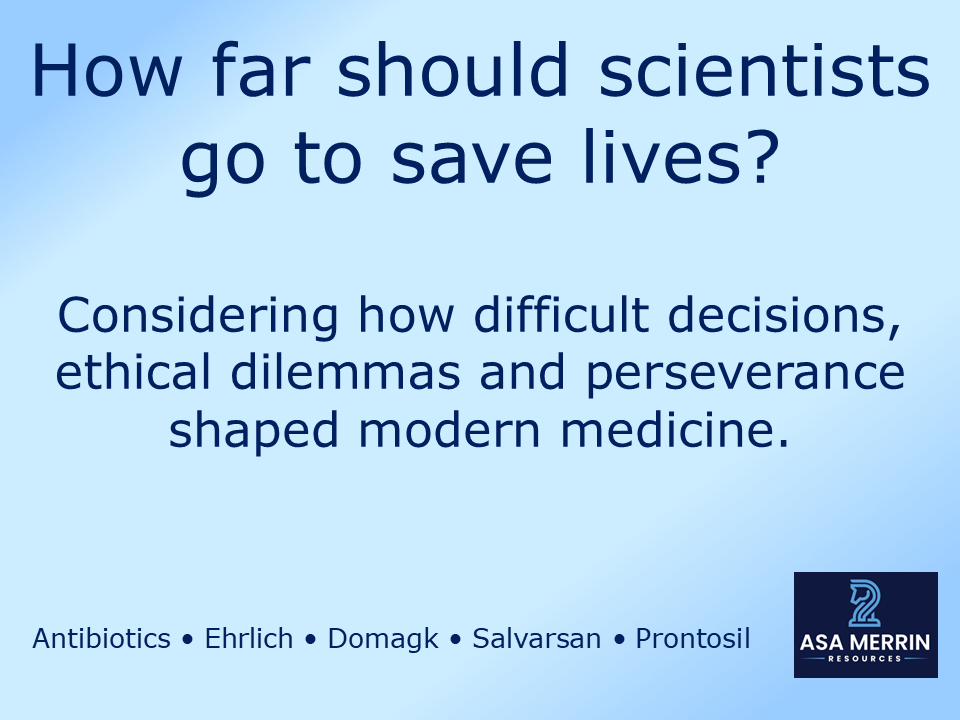
Antibiotics – Ehrlich and Domagk
Students explore the development of chemical treatments through the work of Paul Ehrlich and Gerhard Domagk, including Salvarsan and Prontosil. Decision-making scenarios challenge students to consider the difficulties, risks and determination involved in developing new medicines.
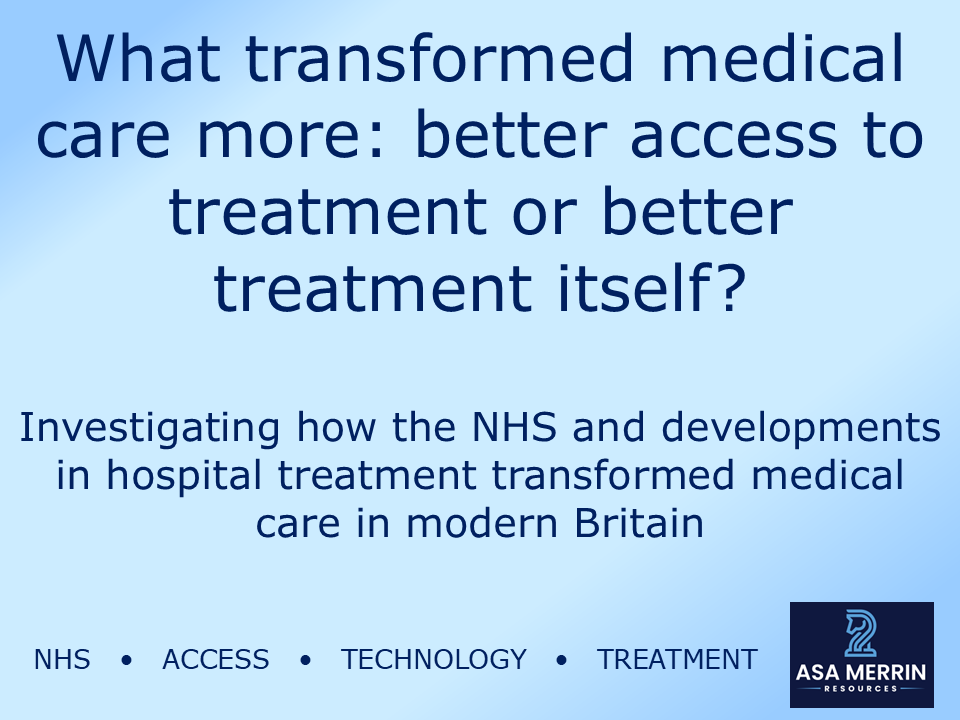
The NHS – Access to Care and Modern Treatments
Students investigate how the establishment of the NHS transformed access to healthcare, alongside improvements in modern hospital treatments and technology. Activities encourage students to evaluate whether wider access or better treatments had the greater impact.
Prevention – Should the Government Tell Us How to Live?
Students examine changing approaches to preventing disease in modern Britain, exploring public health measures, government intervention and individual responsibility. Historical scenarios and evidence-based activities encourage debate about the government’s role in protecting public health.
Penicillin – Fleming, Florey and Chain
Students investigate Fleming’s accidental discovery and the subsequent development of penicillin by Florey, Chain and the Oxford research team. Two What Would You Do? scenarios and a 12-card evidence investigation explore the importance of chance, teamwork, war, government support and mass production.
Lung Cancer – Government Responsibility and Public Health
Students investigate the growing understanding of the link between smoking and lung cancer, considering scientific evidence, government action and changing public attitudes. The lesson culminates in a supported judgement about how far the government was responsible for Britain’s lung cancer problem.
Across the six lessons, students will encounter:
• Low-stakes Register Tasks designed to introduce key historical ideas
• Engaging What Would You Do? scenarios exploring real historical decisions
• Structured evidence investigations, matching activities and historical dilemmas
• Opportunities for discussion, comparison and evaluation
• Extended judgement tasks addressing challenging enquiry questions
• Plenary activities consolidating knowledge and encouraging reflection
All six lessons include their PowerPoint presentations, accompanying worksheets and activities, and full slide-by-slide teacher notes, designed for immediate classroom use.
Designed for Edexcel GCSE Medicine Through Time, but easily adaptable for AQA, OCR and Eduqas.
The bundle develops key disciplinary skills including interpretation, analysis, evaluation and supported judgement, while reinforcing students’ understanding of the individuals, scientific developments, institutions and wider factors responsible for transforming medicine in modern Britain.
Something went wrong, please try again later.
This resource hasn't been reviewed yet
To ensure quality for our reviews, only customers who have purchased this resource can review it
Report this resourceto let us know if it violates our terms and conditions.
Our customer service team will review your report and will be in touch.