


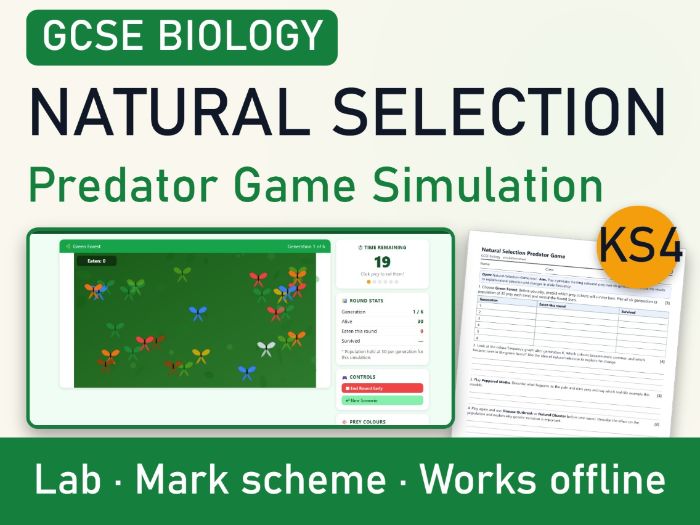

A complete biology simulation for GCSE-level science (ages 14 to 16): a predator game that shows natural selection over six generations of coloured prey, with an A4 student sheet, an answer key and teacher notes. One offline file; no website, no login and nothing to install.
What is this?
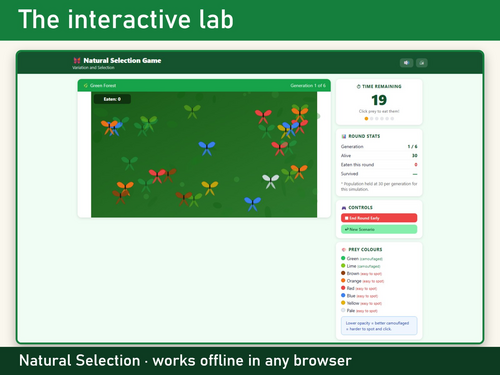
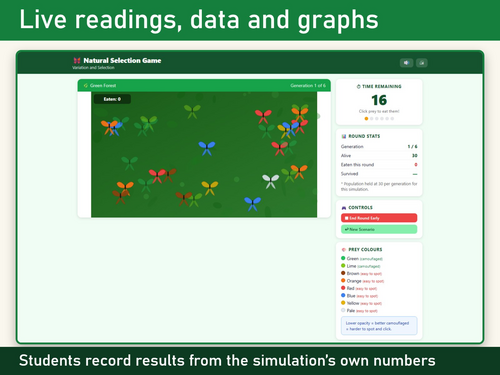
Students play a predator and click on coloured prey in a habitat before a 20-second timer runs out. The survivors reproduce, the population is held at 30 and a graph shows how the colour frequencies change over six generations. Four scenarios, including peppered moths, and optional events such as disease add extra questions.
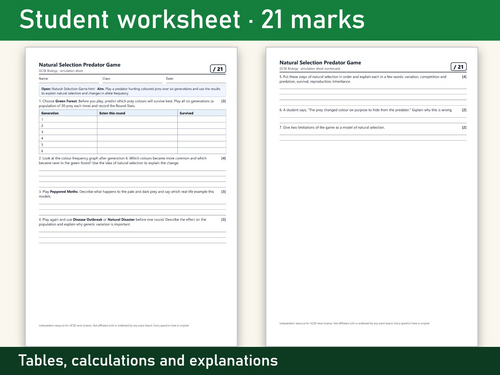
It runs offline from a single file on any device, from a Chromebook to a projector. It comes with a two-page student sheet (21 marks) written for this simulation, with tables to fill in from the simulation’s own numbers, short explanations, calculations and an evaluation question. The answer key gives every number the simulation produces, so marking is quick.
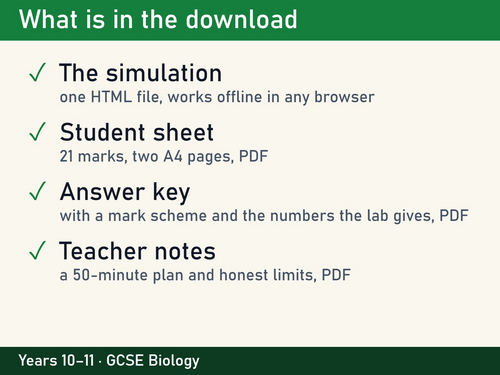
What is in the zip
- The simulation (Natural-Selection-Game.html): one file for any modern browser. Works offline, sends nothing anywhere and uses no live AI at run time.
- Student sheet (PDF, 2 pages, 21 marks) for printing or sharing.
- Answer key (PDF) with a mark scheme and the numbers the simulation gives.
- Teacher notes (PDF): how to run a 50-minute lesson, how the simulation behaves, and its honest limits.
What the simulation includes
- Four scenarios: green forest, tree bark, sandy desert and peppered moths
- A 20-second predator round with live round statistics
- A colour frequency graph for each generation
- Optional events: disease, natural disaster and habitat change
- A key ideas box and a check-your-understanding quiz
What students learn
- Variation, competition, survival and reproduction.
- Why camouflaged prey survive and pass on their alleles.
- That individuals do not change on purpose: populations change.
- The peppered moth as a named example.
- Why genetic variation helps a population cope with change.
Where it fits
GCSE Biology: variation, natural selection, adaptation and evolution. Use it as a starter, for prep, cover work, homework or revision.
What it does, and what it does not
The numbers come from a model, not from measurements, so real data will look messier. It does not replace working with real apparatus: use it to prepare, to practise reading and plotting data, or when the practical cannot be run. There is a free demo of this simulation on Tes with one fixed set-up and a one-page sheet, so you can try the format first.
Written by a British science and maths teacher who taught for more than 12 years in international schools, including a spell as Head of Science. An independent resource, not affiliated with or endorsed by any exam board. Every question and the simulation are original.
Something went wrong, please try again later.
This resource hasn't been reviewed yet
To ensure quality for our reviews, only customers who have purchased this resource can review it
Report this resourceto let us know if it violates our terms and conditions.
Our customer service team will review your report and will be in touch.
£3.95