


What This Book Teaches Best
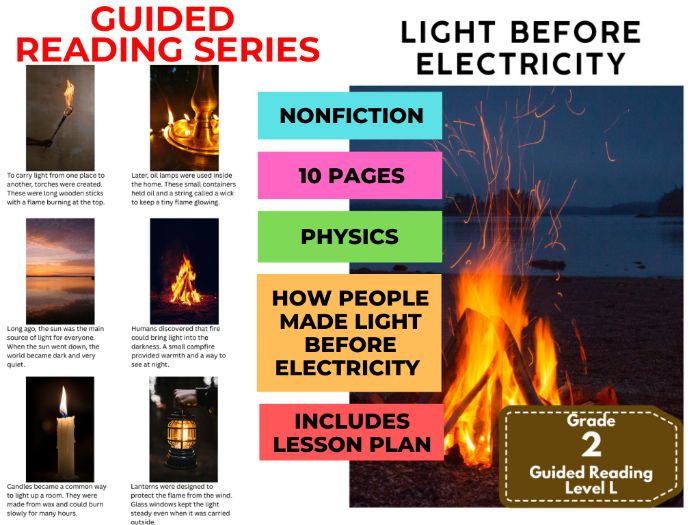
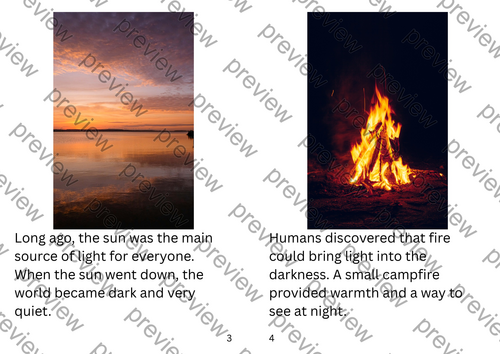
• The sun was the main source of light long ago, and it got dark when the sun went down.
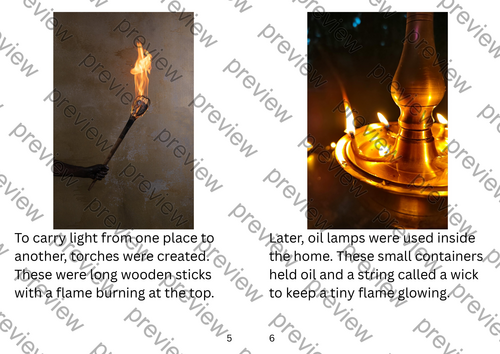
• People discovered fire could bring light into darkness and help them see at night.
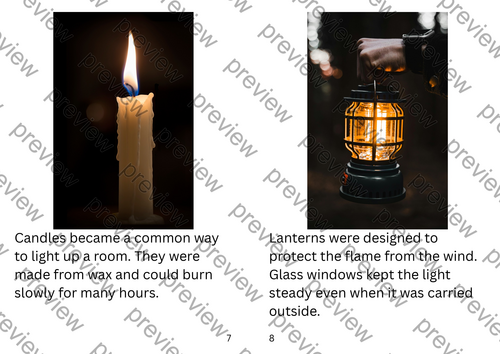
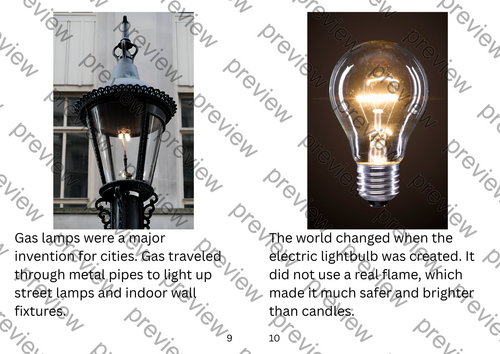
• A clear sequence of lighting tools is explained: torches, oil lamps (with a wick), candles, lanterns, gas lamps, electric lightbulbs, and LED bulbs.
• How inventions solved problems: lanterns protected flames from wind, gas traveled through pipes to power lamps, and electric lightbulbs were safer because they used no real flame.
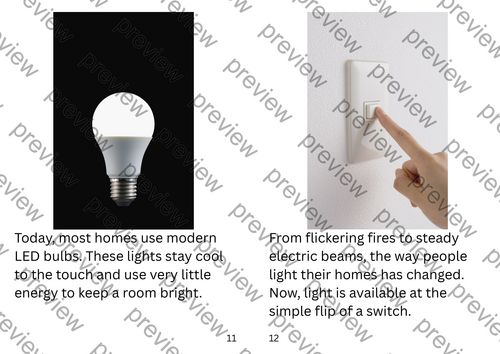
• Past-to-present comparison: lighting changed from “flickering fires” to steady electric light you can turn on with a switch.
Learning Goals
• Students will describe why the sun was the main source of light long ago.
• Students will explain how fire helped people see at night.
• Students will identify several light sources from the book and describe how each one made light.
• Students will explain how lanterns kept light steady when carried outside.
• Students will explain why the electric lightbulb was safer and brighter than candles in the book.
• Students will describe how LED bulbs are different from older light sources (cool to the touch, little energy).
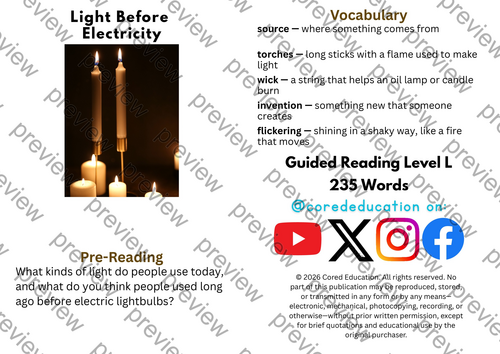
Key Vocabulary From the Text
• source — where something comes from.
• torches — long sticks with a flame used for light.
• wick — a string that helps a lamp or candle burn.
• invention — something new that someone creates.
• flickering — shining in a shaky way, like moving firelight.
Discussion Prompts
• Pre-reading question: What kinds of lights do you use when it is dark?
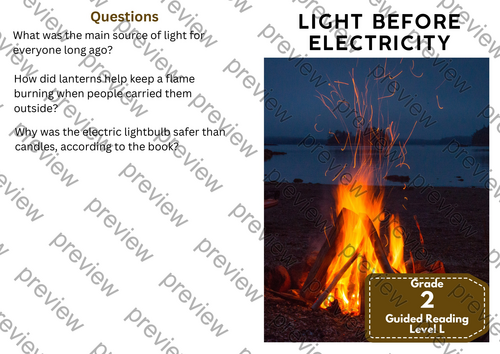
• Comprehension questions: What was the main source of light for everyone long ago? How did lanterns protect the flame when people carried them outside? Why did the book say the electric lightbulb was safer than candles?
Printing Tips
-
Best Printing Method (Recommended)
“Booklet” Printing (Best if Available)
If your printer or PDF viewer supports Booklet Printing, use this.
Settings to use:
• Print mode: Booklet
• Paper size: Letter or A4 (either works)
• Orientation: Landscape
• Print on both sides: Yes
• Flip on: Short edge
• Scaling: Fit to printable area
• Booklet subset:
o First test: Front sides only
o Then: Back sides only
This will automatically:
• Pair pages correctly
• Put the cover on the outside
• Align everything for folding
After printing, fold in half and staple along the spine. -
If “Booklet” Printing Is NOT Available
You can still print this correctly with manual duplex printing.
Step-by-step: -
Open the PDF.
-
Choose Print.
-
Set:
o Orientation: Landscape
o Pages per sheet: 1
o Print on both sides: Yes
o Flip on: Short edge -
Print all pages.
Because each PDF page already contains two facing book pages, the result will still fold cleanly into a book.
Something went wrong, please try again later.
This resource hasn't been reviewed yet
To ensure quality for our reviews, only customers who have purchased this resource can review it
Report this resourceto let us know if it violates our terms and conditions.
Our customer service team will review your report and will be in touch.
£1.25