


What This Book Teaches Best
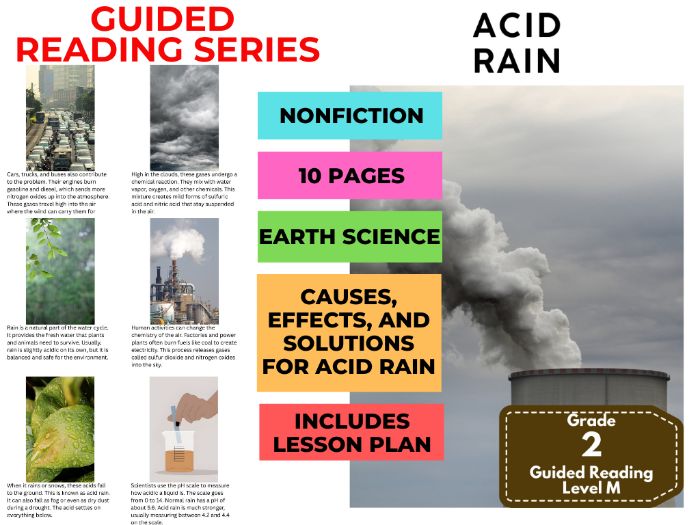
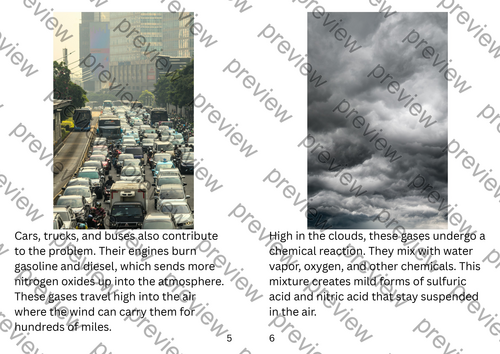
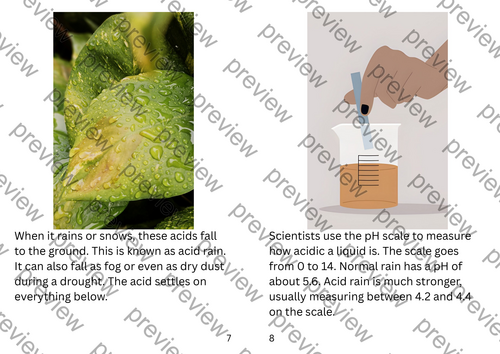
• Explains how human activities (factories, power plants, and vehicles) change the chemistry of the air by releasing gases into the sky.
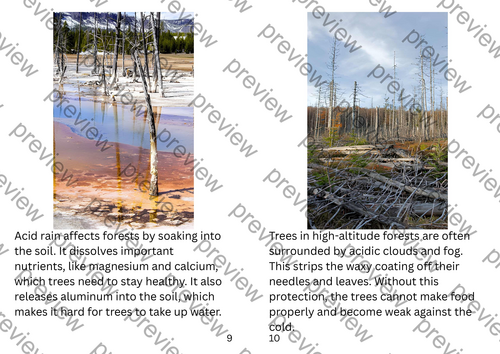
• Describes a chemical reaction in the clouds where gases mix with water vapor and oxygen to form acids that stay suspended in the air.
• Defines acid rain as acids falling to the ground as rain or snow, and notes it can also fall as fog or as dry dust during a drought.
• Uses the pH scale to compare normal rain (about 5.6) to acid rain (often between 4.2 and 4.4).
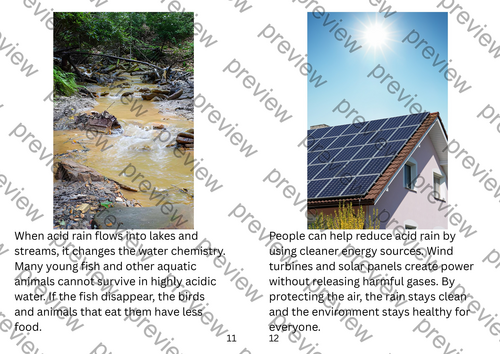
• Shows environmental impacts on forests (nutrients dissolving; difficulty taking up water) and on lakes/streams (changes to water chemistry that affect fish and other animals).
Learning Goals
• Describe how rain is part of the water cycle and helps plants and animals survive.
• Identify gases released by factories, power plants, and vehicles that contribute to acid rain.
• Explain how gases high in the clouds can react and form acids that stay in the air.
• Use details from the text to compare normal rain and acid rain using pH numbers.
• Describe how acid rain can affect forests, lakes, streams, fish, birds, and other animals.
• Explain one way people can help reduce acid rain by using cleaner energy sources.
Key Vocabulary From the Text
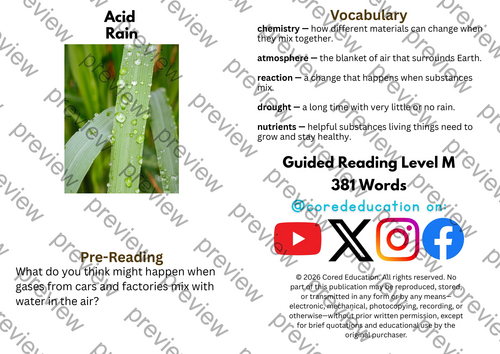
• chemistry — how materials can change when they mix.
• atmosphere — the air that surrounds Earth.
• reaction — a change that happens when substances mix.
• drought — a long time with little or no rain.
• nutrients — substances living things need to grow healthy.
Discussion Prompts
• Pre-reading question: What do you think might happen when gases from cars and factories mix with water in the air?
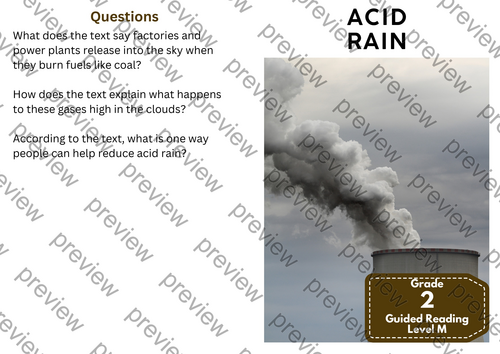
• Comprehension questions: What gases do factories and power plants release when they burn fuels like coal?
• Comprehension questions: What happens to these gases high in the clouds, according to the text?
• Comprehension questions: What is one way people can help reduce acid rain in this book?
Printing Tips
-
Best Printing Method (Recommended)
“Booklet” Printing (Best if Available)
If your printer or PDF viewer supports Booklet Printing, use this.
Settings to use:
• Print mode: Booklet
• Paper size: Letter or A4 (either works)
• Orientation: Landscape
• Print on both sides: Yes
• Flip on: Short edge
• Scaling: Fit to printable area
• Booklet subset:
o First test: Front sides only
o Then: Back sides only
This will automatically:
• Pair pages correctly
• Put the cover on the outside
• Align everything for folding
After printing, fold in half and staple along the spine. -
If “Booklet” Printing Is NOT Available
You can still print this correctly with manual duplex printing.
Step-by-step: -
Open the PDF.
-
Choose Print.
-
Set:
o Orientation: Landscape
o Pages per sheet: 1
o Print on both sides: Yes
o Flip on: Short edge -
Print all pages.
Because each PDF page already contains two facing book pages, the result will still fold cleanly into a book.
Something went wrong, please try again later.
This resource hasn't been reviewed yet
To ensure quality for our reviews, only customers who have purchased this resource can review it
Report this resourceto let us know if it violates our terms and conditions.
Our customer service team will review your report and will be in touch.
£1.25