




What This Book Teaches Best
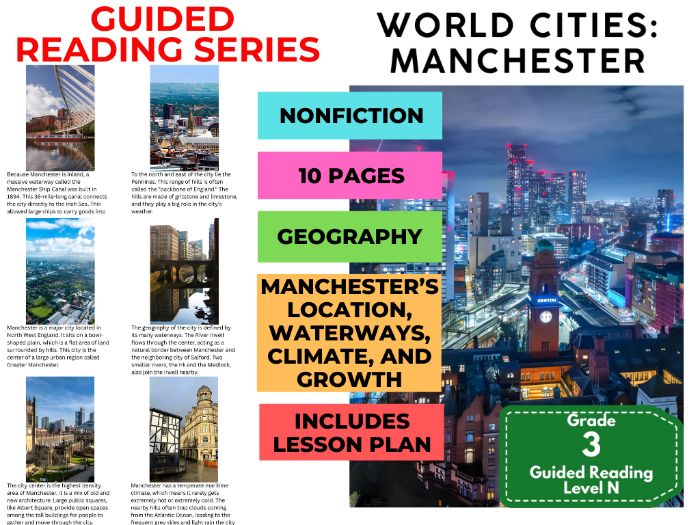
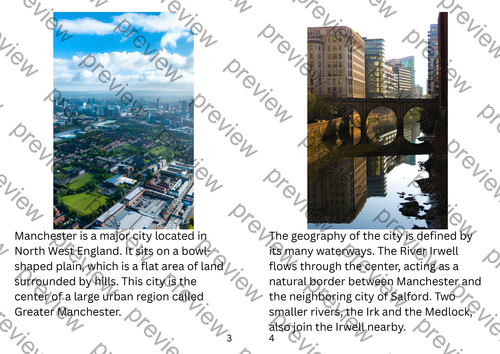
• How Manchester’s location and landform (a bowl-shaped plain) help describe where the city sits and what surrounds it.
• How waterways shape a city’s geography, including the River Irwell as a border and nearby rivers that join it.
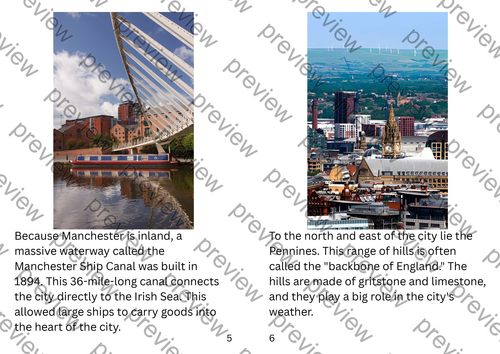
• How people changed transportation and trade by building the Manchester Ship Canal to connect the inland city to the Irish Sea.
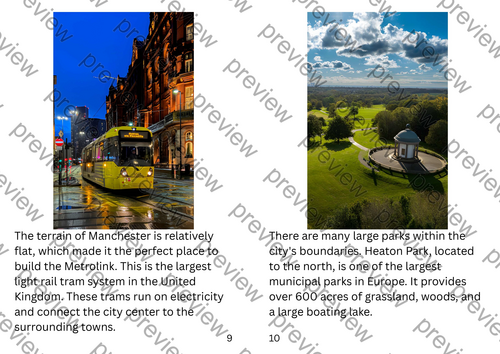
• How weather and climate connect to land features, including nearby hills trapping clouds and creating frequent grey skies and light rain.
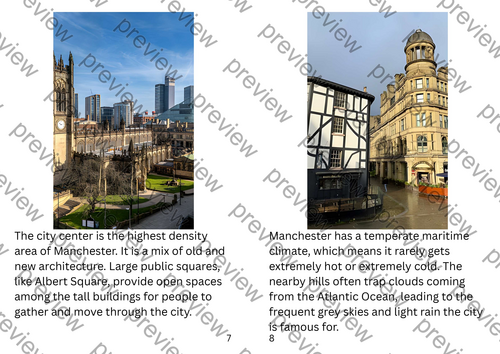
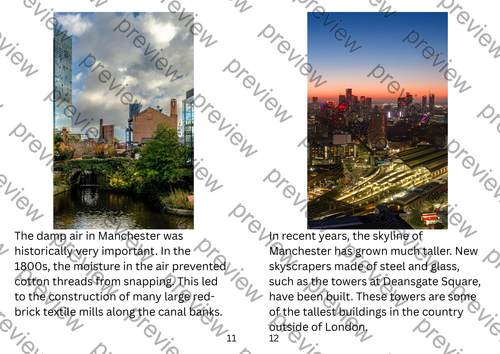
• How Manchester has changed over time, from textile mills in the 1800s to a skyline with new skyscrapers in recent years.
Learning Goals
• Students will identify where Manchester is located in England using details from the text.
• Students will describe how Manchester’s rivers and waterways affect the city’s geography.
• Students will explain why the Manchester Ship Canal was built and what it connects to.
• Students will describe Manchester’s temperate maritime climate using evidence from the text.
• Students will explain how damp air influenced textile mills in the 1800s, according to the text.
• Students will describe one way Manchester’s city center or skyline has changed, using text details.
Key Vocabulary From the Text
• waterways — rivers or channels that water flows through.
• terrain — what the land is like.
• maritime — connected to the sea or ocean.
• municipal — belonging to a city or town.
• skyscrapers — very tall buildings with many floors.
Discussion Prompts
• Pre-reading question: How might rivers, hills, and weather shape what a city becomes like?
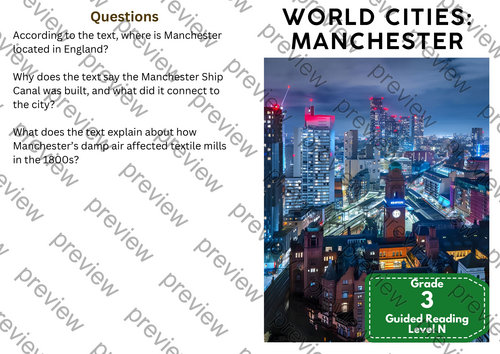
• Comprehension questions: Where does the text say Manchester is located in England?
• Comprehension questions: What did the Manchester Ship Canal connect Manchester to?
• Comprehension questions: According to the text, how did damp air help cotton threads in the 1800s?
Printing Tips
-
Best Printing Method (Recommended)
“Booklet” Printing (Best if Available)
If your printer or PDF viewer supports Booklet Printing, use this.
Settings to use:
• Print mode: Booklet
• Paper size: Letter or A4 (either works)
• Orientation: Landscape
• Print on both sides: Yes
• Flip on: Short edge
• Scaling: Fit to printable area
• Booklet subset:
o First test: Front sides only
o Then: Back sides only
This will automatically:
• Pair pages correctly
• Put the cover on the outside
• Align everything for folding
After printing, fold in half and staple along the spine. -
If “Booklet” Printing Is NOT Available
You can still print this correctly with manual duplex printing.
Step-by-step: -
Open the PDF.
-
Choose Print.
-
Set:
o Orientation: Landscape
o Pages per sheet: 1
o Print on both sides: Yes
o Flip on: Short edge -
Print all pages.
Because each PDF page already contains two facing book pages, the result will still fold cleanly into a book.
Something went wrong, please try again later.
This resource hasn't been reviewed yet
To ensure quality for our reviews, only customers who have purchased this resource can review it
Report this resourceto let us know if it violates our terms and conditions.
Our customer service team will review your report and will be in touch.
£1.25