


**This lesson introduces a non-European society that provides contrasts with British history - the ancient Maya civilization. **
Included in the bundle:
-Lesson Slides
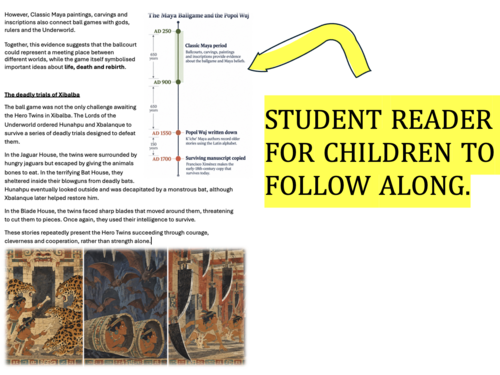
-Student Reader
-Source Pack
This is Lesson 3 of a series of four, knowledge-rich curriculum lessons.
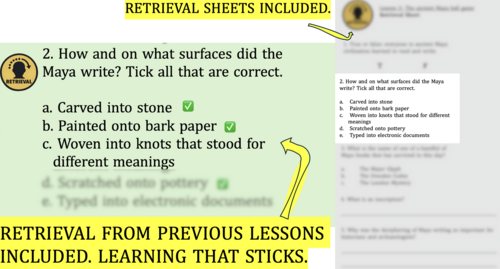
Each lesson combines an accessible student reader with high-quality historical sources, explicit vocabulary instruction and regular retrieval opportunities.
Activities encourage pupils to think like historians: examining evidence, making inferences, asking questions and connecting new learning to prior knowledge.
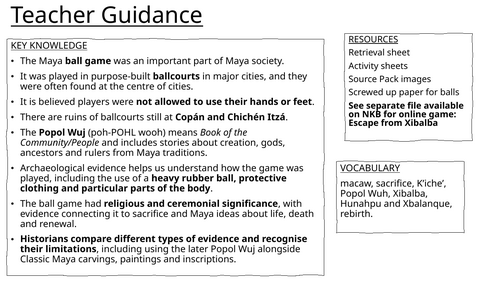
Lesson 3 introduces the following key knowledge:
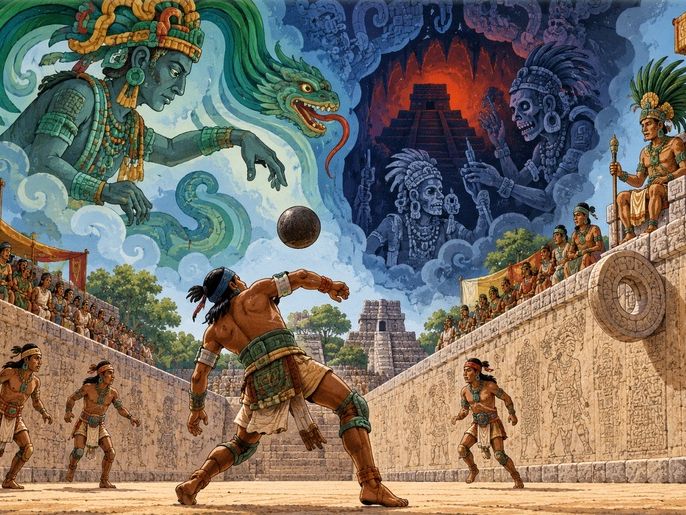
-The Maya ball game was an important part of Maya society.
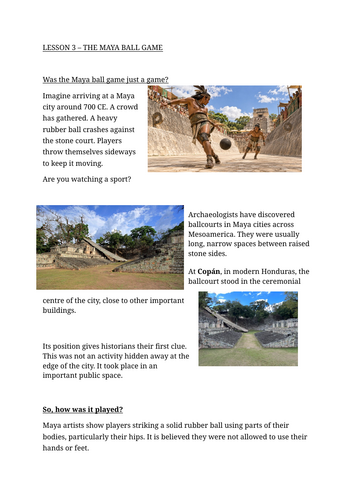
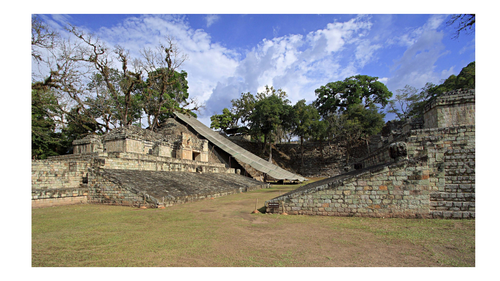
-It was played in purpose-built ballcourts in major cities, and they were often found at the centre of cities.
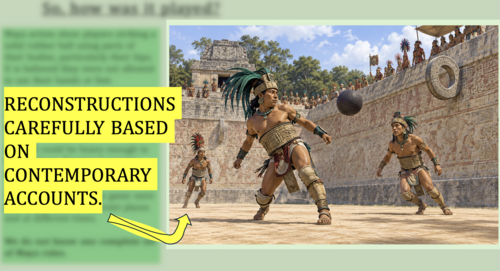
-It is believed players were not allowed to use their hands or feet.
-There are ruins of ballcourts still at Copán and Chichén Itzá.
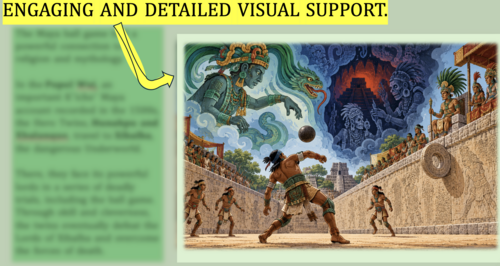
-The Popol Wuj (poh-POHL wooh) means Book of the Community/People and includes stories about creation, gods, ancestors and rulers from Maya traditions.
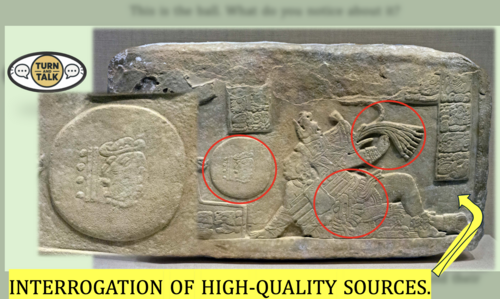
-Archaeological evidence helps us understand how the game was played, including the use of a heavy rubber ball, protective clothing and particular parts of the body.
-The ball game had religious and ceremonial significance, with evidence connecting it to sacrifice and Maya ideas about life, death and renewal.
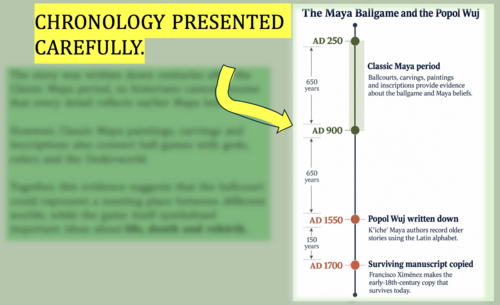
-Historians compare different types of evidence and recognise their limitations, including using the later Popol Wuj alongside Classic Maya carvings, paintings and inscriptions.
Something went wrong, please try again later.
This resource hasn't been reviewed yet
To ensure quality for our reviews, only customers who have purchased this resource can review it
Report this resourceto let us know if it violates our terms and conditions.
Our customer service team will review your report and will be in touch.
£3.00