


**This lesson introduces a non-European society that provides contrasts with British history - the ancient Maya civilization. **
Included in the bundle:
-Lesson Slides
-Student Reader
-Source Pack
This is Lesson 4 of a series of four, knowledge-rich curriculum lessons.
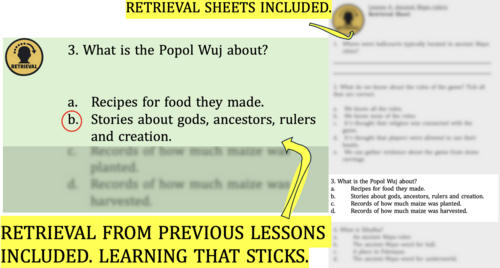
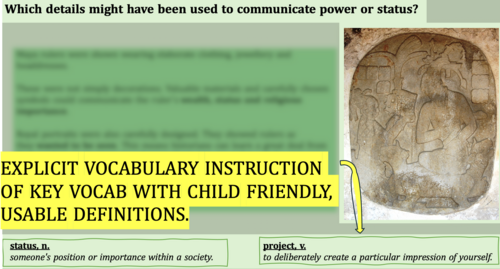
Each lesson combines an accessible student reader with high-quality historical sources, explicit vocabulary instruction and regular retrieval opportunities.
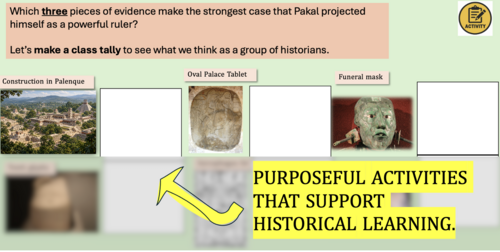
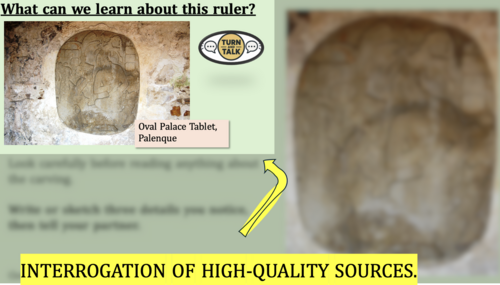
Activities encourage pupils to think like historians: examining evidence, making inferences, asking questions and connecting new learning to prior knowledge.
Lesson 4 introduces the following key knowledge:
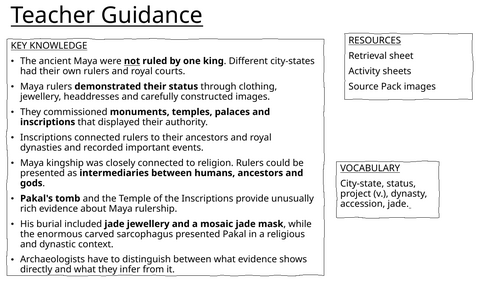
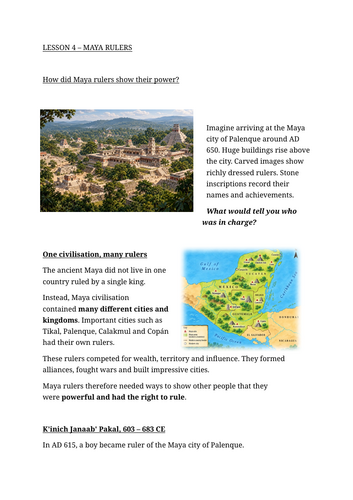
-The ancient Maya were not ruled by one king. Different city-states had their own rulers and royal courts.
-Maya rulers demonstrated their status through clothing, jewellery, headdresses and carefully constructed images.
-They commissioned monuments, temples, palaces and inscriptions that displayed their authority.
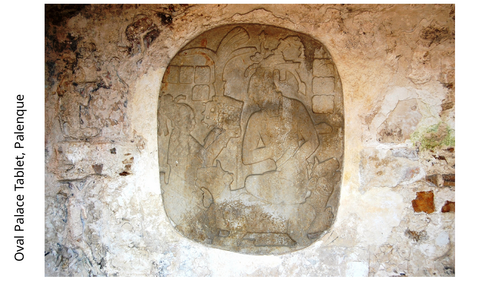
-Inscriptions connected rulers to their ancestors and royal dynasties and recorded important events.
-Maya kingship was closely connected to religion. Rulers could be presented as intermediaries between humans, ancestors and gods.
-Pakal’s tomb and the Temple of the Inscriptions provide unusually rich evidence about Maya rulership.
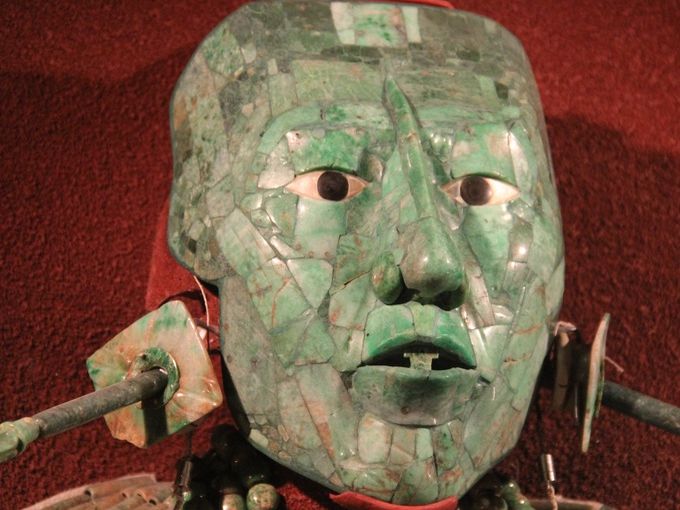
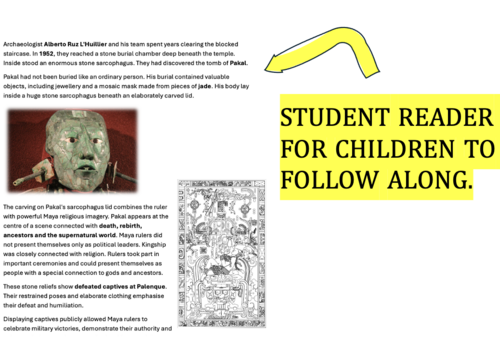
-His burial included jade jewellery and a mosaic jade mask, while the enormous carved sarcophagus presented Pakal in a religious and dynastic context.
-Archaeologists have to distinguish between what evidence shows directly and what they infer from it.
Something went wrong, please try again later.
This resource hasn't been reviewed yet
To ensure quality for our reviews, only customers who have purchased this resource can review it
Report this resourceto let us know if it violates our terms and conditions.
Our customer service team will review your report and will be in touch.
£3.00