


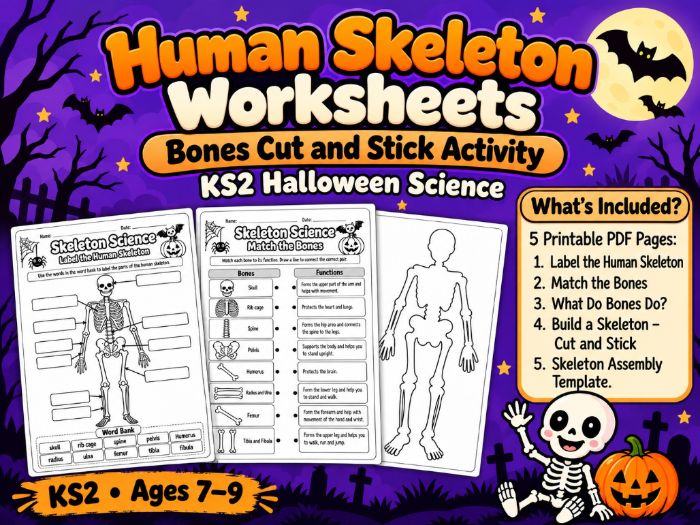
Human Skeleton Worksheets | Bones Cut and Stick Activity | KS2 Halloween Science
Make learning about the human skeletal system fun and engaging with this 5-page Human Skeleton Science Activity Pack, featuring Halloween-themed illustrations and hands-on learning activities!
What’s Included?
5 Printable PDF Pages:
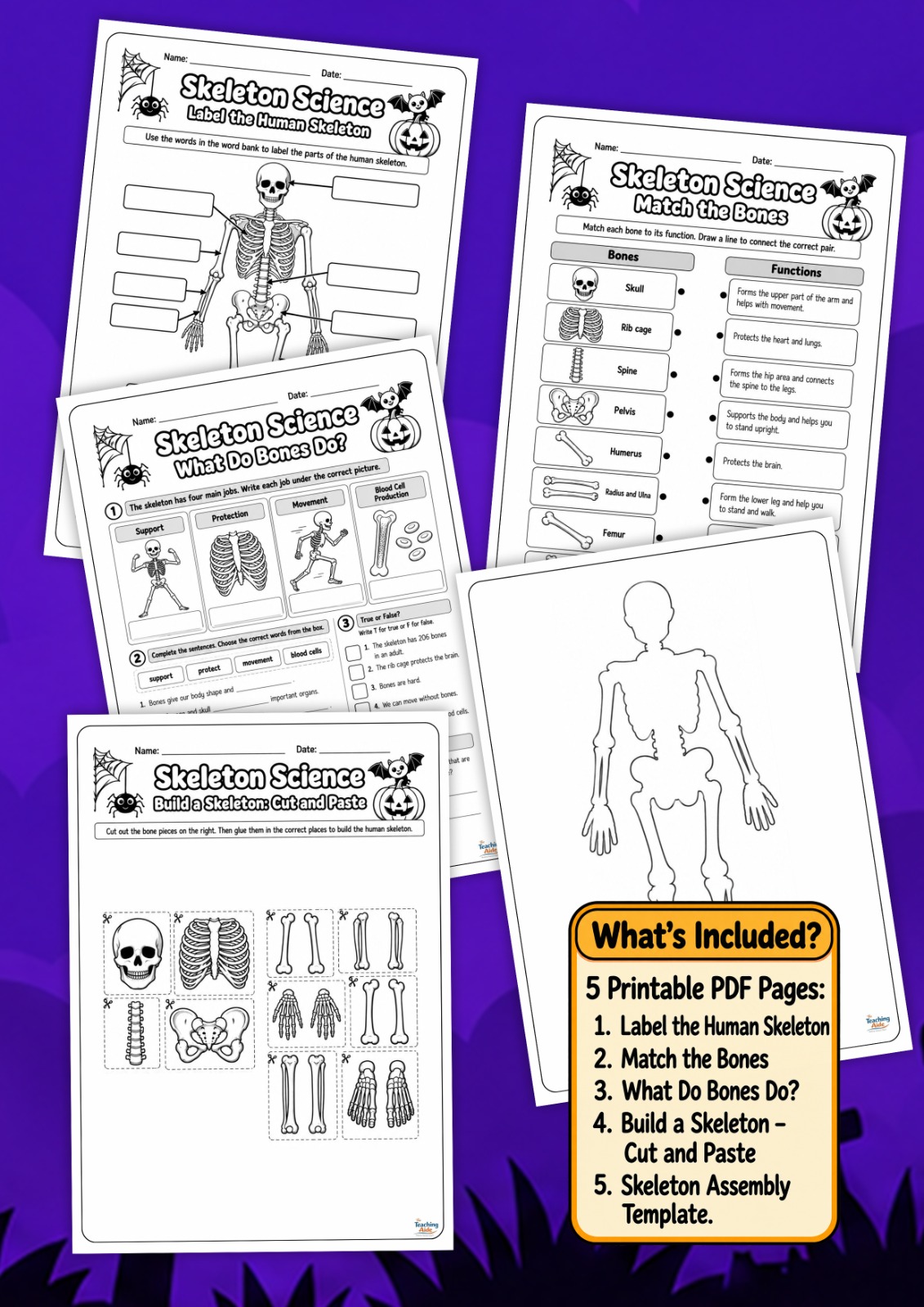
- Label the Human Skeleton
Identify and label 10 major bones and skeletal structures.
Use the word bank to complete the skeleton diagram.
Develop scientific vocabulary and anatomical awareness.
- Match the Bones
Match eight bones and skeletal structures to their correct functions.
Explore how bones support the body, protect organs and help us move.
- What Do Bones Do?
Explore the four main functions of the skeletal system: support, protection, movement and blood cell production.
Complete missing-word sentences.
Answer true-or-false questions.
Develop scientific reasoning through short-answer questions.
Complete a bonus question about organs protected by the rib cage.
- Build a Skeleton – Cut and Stick
Cut out the different skeletal parts.
Identify and arrange the bones in the correct positions.
Develop fine motor skills through a practical activity.
- Human Skeleton Template
Use the body outline to assemble a complete skeleton.
Stick the cut-out bones in the correct positions to create a human skeleton model.
Learning Objectives
Children will:
Identify major bones of the human skeleton.
Understand the main functions of the skeletal system.
Recognise how bones protect vital organs.
Explain how bones and muscles work together to support movement.
Learn that bone marrow produces blood cells.
Use scientific vocabulary to describe bones and their functions.
Build a model of the human skeleton.
Curriculum Links – England
Key Stage 2 – Year 3 Science
Animals, Including Humans
This resource supports the National Curriculum objective:
Identify that humans and some other animals have skeletons and muscles for support, protection and movement.
It also supports scientific vocabulary development, observation and communication of scientific understanding.
Something went wrong, please try again later.
This resource hasn't been reviewed yet
To ensure quality for our reviews, only customers who have purchased this resource can review it
Report this resourceto let us know if it violates our terms and conditions.
Our customer service team will review your report and will be in touch.
£2.00