


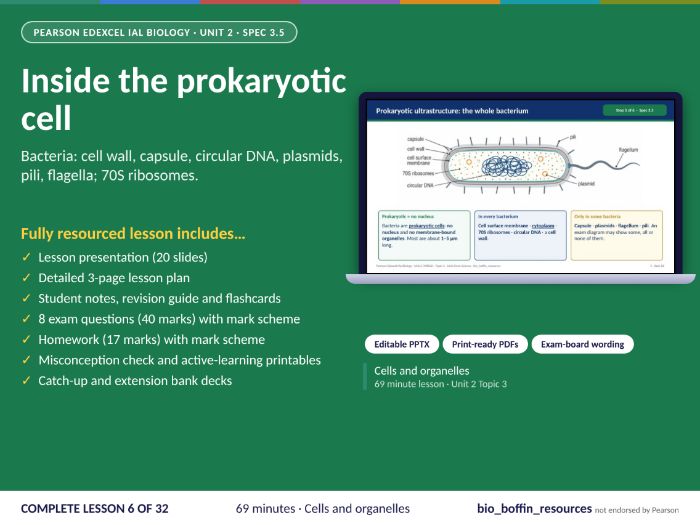
Complete Edexcel IAL Biology lesson (spec 3.5): the structures inside a bacterium and what each one does, with 70S ribosomes. Ready to teach, no prep.
Lesson 6 of 32 · Topic 3 · Unit 2 (WBI12) · Spec 3.5 · 69 minutes
The question this lesson answers: what is inside a bacterial cell, and how does each part help it survive?
By the end, students can
- Describe the cell wall, capsule, circular DNA, plasmids, flagellum, pili and 70S ribosomes of a prokaryotic cell.
- State the function of each structure, and explain why “prokaryotes have no DNA” and “prokaryotes have no organelles” are both wrong.
- Compare prokaryotic and eukaryotic cells using “both” and “whereas”.
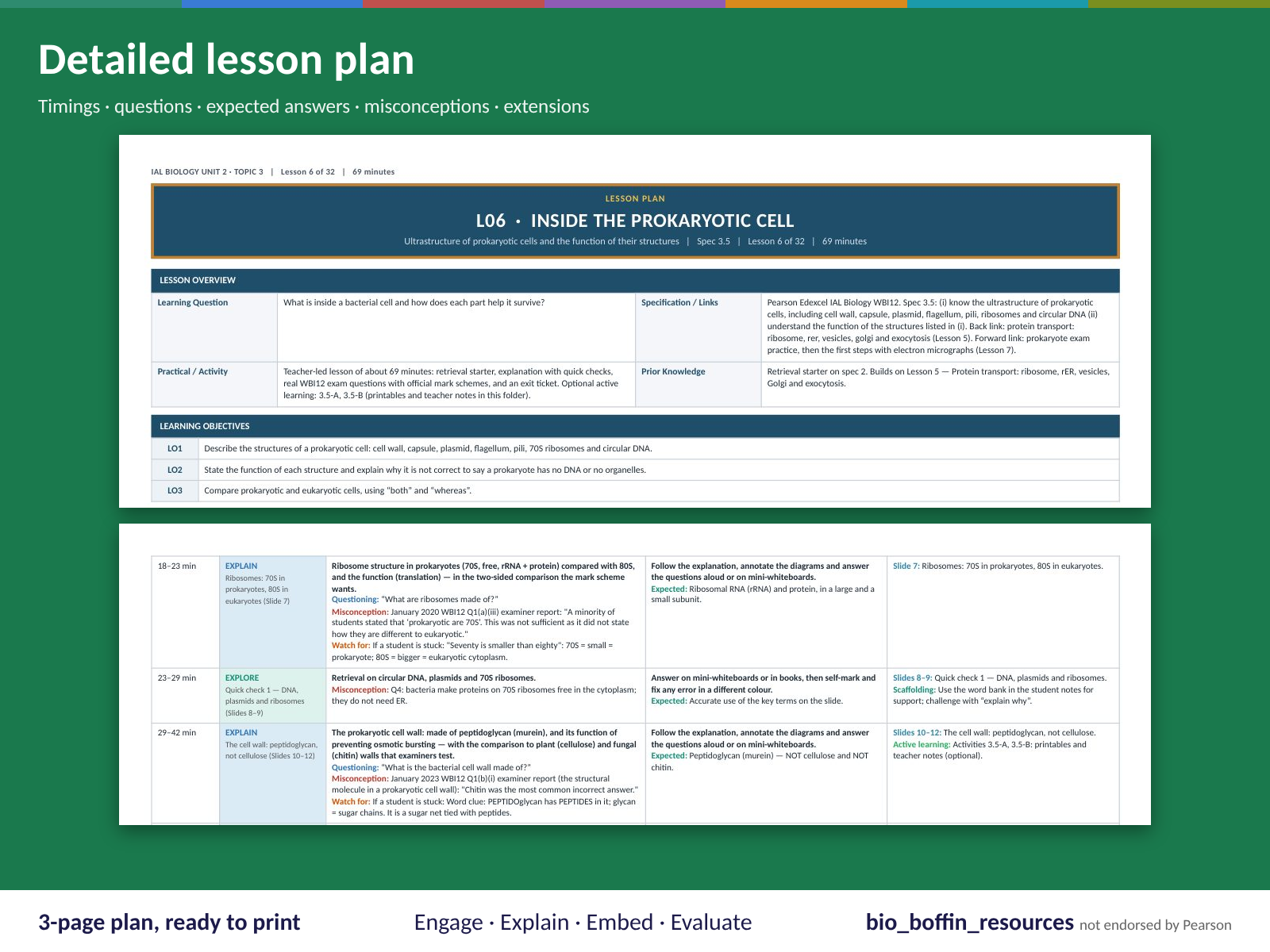
How the 20-slide lesson runs
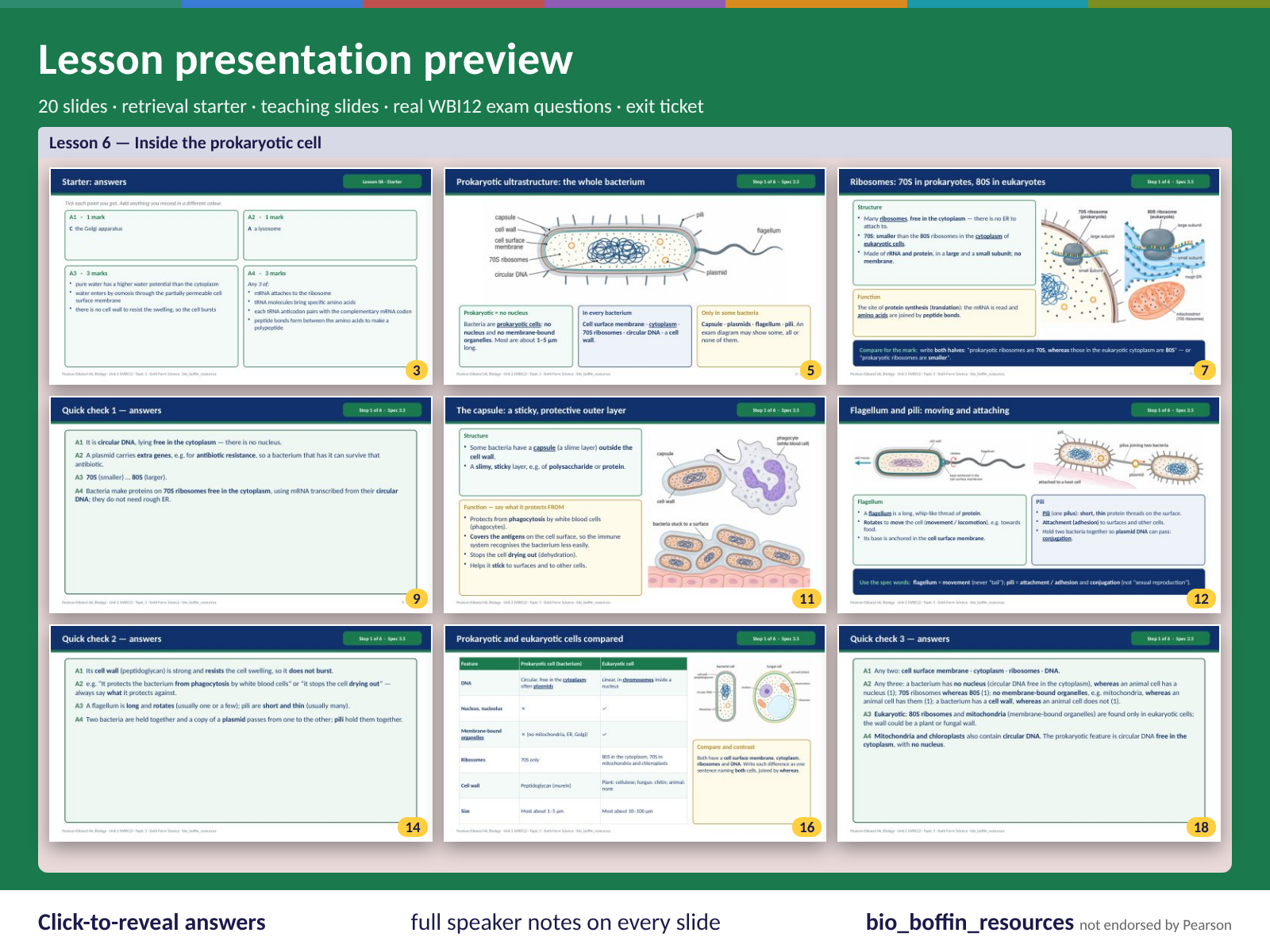
A retrieval starter, then the whole bacterium on one slide. Genetic material (circular DNA and plasmids) and ribosomes (70S in prokaryotes, 80S in eukaryotes) come first, followed by the first quick check. The cell wall (peptidoglycan, not cellulose), the capsule, and the flagellum and pili form the second block with its own quick check. A “seven structures at a glance” slide and a prokaryotic v eukaryotic comparison lead into the third quick check. All quick checks have answers on the next slide. An exit ticket closes the lesson.
Marks students usually lose here
- Saying the bacterial cell wall is made of cellulose (it is peptidoglycan).
- Writing “no DNA” or “no nucleus, so no genetic material” instead of circular DNA lying free in the cytoplasm.
- Describing the flagellum and pili as doing the same job (moving v attaching).
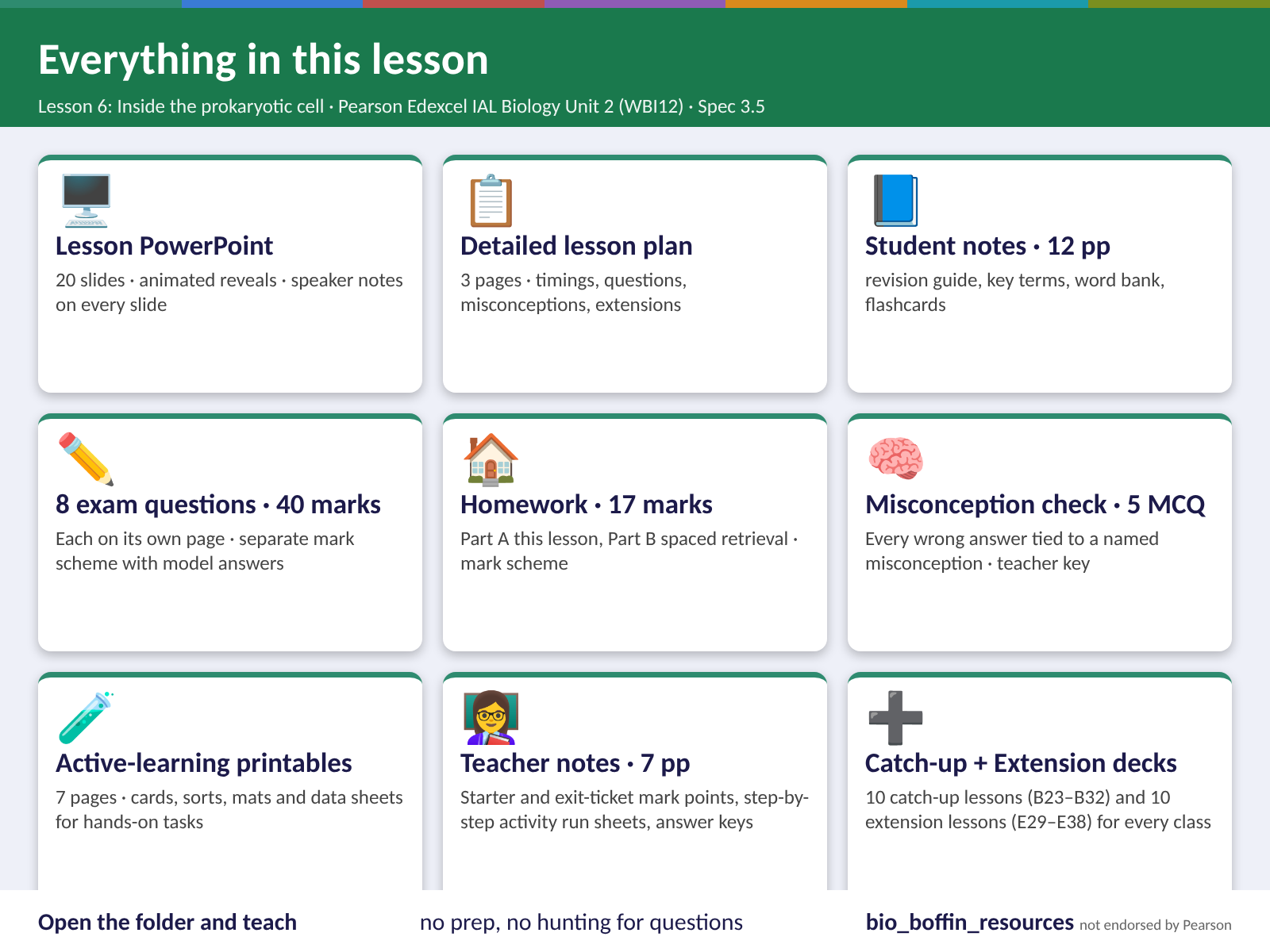
In the folder (13 files)
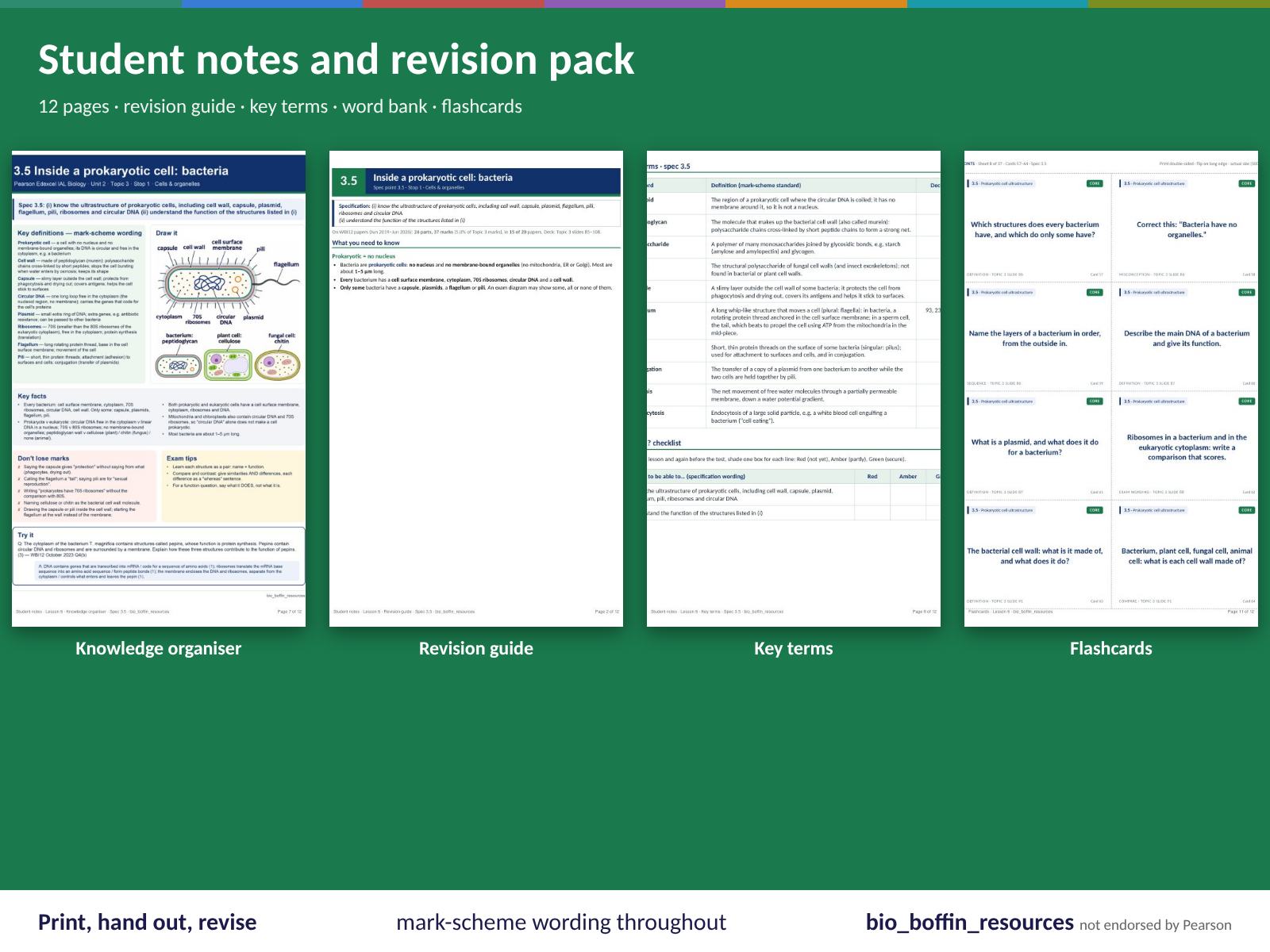
- PowerPoint, 3-page lesson plan and 12-page student notes with a one-page knowledge organiser
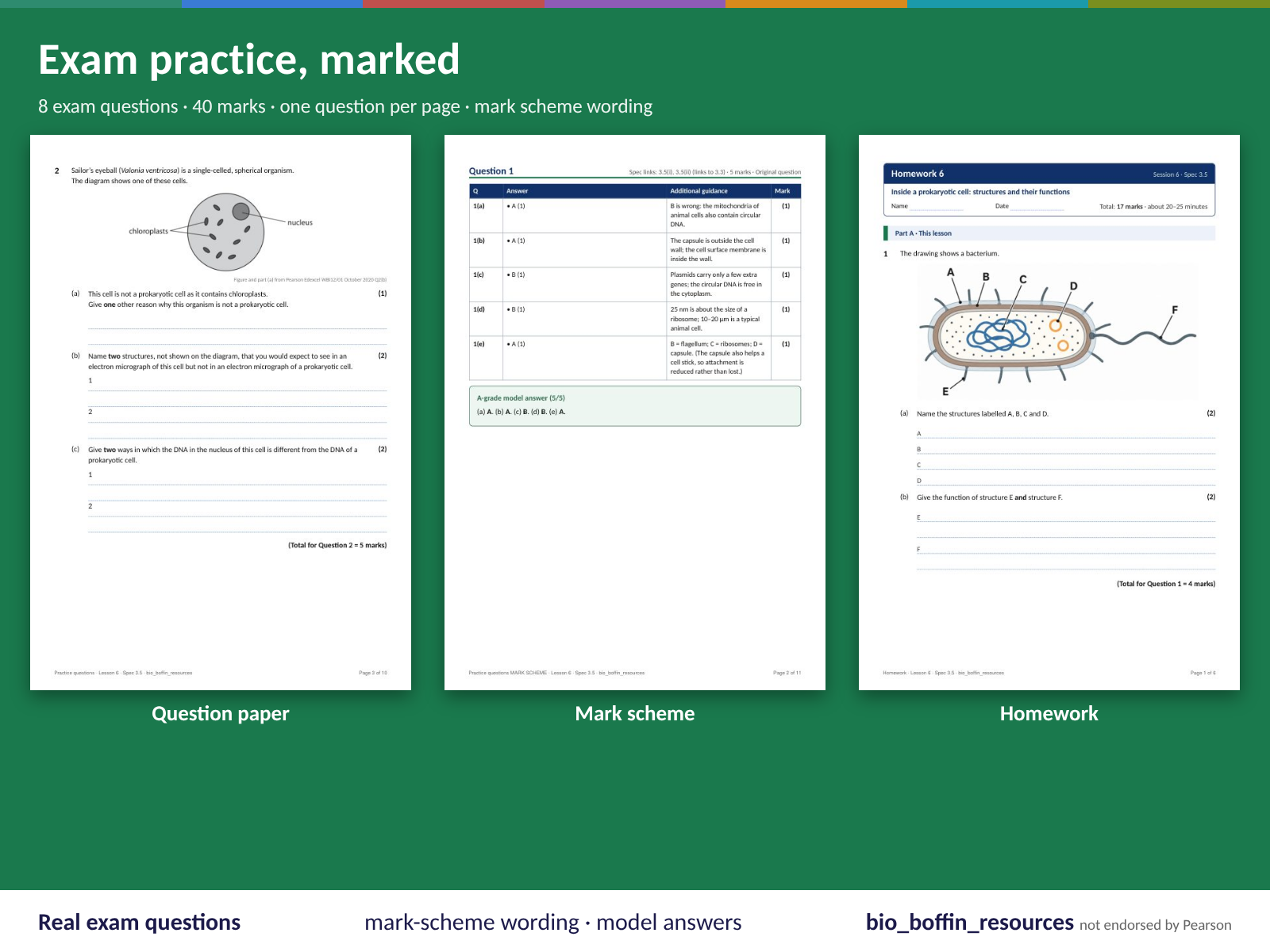
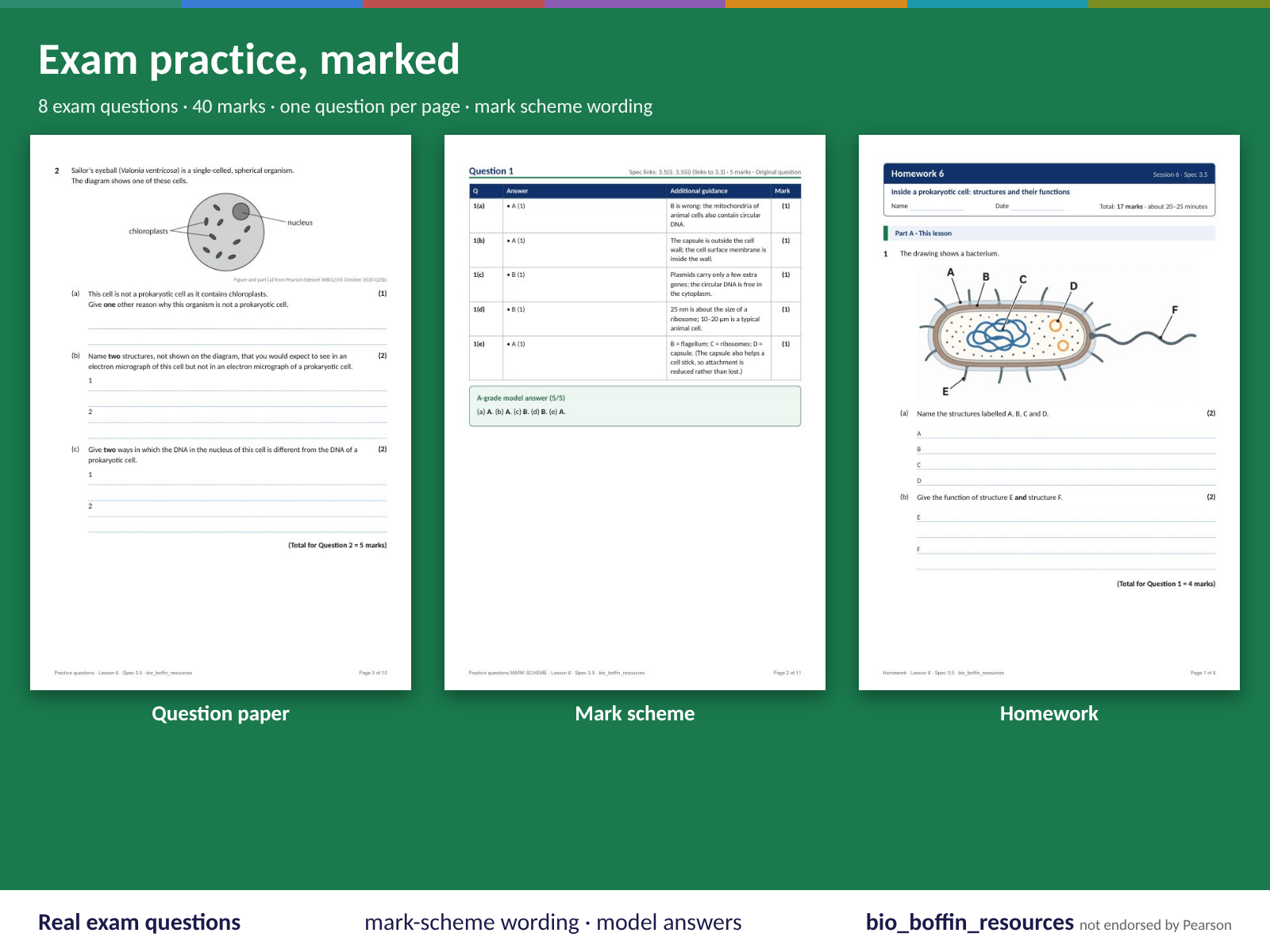
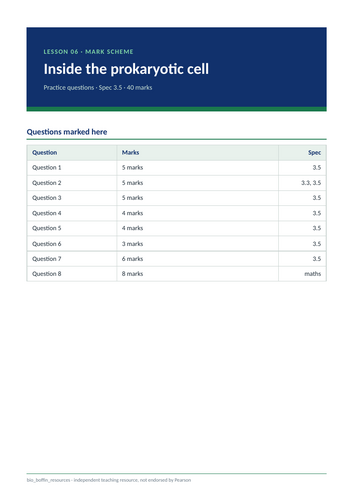
- 8 practice questions (40 marks) and mark scheme, each question on its own page
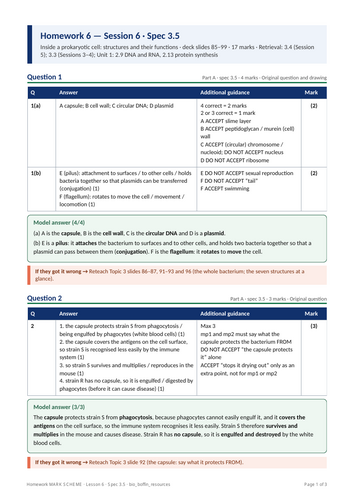
- 17-mark homework (label a bacterium, why a capsule causes disease, plasmid transfer of antibiotic resistance) with mark scheme
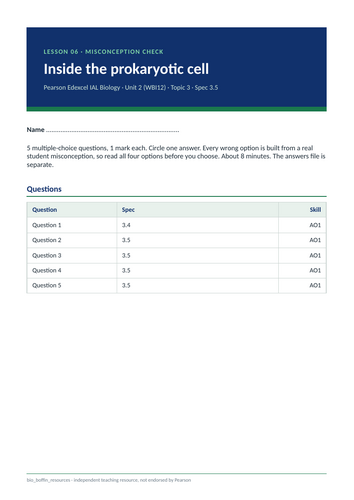
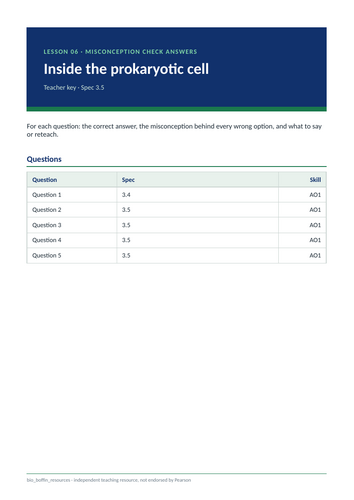
- 5-question misconception check with teacher key
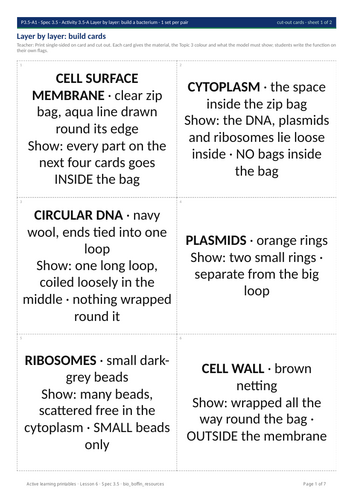
- 7 pages of active-learning printables: Layer by layer (build a bacterium) and Prokaryote, eukaryote or both? (the evidence sort)
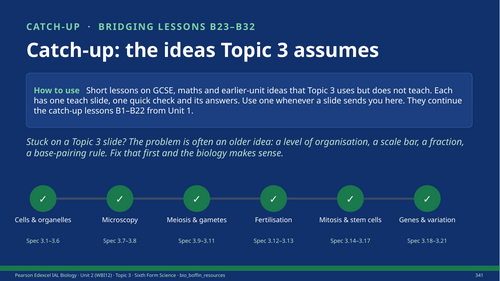
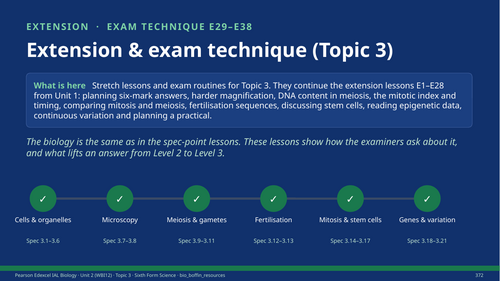
- 7 pages of teacher notes (starter and exit mark points, a step-by-step run sheet for every active-learning activity, answer keys), plus catch-up and extension bank decks
Follows Lesson 5 (rough ER and Golgi); Lesson 7 is exam practice on prokaryotes. The full 32-lesson Topic 3 bundle is in my shop.
An independent resource by bio_boffin_resources, written by a Biology teacher with 10 years’ experience in a leading international school. Not endorsed by Pearson.
Something went wrong, please try again later.
This resource hasn't been reviewed yet
To ensure quality for our reviews, only customers who have purchased this resource can review it
Report this resourceto let us know if it violates our terms and conditions.
Our customer service team will review your report and will be in touch.
£5.00