


IGCSE Physics: Terminal Velocity | Edexcel Modular | Unit 1 | L13
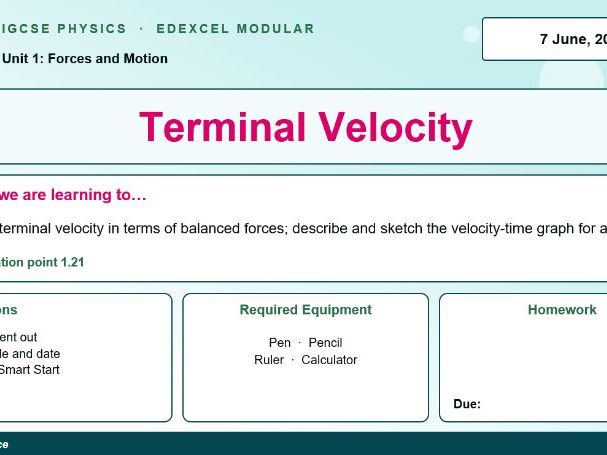
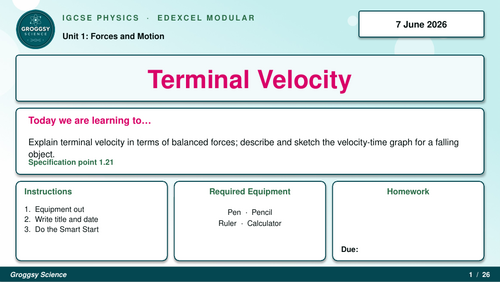
This lesson covers spec point 1.21 — describing the forces acting on falling objects and explaining why falling objects reach a terminal velocity.
PowerPoint includes:
• Retrieval starter reviewing resultant force, F = ma and W = mg
• Direct Instruction (I Do) — forces on a falling object introduced: weight (down) and air resistance (up); three-stage model explained: initial acceleration (weight > air resistance); decreasing acceleration (air resistance increases with speed); terminal velocity (weight = air resistance, resultant = 0 N); parachutist opening parachute as extension
• Guided Practice (We Do) — describe forces at each stage of fall; explain why acceleration decreases as speed increases; sketch a velocity–time graph for a falling object reaching terminal velocity
• Independent Practice (You Do) — extended explanation questions; VT graph analysis for a skydiver with and without a parachute
• Review and Reflect — 3 MCQs and exit ticket
Activity Sheet includes:
• Three-stage free body diagram sequence (accelerating, still accelerating but less, terminal velocity)
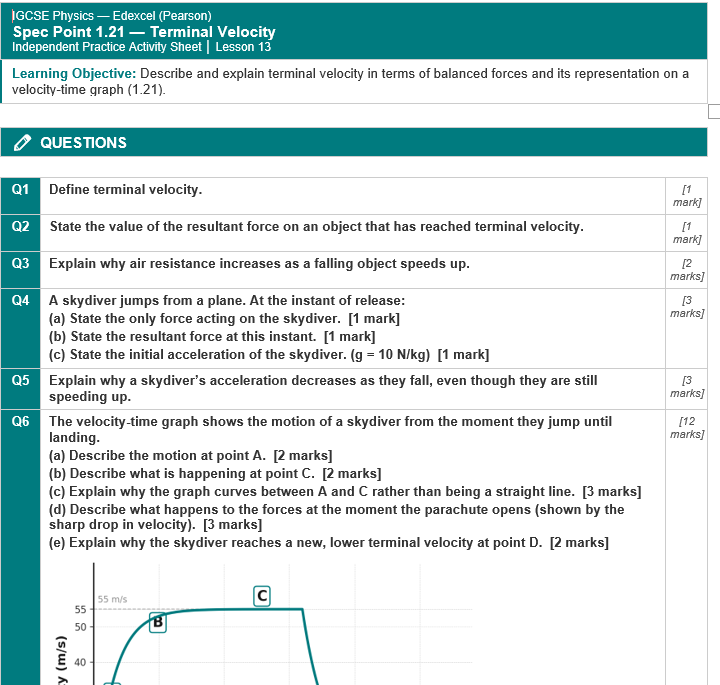
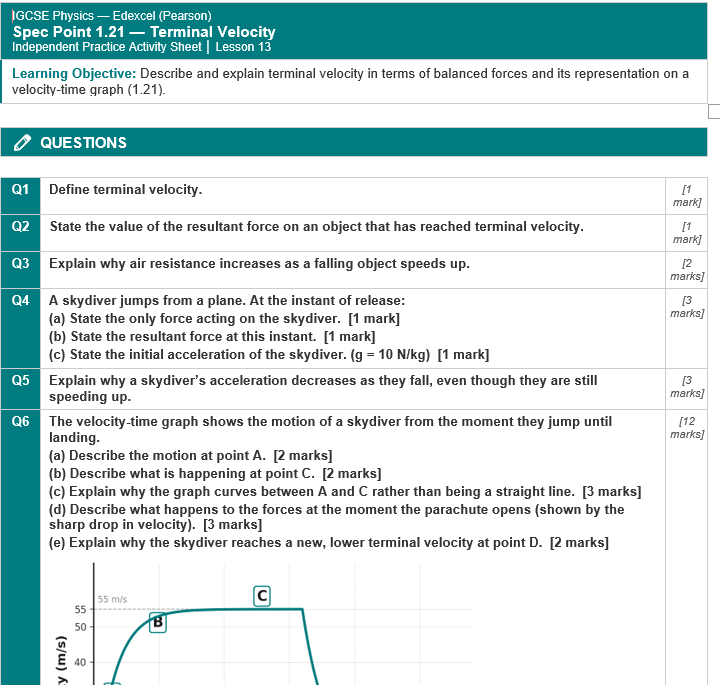
• 10 exam-style questions on forces, terminal velocity explanations and VT graph interpretation
• Stretch question analysing the full VT graph of a skydiver who opens their parachute mid-fall, including the new lower terminal velocity
• Full mark scheme for teacher use
Something went wrong, please try again later.
This resource hasn't been reviewed yet
To ensure quality for our reviews, only customers who have purchased this resource can review it
Report this resourceto let us know if it violates our terms and conditions.
Our customer service team will review your report and will be in touch.
£1.99