


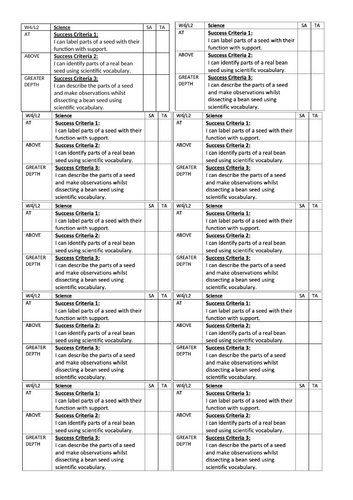
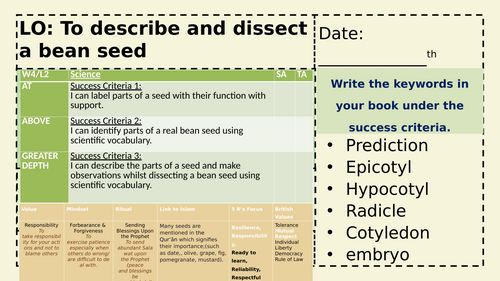

This Dissecting a Bean Seed PowerPoint is a complete, hands-on KS2 science lesson that teaches students how to identify, label and explore the internal parts of a seed through scientific observation and practical investigation. It introduces and reinforces key vocabulary including epicotyl, hypocotyl, radicle, cotyledon and embryo, with space for pupils to record these under clear success criteria.
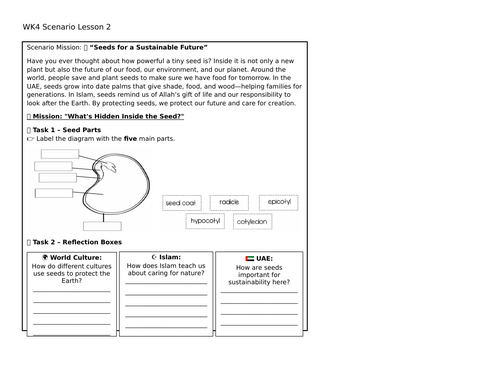
The lesson begins with a meaningful scenario—“Seeds for a Sustainable Future”—linking seed study to global food security, UAE culture, and Islamic teachings about caring for creation. This helps students understand why seeds matter in the real world, from date palms in the UAE, to rice fields in Asia and Indigenous seed-saving traditions worldwide.
The resource includes structured tasks such as:
Task 1: Labelling a diagram with the five main seed parts
Task 2: Reflection prompts connecting science to culture, sustainability and religion
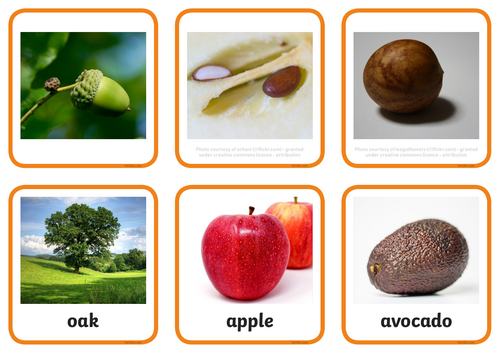
A matching activity (boss and employee) to reinforce identification of seeds
A prediction task and WAGOLL to model scientific thinking
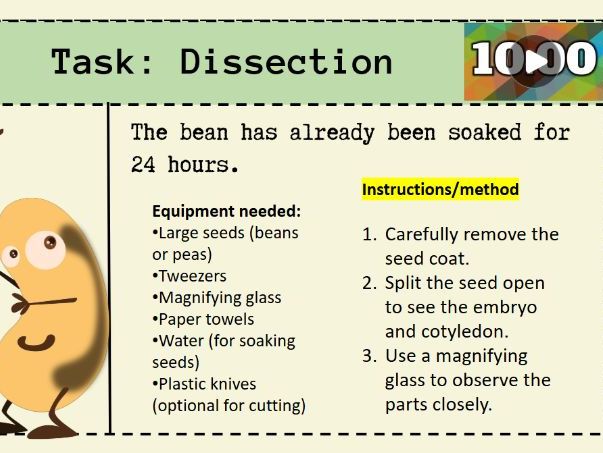
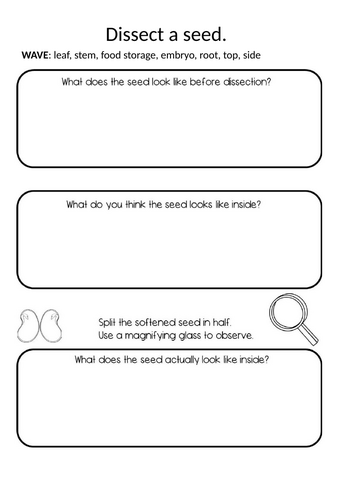
Students are then guided through a full seed dissection. The PowerPoint provides:
equipment lists
step-by-step instructions
observation prompts (texture, colour, seed coat, embryo, cotyledon)
key questions to support scientific enquiry
opportunities to compare predictions with real results
Visuals and a linked video help students understand how to safely dissect a soaked bean seed, identify its parts and record accurate observations using scientific vocabulary.
A results section guides pupils to reflect on what they discovered, how the seed coat protects the seed, and what a seed needs to grow. The lesson ends with a plenary and self-assessment opportunity. It also introduces the next lesson on germination and testing different growing conditions, providing excellent continuity.
This resource is ideal for KS2 plants, life cycles, or scientific enquiry units. It supports practical investigation, cross-curricular learning, sustainability links, and vocabulary development, with minimal teacher preparation required.
Something went wrong, please try again later.
This resource hasn't been reviewed yet
To ensure quality for our reviews, only customers who have purchased this resource can review it
Report this resourceto let us know if it violates our terms and conditions.
Our customer service team will review your report and will be in touch.
£2.00