


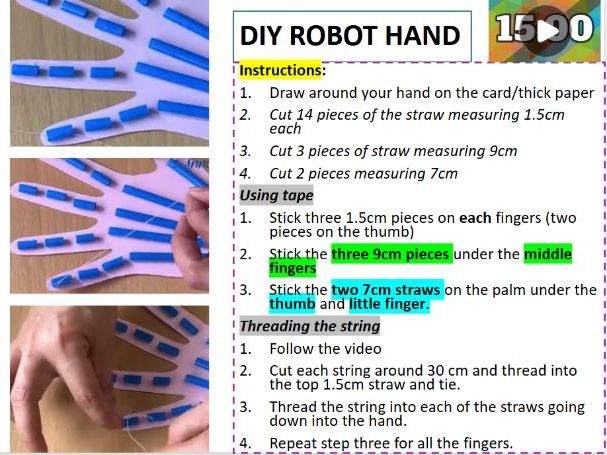
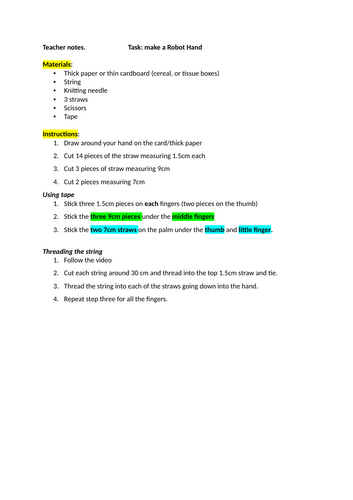
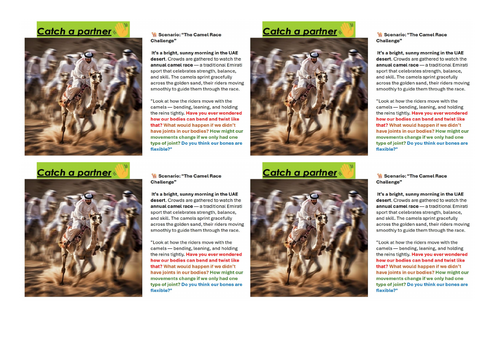


This Skeleton and Movement Investigation resource is a KS2 science lesson designed to help pupils understand how bones and joints work together to allow the human body to move. The lesson uses a practical, hands-on approach to build knowledge of the skeletal system.
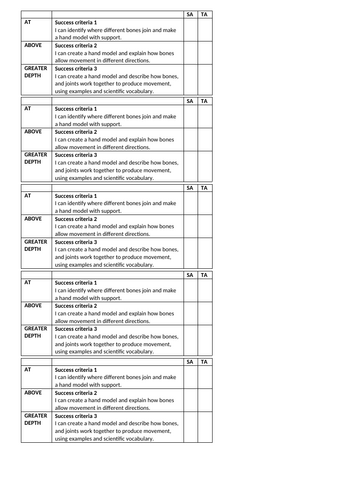
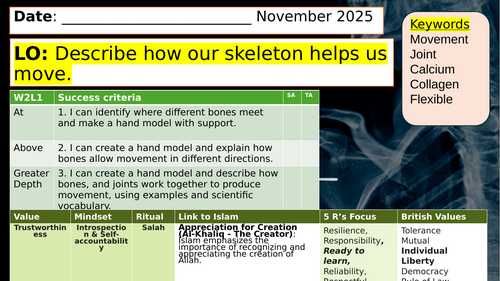
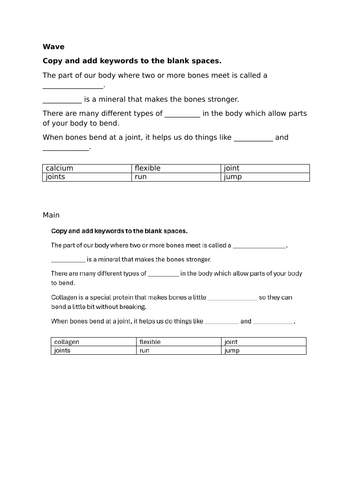
Pupils begin by identifying where different bones meet, exploring simple joint locations, and creating a basic hand model with support. This introduces the idea that bones connect at joints and that these connections enable movement.
As pupils gain confidence, they move on to independently creating a hand model and explaining how bones allow movement in different directions. This strengthens their understanding of how the skeleton provides structure, flexibility and protection.
For deeper learning, pupils extend their explanations by describing how bones and joints work together to produce movement, using scientific vocabulary such as hinge joint, tendons, phalanges, and flexion. They provide clear examples of movements, helping them link model-making to real human biology.
This resource is ideal for KS2 units on Animals Including Humans, supporting practical exploration, model-building, and clear scientific explanation.
Something went wrong, please try again later.
This resource hasn't been reviewed yet
To ensure quality for our reviews, only customers who have purchased this resource can review it
Report this resourceto let us know if it violates our terms and conditions.
Our customer service team will review your report and will be in touch.
£2.00