

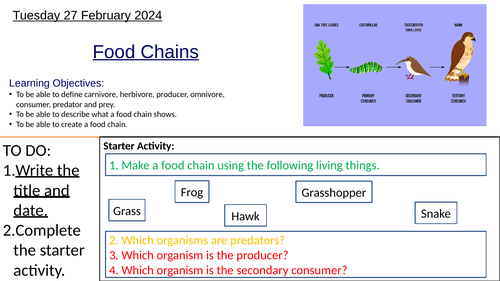

This PowerPoint resource provides an engaging introduction to food chains, the transfer of energy in ecosystems, and the roles of organisms within these chains. Designed for middle school science classes, it emphasizes understanding fundamental ecological relationships and energy flow.
Key learning objectives:
- Defining key terms such as producer, consumer, herbivore, carnivore, omnivore, predator, and prey.
- Describing what a food chain represents and understanding the direction of energy transfer.
- Creating food chains and identifying the roles of different organisms within them.
Resource features:
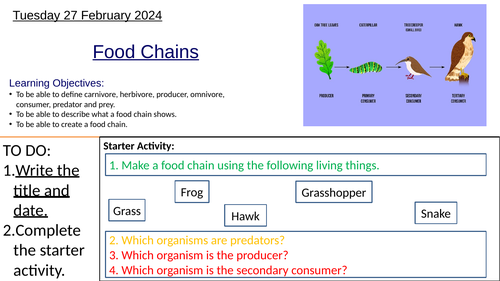
The lesson begins with a starter activity where students build a food chain using specific organisms (e.g., grass, grasshopper, frog, snake, hawk) and answer questions about the roles of these organisms. Key concepts are introduced with clear explanations and examples:
What is a Food Chain?
Explains how food chains show the transfer of energy from one organism to another, starting with producers and moving through various consumer levels.
Roles in the Food Chain:
Detailed definitions and examples of producers (e.g., grass), primary consumers (e.g., grasshopper), secondary consumers (e.g., frog), tertiary consumers, and top predators (e.g., hawk).
Arrows in Food Chains:
Emphasizes that arrows show the direction of energy flow, not who eats whom.
Interactive tasks include:
- Identifying and labeling roles in given food chains.
- Completing diagrams by adding appropriate arrows and organisms.
- Matching ecological terms with their definitions.
- Creating a custom food chain, including humans, and labeling each component’s role.
The plenary encourages students to reflect on the day’s learning objectives, ensuring they can define key terms, describe the purpose of a food chain, and construct their own examples.
File details:
This editable ‘.pptx’ file aligns with middle school science curricula. It includes structured explanations, real-world examples, and interactive tasks, making it an essential resource for teaching food chains and energy flow in ecosystems.
Something went wrong, please try again later.
This resource hasn't been reviewed yet
To ensure quality for our reviews, only customers who have purchased this resource can review it
Report this resourceto let us know if it violates our terms and conditions.
Our customer service team will review your report and will be in touch.
£2.00