


Use pupils’ natural interest in dogs to explore genetics, inheritance, selective breeding and health in a relatable real-world context.
This complete 3-lesson Key Stage 3 Science unit is designed for Years 7–9 (ages 11–14) and links directly to Biology topics within Genetics and Evolution.
Using familiar dog breeds and characteristics as examples, pupils move from the basic principles of genetic inheritance through selective breeding and breed development to the ways breeding choices can influence health and welfare.
The unit uses British English throughout and includes PowerPoints, teacher lesson plans and pupil workbooks for all three lessons. Workbooks are supplied in printable and fillable versions.
Lesson 1: Genes, Alleles and Inheritance
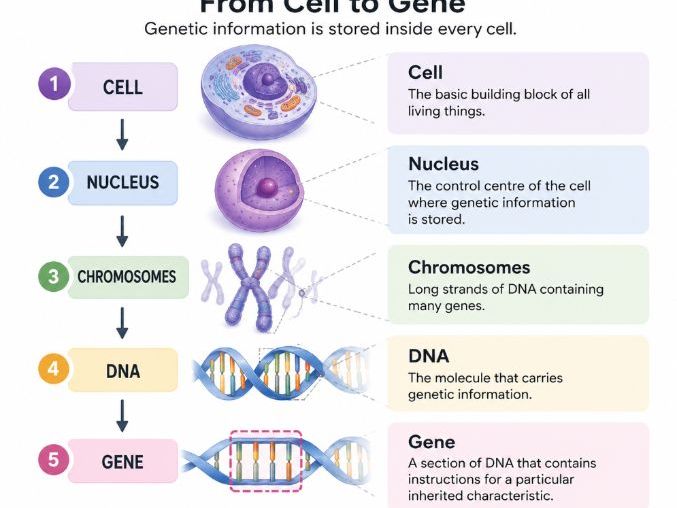
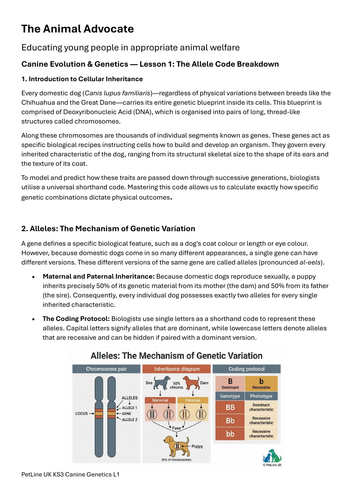
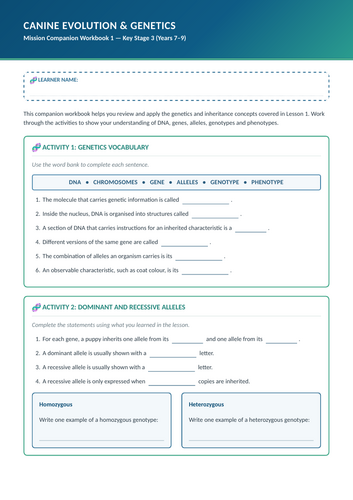
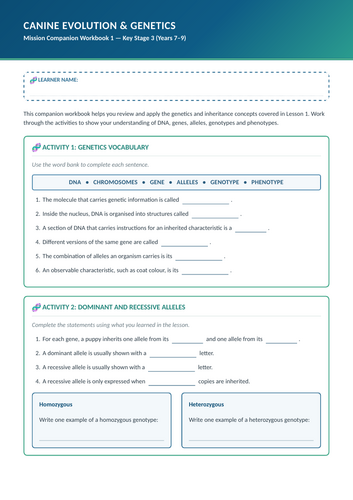
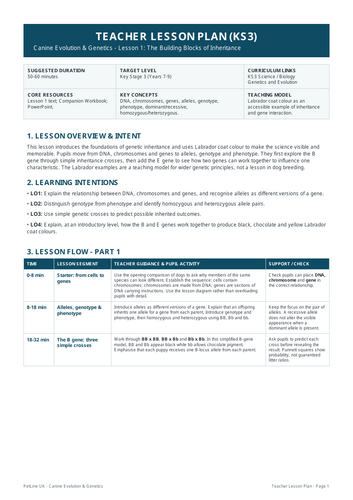
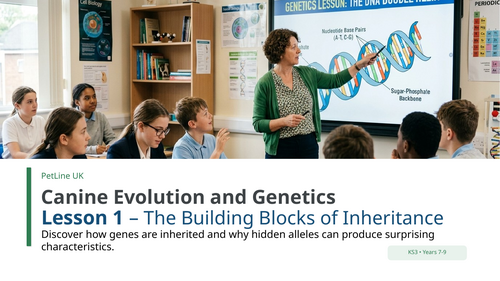
Introduces DNA, chromosomes, genes and alleles before using Labrador coat colour as a practical model for inheritance. Pupils explore dominant and recessive alleles, genotype and phenotype, and distinguish between homozygous dominant, heterozygous and homozygous recessive genotypes.
Lesson 2: Selective Breeding and the Development of Dog Breeds
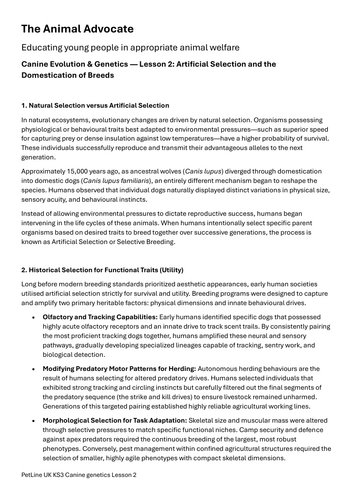
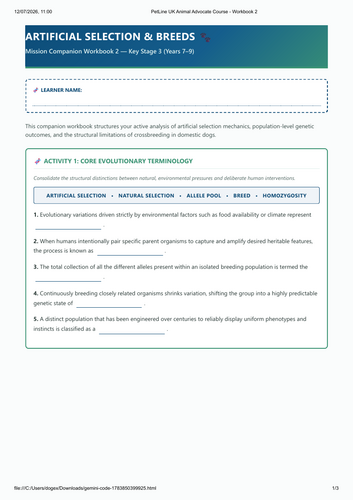
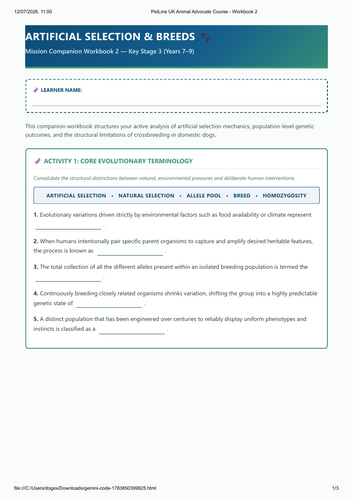
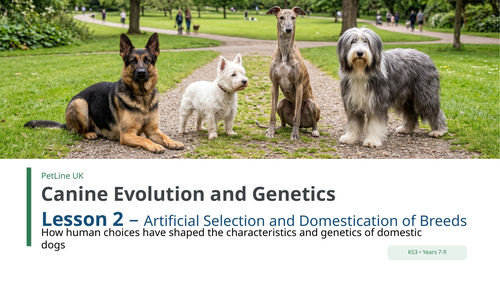
Explores the difference between natural selection and artificial selection and considers how humans have selectively bred dogs for useful characteristics and particular roles. Pupils investigate how repeated selection changes populations over generations, including changes in allele frequency, genetic diversity and the development of recognisable breed characteristics.
Lesson 3: Breeding for Health
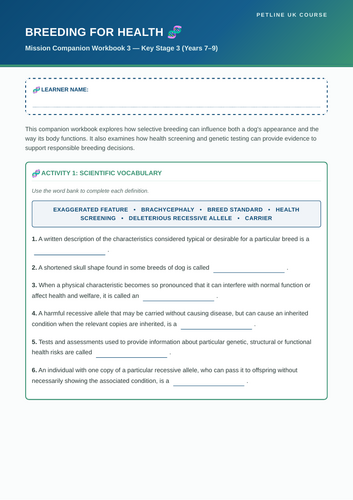
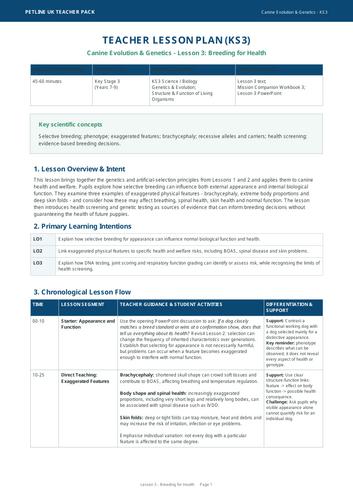
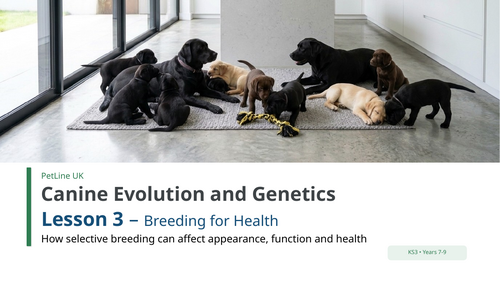
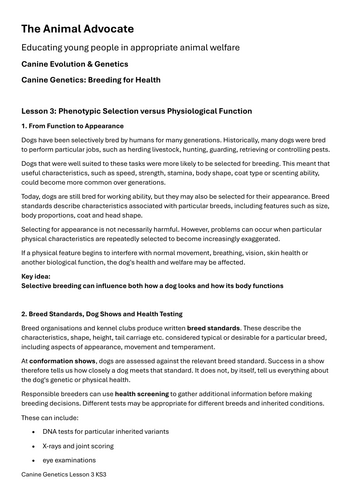
Examines how selective breeding can influence both appearance and biological function. Pupils investigate exaggerated features including brachycephaly, body proportions and skin folds, considering their possible effects on breathing, spinal health, skin health and welfare.
The lesson then introduces DNA testing, joint scoring and respiratory function grading, showing how health information can help breeders make informed decisions and reduce avoidable risks. Pupils also learn an important scientific distinction: health screening provides evidence about risk but cannot guarantee that every puppy will be healthy.
What is included:
3 PowerPoint presentations — one for each lesson
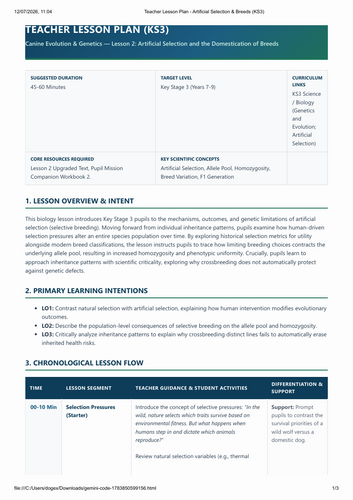
3 Teacher Lesson Plans — with lesson structure, curriculum links, key teaching points, misconceptions and answer guidance
3 Pupil Companion Workbooks — structured activities including vocabulary, genetics tasks, case studies and applied scientific reasoning
Fillable versions of all pupil workbooks for on-screen completion
Printable versions for classroom use
Curriculum links:
Key Stage 3 Science — Biology: Genetics and Evolution, with links to Structure and Function of Living Organisms.
Suitable as a complete three-lesson unit or as individual lessons to support existing teaching on inheritance, selective breeding, genetics and animal health.
Get this resource as part of a bundle and save up to 58%
A bundle is a package of resources grouped together to teach a particular topic, or a series of lessons, in one place.
Something went wrong, please try again later.
This resource hasn't been reviewed yet
To ensure quality for our reviews, only customers who have purchased this resource can review it
Report this resourceto let us know if it violates our terms and conditions.
Our customer service team will review your report and will be in touch.
£5.99