


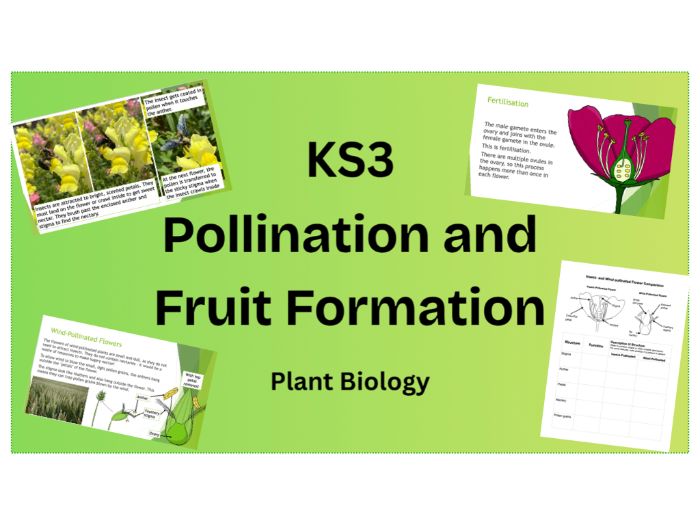
This Powerpoint and worksheet introduce the structure of insect-pollinated and wind-pollinated flowers followed by fertilisation in plants and the formation of fruits at a level suitable for KS3 science students.
This lesson follows on from the KS3 Flower Structure and Dissection lesson, though can be used separately as part of a unit on the lifecycle of a plant or plant reproduction.
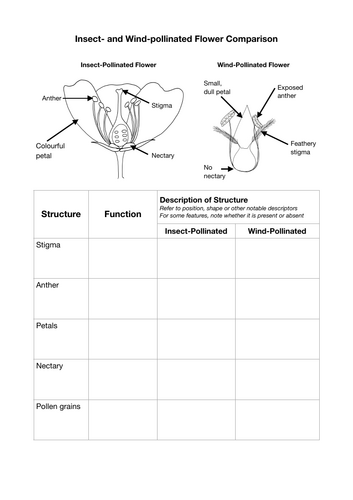
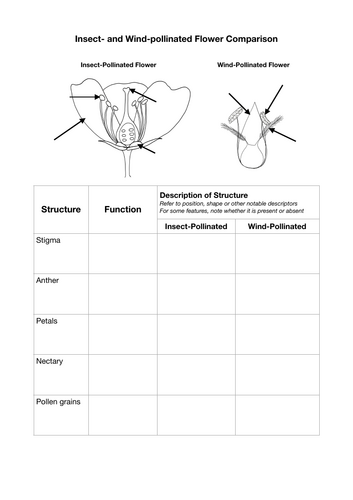
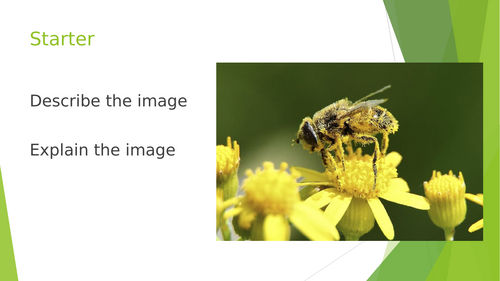
The lesson comes with a starter, worksheet with comparison diagrams for insect- and wind-pollinated flowers, and a plenary. The main focus of the lesson is on recognising the difference between wind- and insect-pollinated flowers, but the process of fertilisation is covered at the level of detail needed for KS3 science, and the formation of fruits and seeds is introduced.
This lesson can be teacher-led or more independent if slides are shared with students to work through as a comprehension task. It has been designed to be accessible for students with low-level English with the use of large images and diagrams. There are two versions of the worksheet depending on the level of support/challenge needed in your classroom.
This material covers the following specification point from the UK KS3 science curriculum:
- reproduction in plants, including flower structure, wind and insect pollination, fertilisation, seed and fruit formation and dispersal, including quantitative investigation of some dispersal mechanisms
To view (free) examples of my lessons, take a look at the following:
KS3 Plant Structure
KS3 Photosynthesis
KS3 Classification in Plants
Get this resource as part of a bundle and save up to 30%
A bundle is a package of resources grouped together to teach a particular topic, or a series of lessons, in one place.
Something went wrong, please try again later.
This resource hasn't been reviewed yet
To ensure quality for our reviews, only customers who have purchased this resource can review it
Report this resourceto let us know if it violates our terms and conditions.
Our customer service team will review your report and will be in touch.
£2.00