



Pupils explain static charge, build and measure series and parallel circuits, calculate resistance, map magnetic fields and make and use electromagnets.
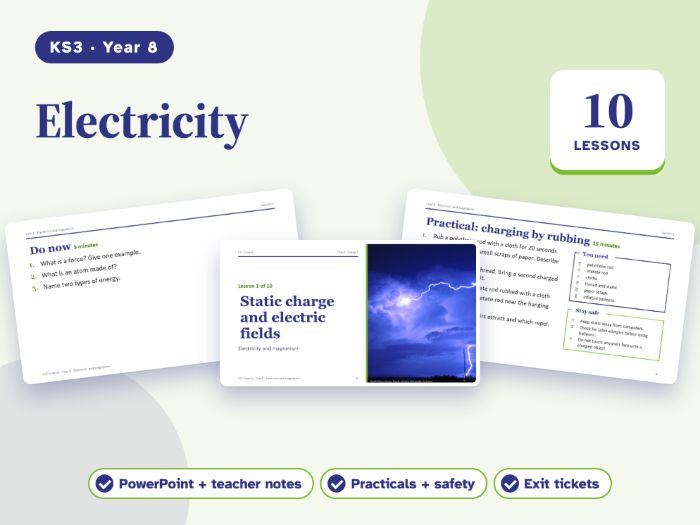
10 complete lessons for Year 8, ready to teach as editable PowerPoint.
The lessons
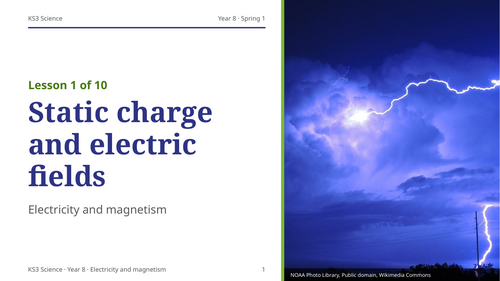
- Static charge and electric fields: Explain static charge and forces between charges.
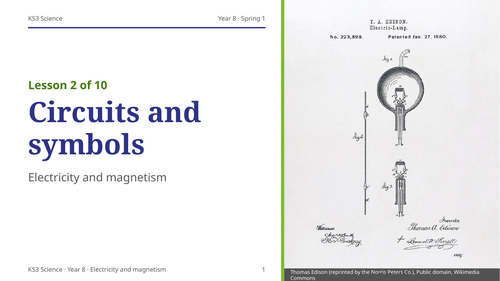
- Circuits and symbols: Draw circuit diagrams with standard symbols and build them.
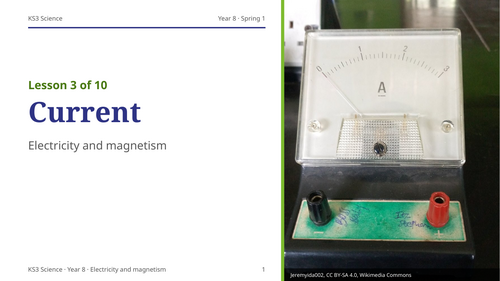
- Current: Measure current with an ammeter.
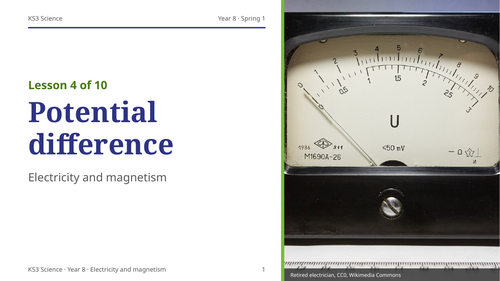
- Potential difference: Measure potential difference with a voltmeter.
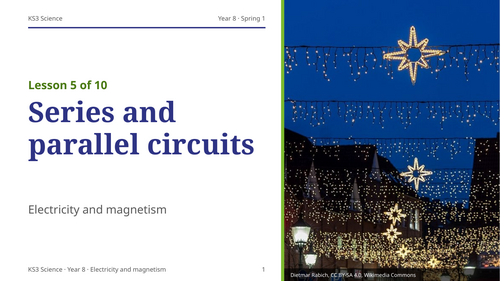
- Series and parallel circuits: Compare current and brightness in series and parallel circuits.
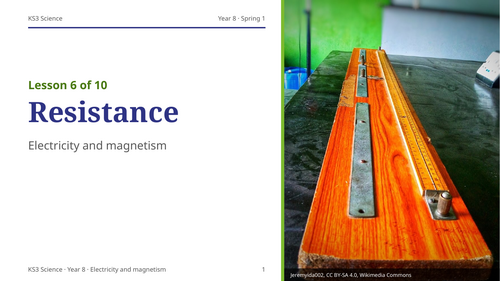
- Resistance: Calculate resistance and investigate how wire length affects it.
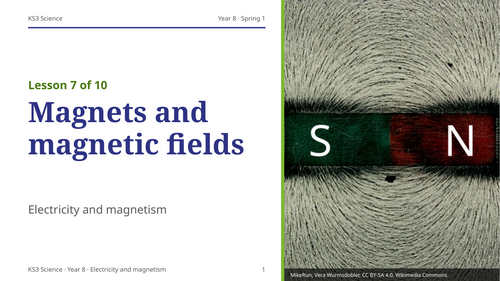
- Magnets and magnetic fields: Describe magnetic poles and map a magnetic field.
- The Earth’s magnetic field: Explain how a compass uses the Earth’s magnetic field.
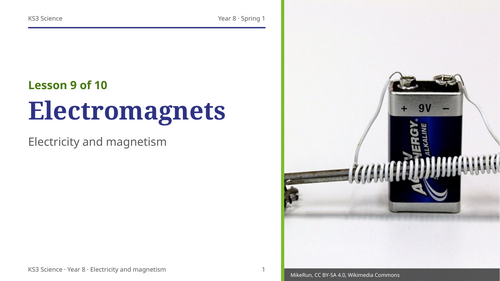
- Electromagnets: Investigate what changes the strength of an electromagnet.
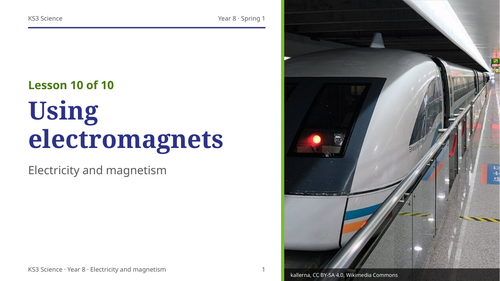
- Using electromagnets: Explain how electromagnets are used in motors, relays and cranes.
Practicals and demonstrations: Balloons, polythene and acetate rods, cloths; Cells, bulbs, switches and leads; Ammeters in series circuits; Voltmeters connected in parallel; Series and parallel bulb circuits with ammeters; Resistance of constantan wire at different lengths; Bar magnets, plotting compasses, sealed iron filings; Magnetised needle on cork in water; Electromagnets from wire, an iron nail and a low-voltage supply; Demo: A simple DC motor.
Key words: charge, static electricity, electric field, circuit, current, ampere, ammeter, potential difference, volt, voltmeter, series, parallel, resistance, ohm, conductor, insulator, magnetic field, pole, electromagnet, motor.
Assessment: End-of-unit test (40 minutes) with circuit diagrams and a resistance calculation.
What is included
- 10 editable PowerPoint decks (12 to 13 slides each) with teacher notes on every slide
- A Do Now retrieval starter, with a photograph or diagram (credited on the slide)
- Practical slides with the method, equipment and safety notes, or a teacher demonstration
- Worked examples for the maths, with units
- Tasks with answer slides for self-marking
- A self-check and an exit ticket to close every lesson
- Picture credits slide in every deck
Everything is in real text boxes, so you can change wording, add your own slides and print handouts. Planned against the National Curriculum for science in England (Key Stage 3). Practicals are suggestions: check each against your school’s risk assessments and CLEAPSS guidance. British English throughout. Part of a complete KS3 Science course for Years 7 to 9.
Something went wrong, please try again later.
This resource hasn't been reviewed yet
To ensure quality for our reviews, only customers who have purchased this resource can review it
Report this resourceto let us know if it violates our terms and conditions.
Our customer service team will review your report and will be in touch.
£22.50