pptx, 11.07 MB
pptx, 11.07 MB

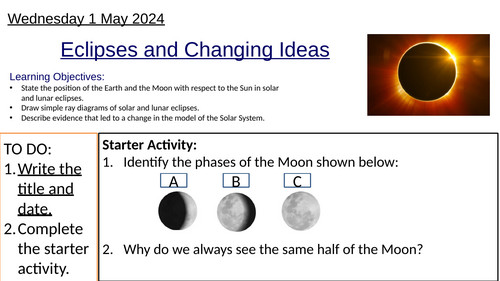
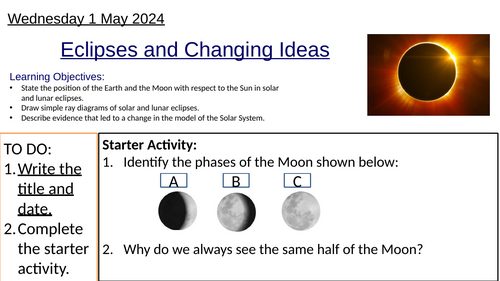
This PowerPoint resource provides an engaging middle school lesson that explores the science behind solar and lunar eclipses and traces the historical evolution of the heliocentric model of the solar system. The lesson integrates visual aids, interactive activities, and historical perspectives to enhance understanding of astronomy.

Key learning objectives:

  • Describing the positions of the Sun, Earth, and Moon during solar and lunar eclipses.
  • Drawing and interpreting ray diagrams to represent eclipses.
  • Exploring the historical transition from the geocentric to the heliocentric model of the solar system.
  • Recognizing the contributions of early astronomers like Copernicus, Galileo, and Ptolemy.

Resource features:
The lesson begins with a starter activity prompting students to identify the Moon’s phases and reflect on why we always see the same side of the Moon. Core topics are introduced with clear visuals and step-by-step explanations:

Eclipses:
Solar Eclipse: Occurs when the Moon is between the Earth and the Sun, casting a shadow on Earth. Key terms like “umbra” and “penumbra” are explained.
Lunar Eclipse: Happens when the Earth is between the Sun and the Moon, casting a shadow on the Moon.
Heliocentric vs. Geocentric Models:
Explains the differences between these models, emphasizing the historical shift from the Earth-centered model (Ptolemy, Aristotle) to the Sun-centered model (Copernicus, Galileo).
Evidence supporting the heliocentric model, including Galileo’s observation of Jupiter’s moons and the phases of Venus, is discussed.

Interactive tasks include:

  • Labeling diagrams of solar and lunar eclipses.
  • Answering reflective questions about eclipse safety and historical models.
  • Comparing geocentric and heliocentric models through spot-the-difference activities and evidence evaluation.

The lesson concludes with a plenary activity, reviewing the contributions of key astronomers and reinforcing the understanding of eclipses through targeted questions.

File details:
This editable ‘.pptx’ file aligns with middle school science curricula. It features structured explanations, clear diagrams, and engaging tasks, making it an essential resource for teaching eclipses and the evolution of astronomical models.

Get this resource as part of a bundle and save up to 58%

A bundle is a package of resources grouped together to teach a particular topic, or a series of lessons, in one place.

Bundle

KS3 Physics Space and the Universe Bundle: 6-Lesson Unit

This PowerPoint bundle contains six engaging and interactive PowerPoint lessons tailored for middle school students. These lessons cover key astronomical and physical science topics, providing a comprehensive exploration of the Universe, celestial phenomena, and the principles of gravity. Bundle Contents: Gravity, Mass, and Weight: Students learn the difference between mass and weight, how gravity affects them, and calculate weight on different planets using gravitational field strength. The Night Sky: Introduces celestial objects visible in the night sky, such as stars, planets, and satellites, and explains their role in understanding the Universe. The Solar System: Explores the structure of the Solar System, including inner and outer planets, the asteroid belt, and the scale of planetary distances. Eclipses and Changing Ideas: Teaches the science behind solar and lunar eclipses and explores the historical shift from the geocentric to the heliocentric model of the Solar System. The Earth: Examines Earth's rotation, revolution, and axial tilt to explain day and night and seasonal changes. The Moon: Covers the phases of the Moon, its synchronous rotation, and its role in eclipses, enriching students’ understanding of lunar phenomena. Key Features: Comprehensive Coverage: Each lesson focuses on essential astronomical concepts and physical principles relevant to middle school science curricula. Interactive Activities: Includes labeling diagrams, reflective questions, and practical problem-solving tasks to reinforce learning. Visual Support: Diagrams, videos, and real-world examples help students grasp abstract concepts like gravity, eclipses, and the Moon’s phases. Educational Value: This bundle provides a thorough introduction to key topics in astronomy and Earth science, helping students build foundational knowledge of the Universe and celestial mechanics. The lessons are visually engaging, easy to follow, and encourage critical thinking and curiosity about the cosmos. File Details: The bundle contains six editable '.pptx' files, making it ideal for in-class presentations or independent study assignments. Lesson 1 The Night Sky Lesson 2 The Solar System Lesson 3 Gravity, Mass and Weight Lesson 4 The Earth Lesson 5 The Moon Lesson 6 Eclipses and Changing Ideas

£5.00

Reviews

Something went wrong, please try again later.

This resource hasn't been reviewed yet

To ensure quality for our reviews, only customers who have purchased this resource can review it

Report this resourceto let us know if it violates our terms and conditions.
Our customer service team will review your report and will be in touch.