


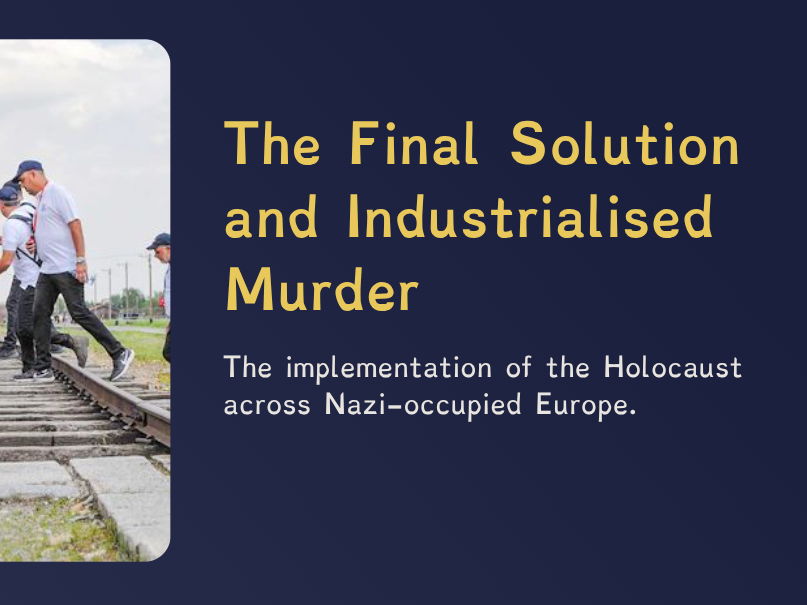
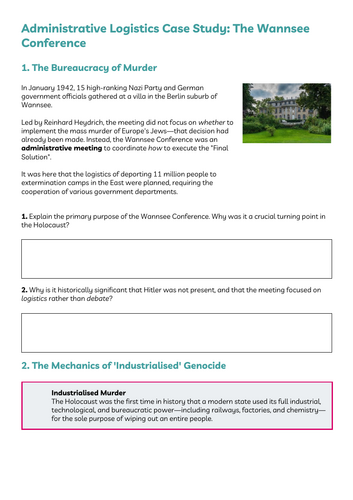
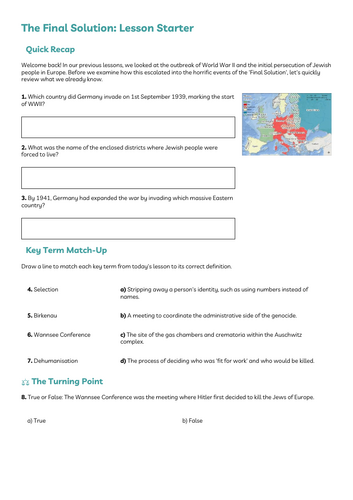
This lesson introduces students to the major turning point in the Holocaust: the formal coordination of genocide. Learners begin by examining the Wannsee Conference, exploring its purpose, significance and the bureaucratic language used to plan mass murder. They then distinguish between concentration camps and extermination camps, understanding how each type functioned within the wider system of persecution.
Students investigate how genocide became an industrialised process, analysing transport networks, killing centres and the administrative structures that enabled mass murder on an unprecedented scale. The lesson concludes with a mapping activity that helps students visualise the geographical spread of the Final Solution across Europe, reinforcing the scale, coordination and intent behind Nazi policy.
This lesson builds historical understanding while encouraging critical reflection on how ordinary systems—railways, paperwork, logistics—were transformed into tools of genocide.
Success Criteria
Students will be able to:
- Explain the significance of the Wannsee Conference and its role in coordinating genocide.
- Distinguish between concentration and extermination camps and describe their different purposes.
- Understand how genocide became industrialised through systems, logistics and technology.
- Map the scale of the Final Solution across Europe and explain what this reveals about Nazi intentions.
Includes
A lesson starter, PowerPoint, and worksheet.
Some visuals in this resource were made with AI to help bring ideas to life and support student understanding.
Something went wrong, please try again later.
This resource hasn't been reviewed yet
To ensure quality for our reviews, only customers who have purchased this resource can review it
Report this resourceto let us know if it violates our terms and conditions.
Our customer service team will review your report and will be in touch.
£2.00