



Explore Macbeth’s ruthless transformation with five expertly tiered versions of Act 3’s pivotal plotting scenes—an essential resource for accessible, inclusive, high-impact English teaching.
This pack unpacks Macbeth’s growing paranoia as he decides Banquo “must be killed,” manipulates hired murderers, and shuts Lady Macbeth out of his plans. Students explore how ambition curdles into fear, how prophecy drives Macbeth toward tyranny, and how the couple’s once-united partnership fractures under guilt and insecurity.
Perfect for specialists, non-specialists, independent learners, and alternative provision settings, the resource provides a structured pathway from secure narrative knowledge to thematic and analytical insight.
Pedagogical strengths:
Vocabulary scaffolding: clear word banks on prophecy, manipulation, paranoia, tyranny, and emotional conflict support confident analytical writing.
Thematic progression: students trace Macbeth’s psychological shift—from reluctant murderer to calculating plotter—and explore how fear of Banquo’s “royalty of nature” corrupts his judgement. They also examine Macbeth and Lady Macbeth’s deteriorating relationship and the moral consequences of ambition.
AO-ready tasks:
AO1—understand Macbeth’s motives, Banquo’s suspicions, and the couple’s rising insecurity.
AO2—analyse metaphors (“fruitless crown,” “full of scorpions”), animal imagery, and soliloquy as a window into Macbeth’s unraveling mind.
AO3—contextualise prophecy, fate, and anxieties about lineage.
AO4—improve clarity, accuracy, and purpose through targeted question sets.
What’s included:
Five differentiated tiers, each containing a concise summary of Macbeth’s plotting; six key takeaways clarifying threat, guilt, manipulation, and character change; a focused vocabulary bank; and exam-style questions from comprehension to evaluation.
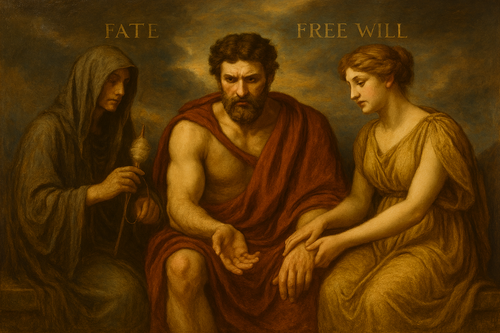
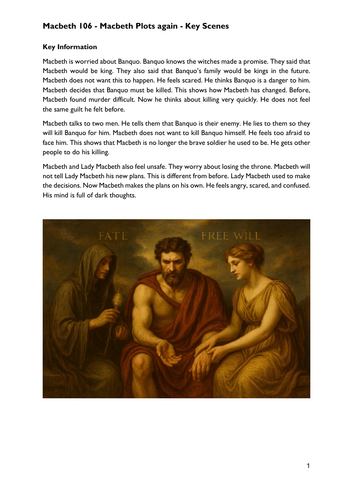
A visual-response page with ten prompts exploring fate vs free will, moral conflict, and Macbeth’s inner turmoil—ideal for retrieval, starters, or cross-curricular literacy.
How it supports literacy, analysis, and moral understanding:
Learners explore Macbeth’s language of fear, his manipulation of the murderers, and the emotional drift between him and Lady Macbeth. This helps them interpret psychological decline, ethical consequences, and the tension between destiny and agency.
Whether used for whole-class differentiation, revision, intervention, or independent study, this resource ensures every learner can access, interpret, and analyse one of Macbeth’s most critical turning points with rigour and confidence.
CoPilot used to support Design
Something went wrong, please try again later.
This resource hasn't been reviewed yet
To ensure quality for our reviews, only customers who have purchased this resource can review it
Report this resourceto let us know if it violates our terms and conditions.
Our customer service team will review your report and will be in touch.
£2.00