


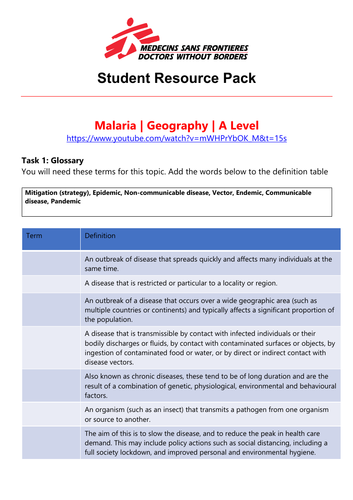
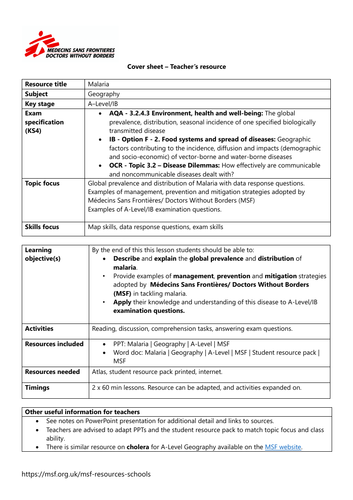
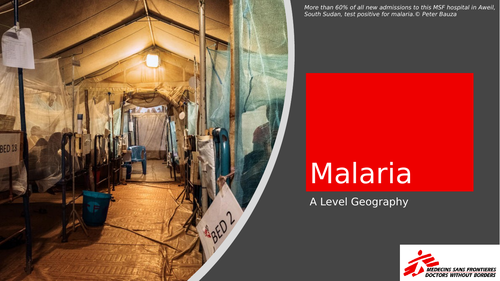
This A-Level Geography resource examines the global prevalence and distribution of malaria. It provides examples of management, prevention and mitigation strategies adopted by Médecins Sans Frontières/ Doctors Without Borders (MSF) in tackling malaria in Burundi and Ethiopia.
There are a range of activities with answers and examples of A-Level/IB examination questions in the presentation for learners to work through. Teachers are encouraged to review and select content and activities to best match their learners’ needs.
Please note that this resource depicts and discusses content that learners may be sensitive to.
Specification links
- AQA - 3.2.4.3 Environment, health and well-being: The global prevalence, distribution, seasonal incidence of one specified biologically transmitted disease, e.g. malaria; its links to physical and socio-economic environments including impacts of environmental variables on transmission vectors. Impact on health and well-being. Management and mitigation strategies.
- IB - Option F - 2. Food systems and spread of diseases: Geographic factors contributing to the incidence, diffusion and impacts (demographic and socio-economic) of vector-borne and water-borne diseases
- OCR - Topic 3.2 – Disease Dilemmas - 3. How effectively are communicable and noncommunicable diseases dealt with? Case study of one communicable disease, such as malaria or tuberculosis, at a country scale, either an LIDC or EDC
Any external links included in the resource were correct at the time of uploading.
Something went wrong, please try again later.
This resource hasn't been reviewed yet
To ensure quality for our reviews, only customers who have downloaded this resource can review it
Report this resourceto let us know if it violates our terms and conditions.
Our customer service team will review your report and will be in touch.
£0.00