

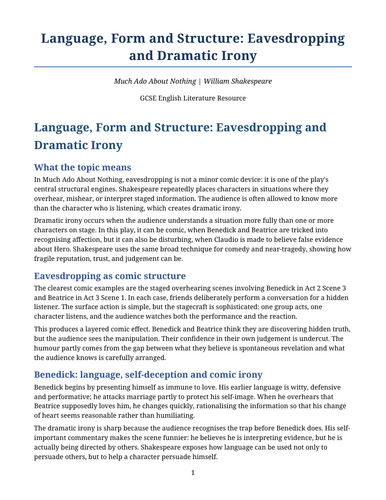

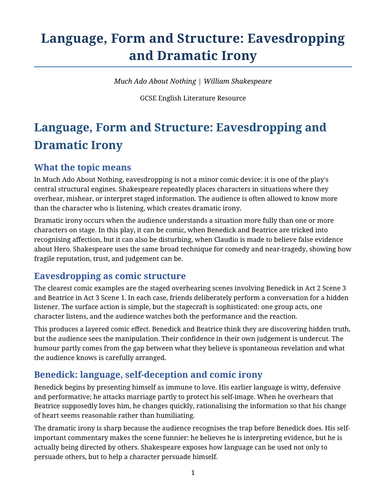
Much Ado About Nothing - William Shakespeare – Eavesdropping and Dramatic Irony
A concise and professionally structured resource exploring how Shakespeare uses eavesdropping and dramatic irony to shape comedy, tension and audience response in Much Ado About Nothing.
This resource provides focused analysis of staged overhearing, concealed listeners, audience knowledge, Benedick and Beatrice’s gulling scenes, Don John’s darker deception of Claudio and Don Pedro, Hero’s public shaming, and the way Shakespeare links comic self-discovery with the serious consequences of misjudgement.
Key features:
- Clear analysis of how eavesdropping acts as a major structural device across the play
- Focus on Benedick, Beatrice, Hero, Claudio, Don Pedro, Don John, Hero and Ursula
- Exploration of dramatic irony, staged speech, audience superiority, concealment, deception, appearance, reputation, judgement and social consequence
- Activities to reinforce and practise key concepts, including definitions, comic and serious deception, quotation analysis, structure, staging, creative writing and exam-style analysis
- Detailed answer key included for straightforward checking and review
Something went wrong, please try again later.
This resource hasn't been reviewed yet
To ensure quality for our reviews, only customers who have purchased this resource can review it
Report this resourceto let us know if it violates our terms and conditions.
Our customer service team will review your report and will be in touch.
£2.00