


AQA GCSE History Cold War 1945–72 | NATO, Arms Race & Space Race | 20 Visual Revision Resources
Description
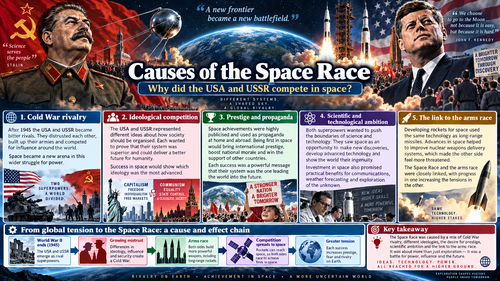
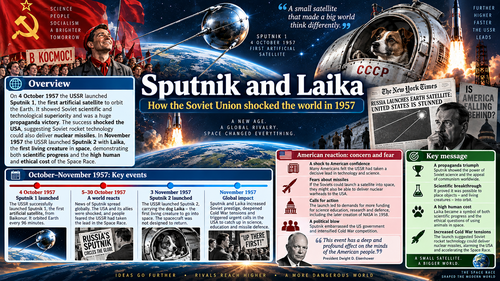
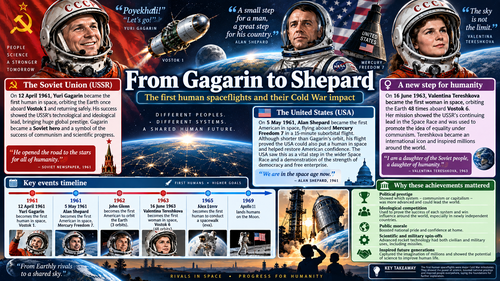
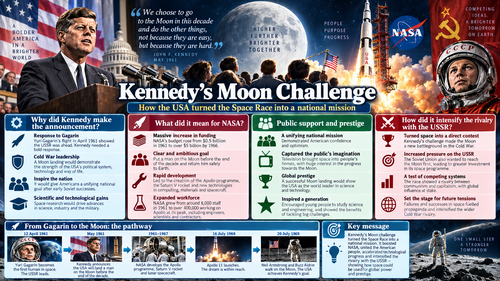
Detailed visual revision pack for AQA GCSE History: Conflict and Tension between East and West, 1945–1972. Includes 20 high-quality PNG revision resources focused on NATO, the nuclear arms race and the Space Race, helping students understand how military alliances, nuclear weapons and technological competition shaped relations between the USA and USSR during the Cold War.
The resources use clear timelines, key events, causes and consequences, key individuals, comparison, historical significance and concise explanations to turn complex Cold War content into memorable visual revision. They are ideal for helping students make connections between events rather than learning isolated facts.
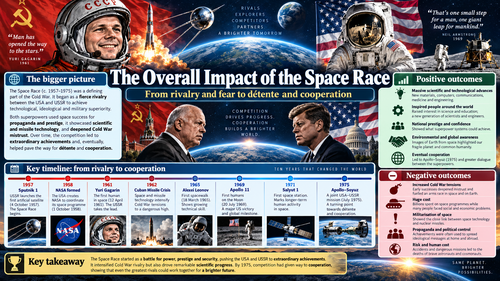
AQA specifically requires students to understand the arms race, the membership and purposes of NATO and the Warsaw Pact, and the Space Race including Sputnik, ICBMs, Polaris, Gagarin and Apollo as part of the development of the Cold War.
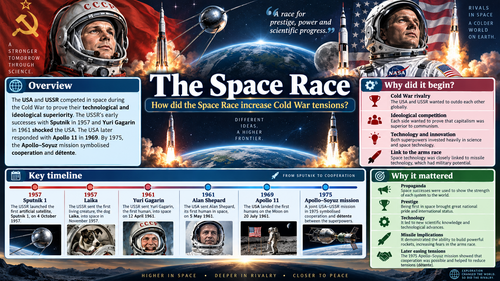
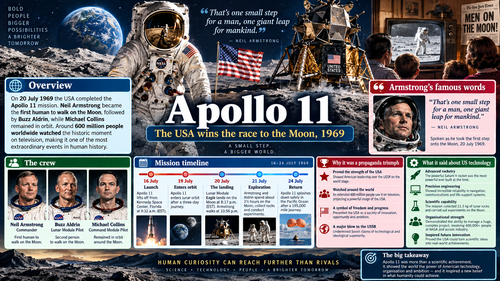
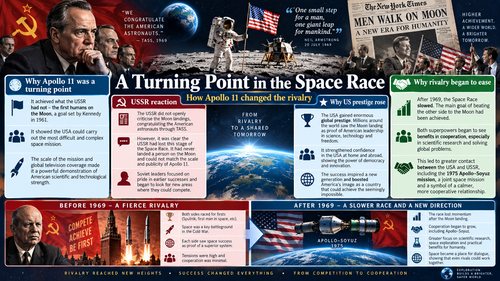
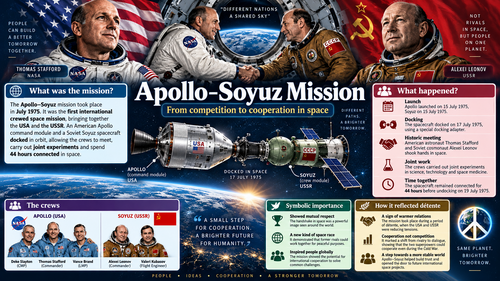
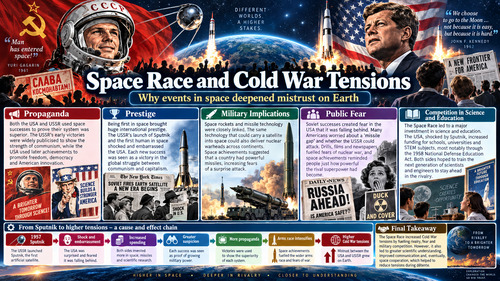
Topics covered include: formation of NATO in 1949, reasons NATO was created, growing East–West tensions, collective security, Article 5, NATO founding members, aims of NATO, impact of NATO on US–Soviet relations, development of opposing military blocs, Warsaw Pact links, causes of the arms race, atomic weapons, Hiroshima and Nagasaki, Soviet development of the atomic bomb, Truman and Stalin, hydrogen bomb race, nuclear weapons development, ICBMs, long-range bombers, submarine-launched missiles, missile delivery systems, nuclear deterrence, Mutually Assured Destruction, MAD, brinkmanship, Cuban Missile Crisis links, impact of the arms race on Cold War tensions, scientific and military competition, causes of the Space Race, Cold War rivalry in space, Sputnik, Sputnik 2, Laika, American reaction to Soviet achievements, Yuri Gagarin, Alan Shepard, John Glenn, Valentina Tereshkova, NASA, Kennedy’s Moon challenge, prestige and propaganda, technological competition, Apollo programme, Apollo 11, Moon landing, Neil Armstrong, Buzz Aldrin, Michael Collins, impact of Apollo 11, competition becoming cooperation and Apollo-Soyuz.
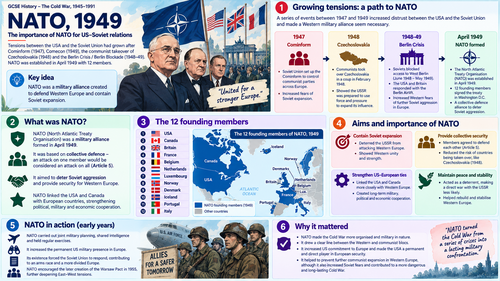
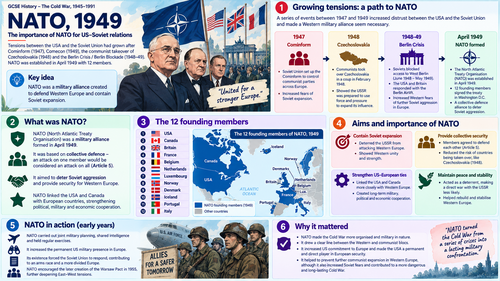
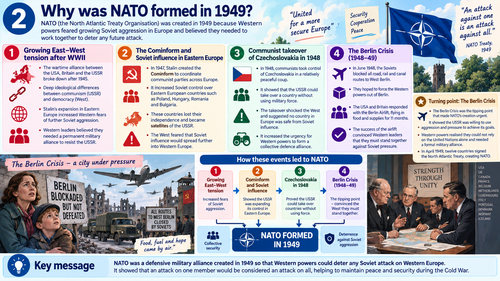
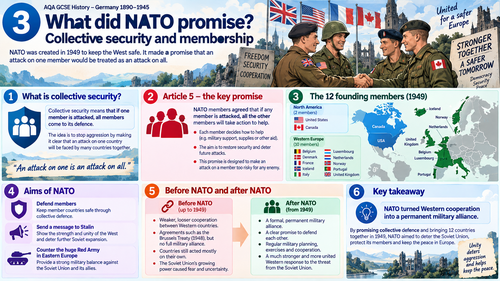
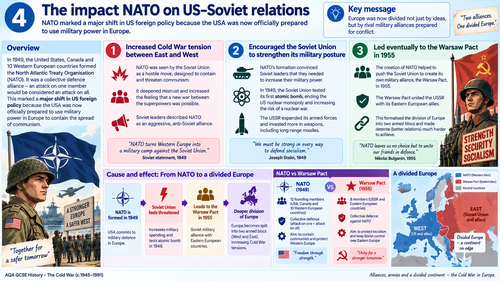
The opening section explains why NATO was formed in 1949, linking its creation to Soviet expansion in Eastern Europe, the communist takeover in Czechoslovakia and the Berlin Crisis. Separate resources explain collective security, Article 5, the founding members and NATO’s impact on relations between the two superpowers.
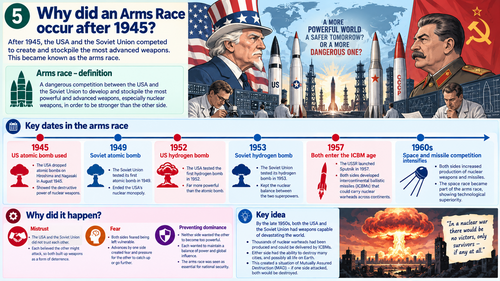
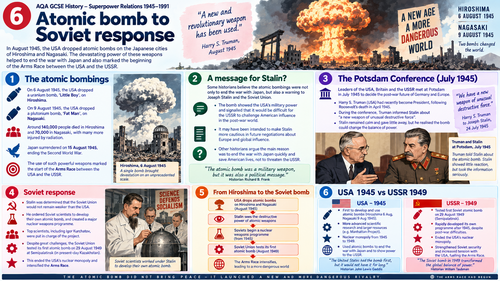
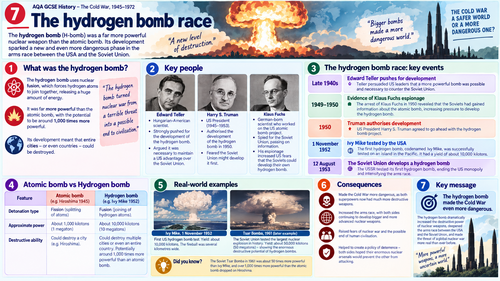
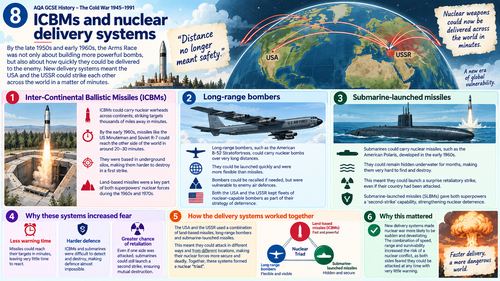
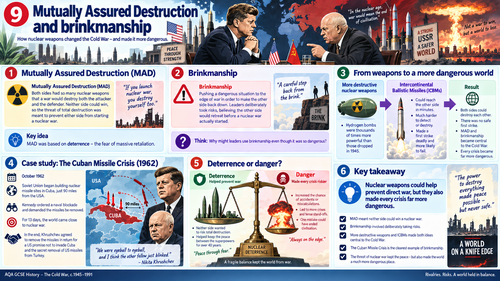
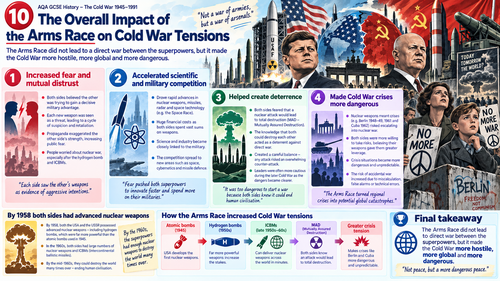
The arms-race section follows the escalating competition from the American atomic monopoly through the Soviet atomic bomb, the development of hydrogen bombs and increasingly sophisticated delivery systems. Students are introduced to ICBMs, strategic bombers, submarine-launched missiles, deterrence, brinkmanship and Mutually Assured Destruction, with clear cause-and-effect links showing why technological developments increased both fear and strategic caution.
Something went wrong, please try again later.
This resource hasn't been reviewed yet
To ensure quality for our reviews, only customers who have purchased this resource can review it
Report this resourceto let us know if it violates our terms and conditions.
Our customer service team will review your report and will be in touch.
£4.99