OCR AAQ in Applied Science: Scientific developments
Resource Bundle


Course: OCR Level 3 Alternative Academic Qualification Cambridge Advanced Nationals in Applied Science.
Unit F181: Science in society
Topic Area 3: Scientific developments
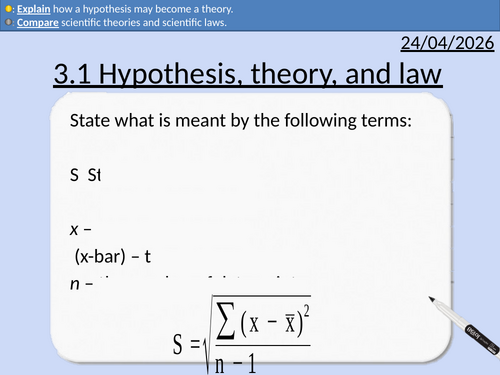
3.1 Hypothesis, theory, and law
3.1.1 Scientific use of terms
3.1.2 Scientific theory vs scientific law
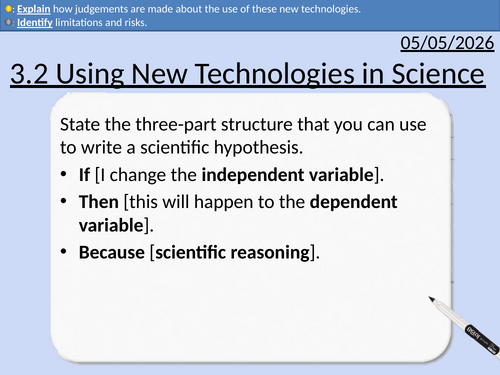
3.2 Using new technologies in science
3.2.1 New technologies play an important part in continuing scientific development
3.2.2 Limitations and risks of new technologies in society
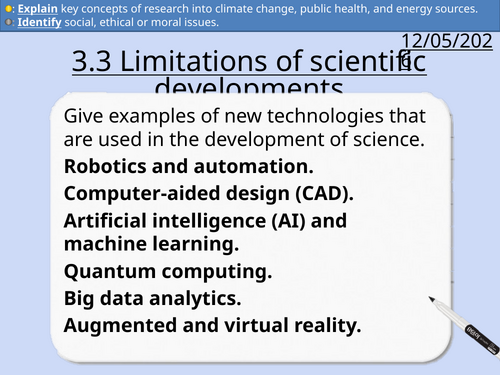
3.3 Implications and limitations of scientific developments
3.3.1 Considerations for scientific developments
3.3.2 Contemporary issues that science will need to solve in the future
Something went wrong, please try again later.
This resource hasn't been reviewed yet
To ensure quality for our reviews, only customers who have purchased this resource can review it
Report this resourceto let us know if it violates our terms and conditions.
Our customer service team will review your report and will be in touch.