


Organisms: Enzymes and Nutrient Breakdown – Year 9
How Do Enzymes Help Us Digest Food? (PPT + Worksheet)
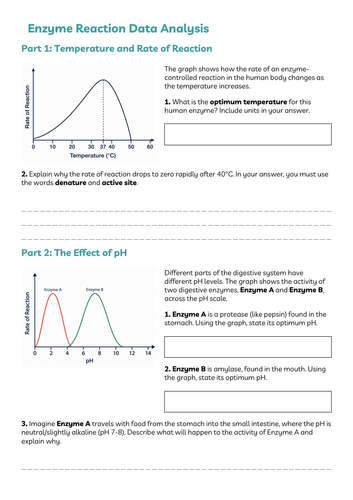
This lesson introduces students to the vital role of enzymes in digestion and metabolism. Pupils define enzymes as biological catalysts, explore the lock‑and‑key hypothesis to understand enzyme specificity, identify the key enzymes responsible for breaking down carbohydrates, proteins and lipids, and describe how temperature and pH affect enzyme activity. The lesson combines clear diagrams, data interpretation and practical examples to build strong conceptual understanding.
Lesson Objectives- Define enzymes as biological catalysts — substances that speed up chemical reactions without being used up.
- Explain the lock and key hypothesis — how enzyme shape determines substrate specificity.
- Identify the specific enzymes that break down carbohydrates, proteins, and lipids — amylase, protease and lipase.
- Describe how temperature and pH affect enzyme activity — denaturation, optimum conditions and reaction rate changes.
- KS3 Biology: Digestion, enzymes and chemical reactions in living organisms
- Working Scientifically: Variables, data analysis and experimental design
Some visuals in this resource were made with AI to help bring ideas to life and support student understanding.
Something went wrong, please try again later.
This resource hasn't been reviewed yet
To ensure quality for our reviews, only customers who have purchased this resource can review it
Report this resourceto let us know if it violates our terms and conditions.
Our customer service team will review your report and will be in touch.
£2.00