


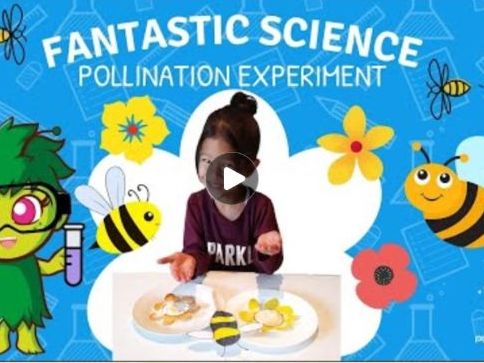

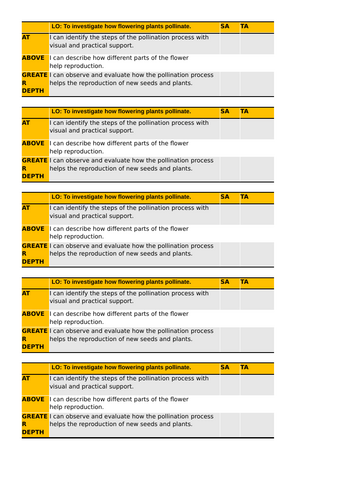

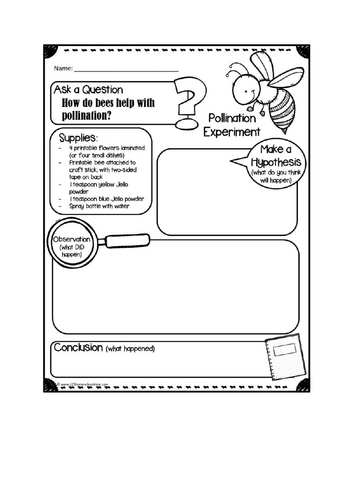
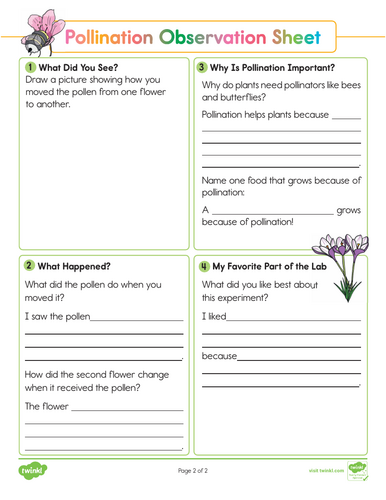
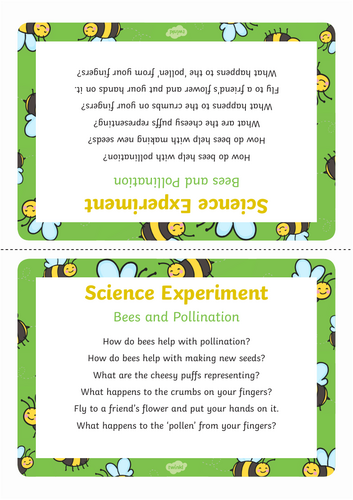
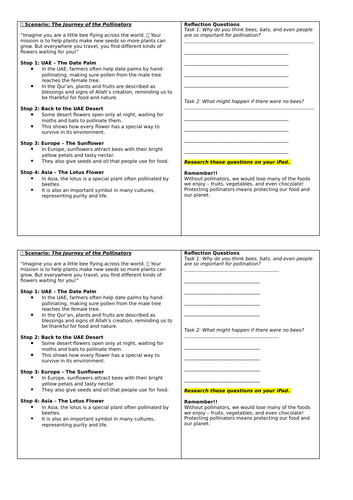

This Flowering Plant Pollination Investigation is a KS2 science resource designed to help pupils understand how pollination works and why it is essential for plant reproduction. The lesson guides learners from recognising the basic steps of pollination to evaluating how this process leads to the formation of new seeds and plants.
Pupils begin by identifying the stages of the pollination process with the help of visual models, diagrams or practical demonstrations. They then build on this knowledge by describing the function of key flower parts—such as the stamen, stigma, pollen and ovary—and understanding how each contributes to successful reproduction.
Higher-level tasks challenge pupils to observe and evaluate how pollination supports seed formation, making links between pollinators, flower structures and the creation of new plants. This supports scientific enquiry, critical thinking, and clear explanation using scientific vocabulary.
This resource is ideal for plant reproduction units, practical investigations, dissection lessons, or hands-on activities involving real flowers or pollination simulations. This lesson offers natural differentiation, allowing pupils to progress from simple identification to meaningful scientific evaluation.
Something went wrong, please try again later.
This resource hasn't been reviewed yet
To ensure quality for our reviews, only customers who have purchased this resource can review it
Report this resourceto let us know if it violates our terms and conditions.
Our customer service team will review your report and will be in touch.
£2.00