

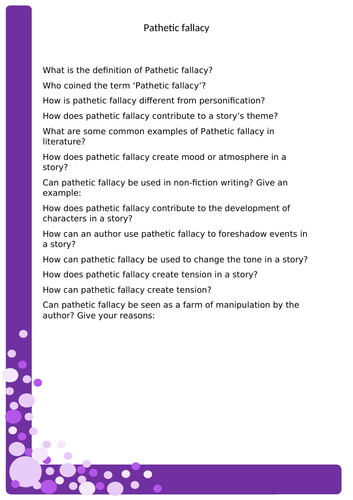

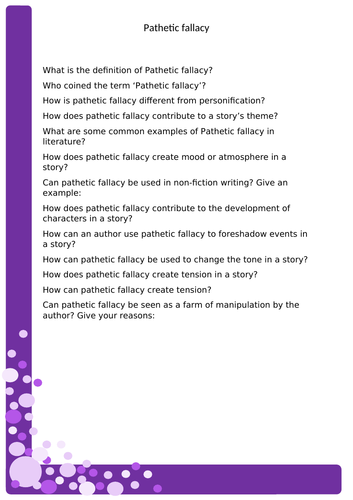
A teacher-created intervention worksheet pack focused on the literary concept of pathetic fallacy, explicitly unpacking terminology, origin, purpose, and application for secondary learners. Ideal for building analytical confidence, modelling expert reading, and transferring method knowledge into both creative and non-fiction writing for GCSE English Language Paper 1 objectivess set by AQA and regulated by Ofqual.
This resource takes students through a structured learning path, including definition recall, method differentiation, theme linking, atmospheric effect, character insight, and original writing application, without presenting copyrighted literature as a full text copy.
What the Resource Includes:
Retrieval prompts answering core questions, including:
What is pathetic fallacy? (full definition space)
Who coined the term? (named origin reference by John Ruskin)
How is it different from personification?
How Ruskin viewed the technique (critical concept framing)
Technique differentiation prompts to support method mastery:
Pathetic fallacy vs. personification
Pathetic fallacy as a device for theme and mood
Structural use of weather/nature to signal perception shifts
Reader effect evaluation questions, supporting AO2-style transferable analysis:
How nature reflects emotion and internal state
How mood is shaped through sentence cohesion and atmospheric focus
Writing application boxes allowing students to create original examples of pathetic fallacy used for:
Foreshadowing
Tone shifts
Tension building
Character development
Manipulation or narrative pressure
Common examples referenced for teaching discussion, such as:
Weather mood engineering found in gothic settings like the foggy street in Bleak House
Storm symbolism noted for comparison to unseen fiction extracts
GCSE Skills Developed:
Accurate recall and explanation of the term ‘pathetic fallacy’
Method recognition and differentiation (personification vs pathetic fallacy)
Exploding individual words and phrases to comment on reader impact
Linking structure and weather choice to emotional and thematic understanding
Building evaluative paragraphs using TEE/PEEL/PEA (both Literature and Language Q4 transfer)
Planning before drafting with quotation harvesting and method labelling
Writing original sentences that manipulate tone or tension using nature and weather cues
Something went wrong, please try again later.
This resource hasn't been reviewed yet
To ensure quality for our reviews, only customers who have purchased this resource can review it
Report this resourceto let us know if it violates our terms and conditions.
Our customer service team will review your report and will be in touch.
£1.50