


TITLE
BTEC Level 3 Sport & Exercise Science Unit 1: Sport & Exercise Physiology | 40-Page Workbook
DESCRIPTION
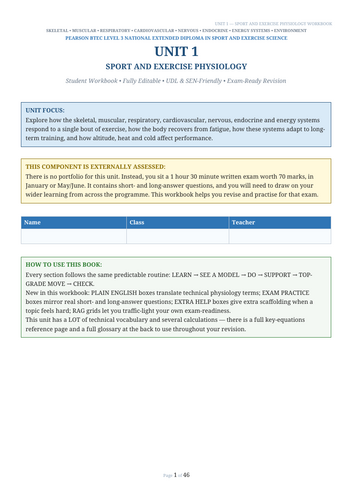
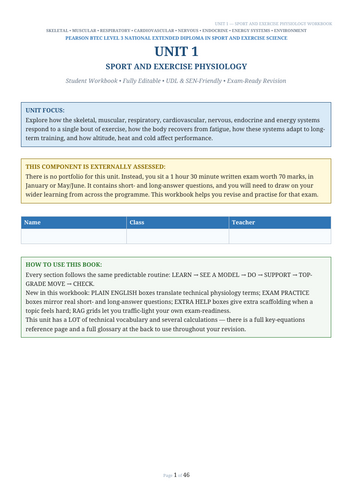
Save planning time with a complete, fully editable 40-page student workbook for Pearson BTEC Level 3 National Sport and Exercise Science – Unit 1: Sport and Exercise Physiology.
This structured workbook supports learners through the key physiological systems, acute responses to exercise, long-term adaptations, fatigue and recovery, and the effects of different environmental conditions on sport and exercise performance.
Designed for use throughout the unit, the workbook gives students one organised place to develop knowledge, apply physiological concepts to sporting situations and prepare for external assessment.
UNIT CONTENT INCLUDES
RESPONSES OF THE BODY SYSTEMS TO EXERCISE
Students develop their understanding of:
• Skeletal system responses
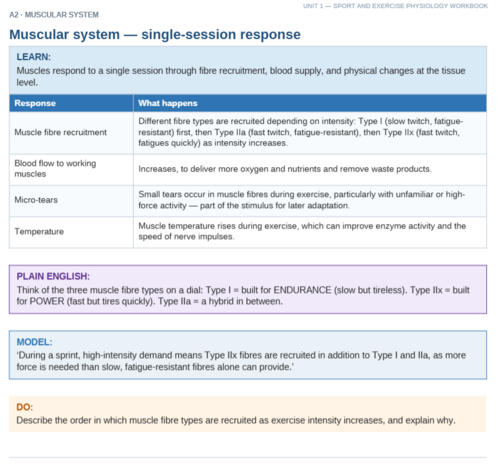
• Muscular system responses
• Cardiovascular system responses
• Respiratory system responses
• Neuromuscular system responses
• Endocrine responses
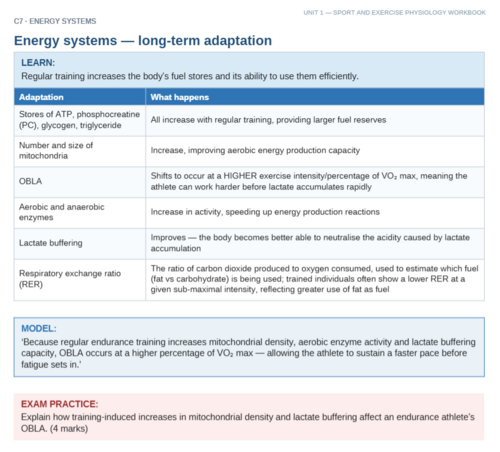
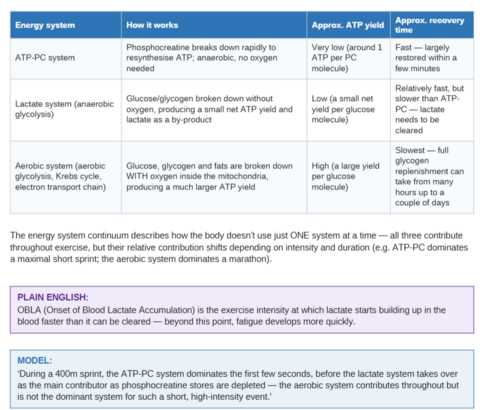
• Energy systems
• Acute physiological responses to exercise
• Interrelationships between body systems
• Application to sport and exercise performance
FATIGUE AND RECOVERY
Students explore:
• Causes of fatigue
• Energy depletion
• Lactate accumulation
• Neuromuscular fatigue
• Dehydration
• Effects of fatigue on performance
• Recovery processes
• Replenishment of energy stores
• Rehydration
• Recovery strategies
• Factors affecting recovery
LONG-TERM ADAPTATIONS TO EXERCISE
Students develop their understanding of:
• Cardiovascular adaptations
• Respiratory adaptations
• Muscular adaptations
• Skeletal adaptations
• Neuromuscular adaptations
• Endocrine adaptations
• Adaptations to different types of training
• Effects of regular exercise on performance
• Applying chronic adaptations to athletes and sporting contexts
ENVIRONMENTAL CONDITIONS
Students explore how performance and body systems are affected by:
• Exercise in hot environments
• Thermoregulation
• Sweating
• Dehydration
• Heat-related illness
• Exercise at altitude
• Reduced oxygen availability
• Physiological responses to altitude
• Acclimatisation
• Effects of environmental conditions on sport performance
WHY TEACHERS WILL FIND IT USEFUL
Unit 1 contains a substantial amount of physiological content and requires learners to do more than simply recall facts.
Students need to understand how body systems respond and adapt to exercise, apply this knowledge to sport and exercise situations, analyse performance information and explain how physiological systems interact.
This workbook gives learners a structured way to work through the unit while reducing the number of separate worksheets, revision activities and scaffolds teachers need to create.
The fully editable Word format also allows teachers to adapt activities, examples and support to suit their learners.
Something went wrong, please try again later.
This resource hasn't been reviewed yet
To ensure quality for our reviews, only customers who have purchased this resource can review it
Report this resourceto let us know if it violates our terms and conditions.
Our customer service team will review your report and will be in touch.
£6.99