


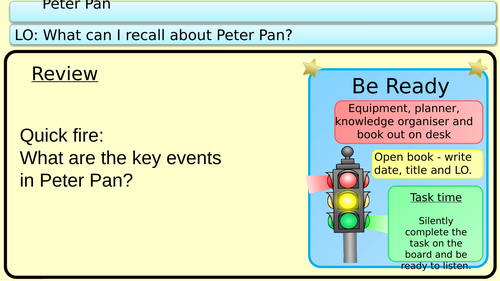
A teacher-created literacy lesson using engaging story content from Peter Pan by J.M. Barrie to deliver explicit reading and writing methods revision.
This structured PowerPoint combines:
Grammar retrieval and word class recall
Language methods identification (GCSE AO2 transferable)
Timed multiple choice technique quizzes
Dialogue-driven inference practice
Structural awareness and story-opening classroom routines
Although the lesson uses plot content to hook learning, the tasks prioritise method identification, reader impact, and evidence accuracy, with no independent plot writing assessed outside of quote or method analysis.
Content & Skills Covered:
Word Class Starter (Retrieval Practice):
Recap of noun, adjective, verb and adverb
Application into student sentence construction
Language Methods Revision (Technique Spotting for AO2):
Students identify and label key non-fiction and fiction language devices using marked extracts and clear definitions on slides, including:
Simile
(“…as fast as a lion” modelled and explained)
Alliteration
(Initial consonant pattern examples like “Emma Elephant…” with teacher-note terminology)
Onomatopoeia
(Sound-imitating lexis such as “bang, crash, boom…”)
Rhetorical question
Repetition as emphasis method
Dialogue tags and verbs of manner
(e.g. mutters, tuts, curls — tone inference cues)
Structural Awareness (For Evaluation of Structure – Q4 Transfer):
How sentence order mirrors worsening control → rising alarm
How dialogue interrupts narration to widen narrative lens
How setting details shift from countable boundaries outside → uncountable vastness inside, prompting inference about space
Horizon description linked to one-point perspective in a student-friendly explanation, echoing terminology of One‑point perspective
Lesson Design Features:
Timed “Be Ready” starter routines for behaviour and silent knowledge recall
Multiple-choice quiz slides focusing on technique selection, not plot retelling
Extract-based method labelling to build academic voice and confidence
Wide theme and perspective pressure points, focusing on:
uncertainty
escalating emotional momentum
environmental discomfort
behavioural disorder
Clear modelling for agree/disagree vocabulary for evaluation writing
Supports both whole-class revision and small-group literacy intervention cycles
Suitable For:
KS3 classrooms
GCSE English Language method analysis transfer
Inference and device spotting interventions
Homework and revision evidence-harvesting
Teachers leading theme-linked discussion before analytical paragraphs
Something went wrong, please try again later.
This resource hasn't been reviewed yet
To ensure quality for our reviews, only customers who have purchased this resource can review it
Report this resourceto let us know if it violates our terms and conditions.
Our customer service team will review your report and will be in touch.
£3.00