


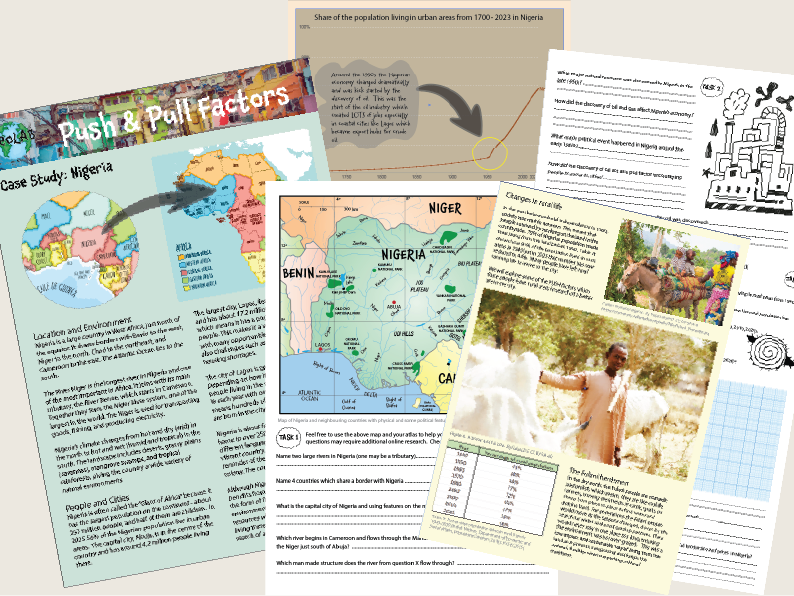

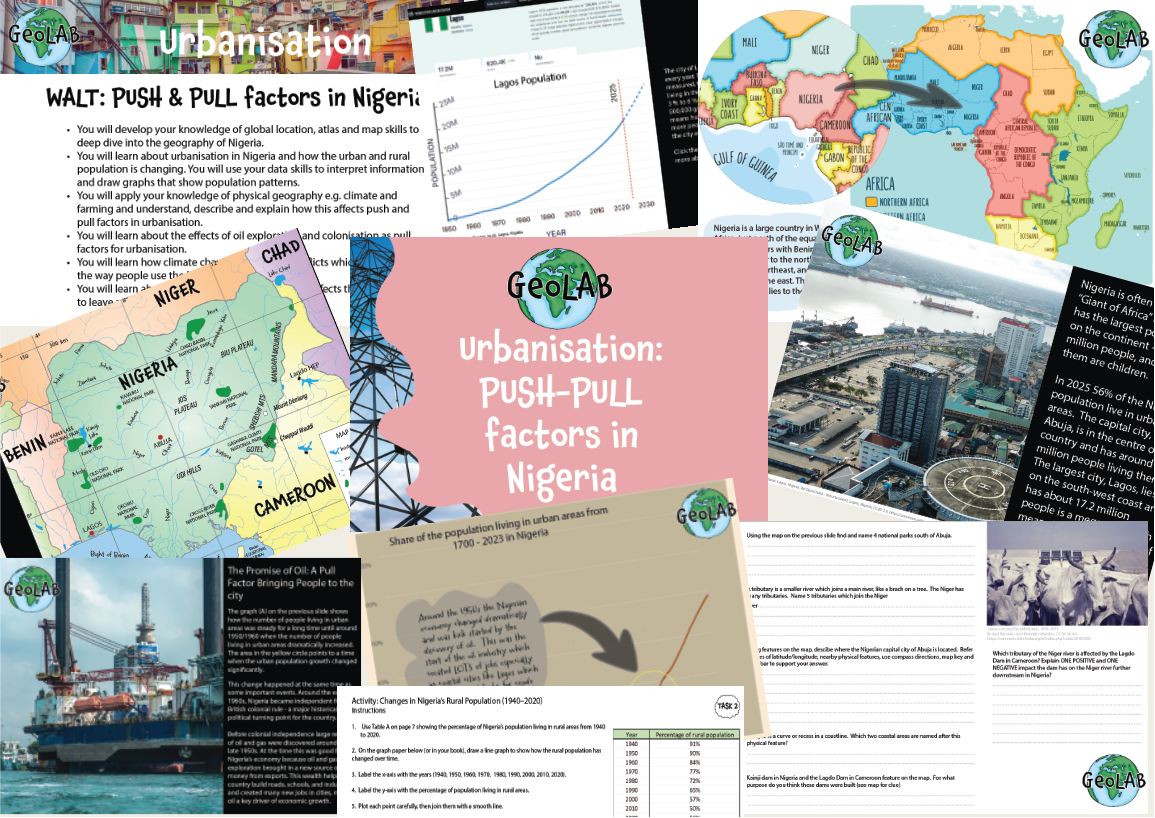
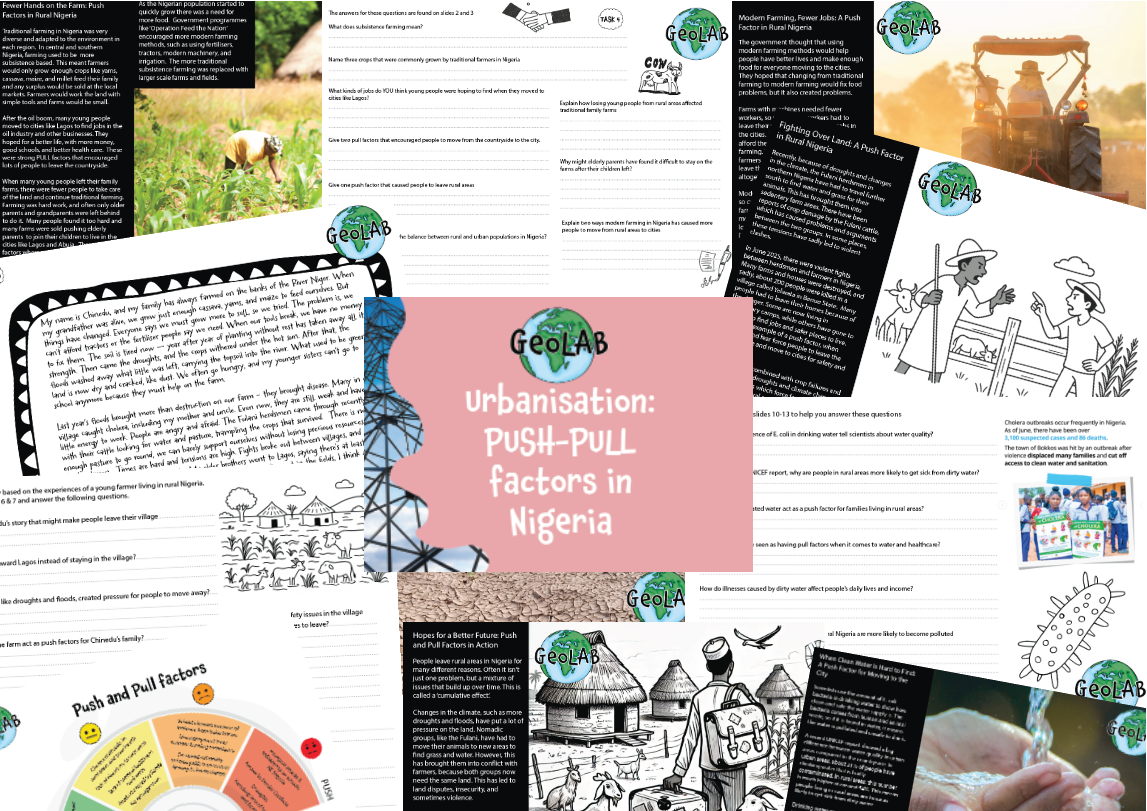
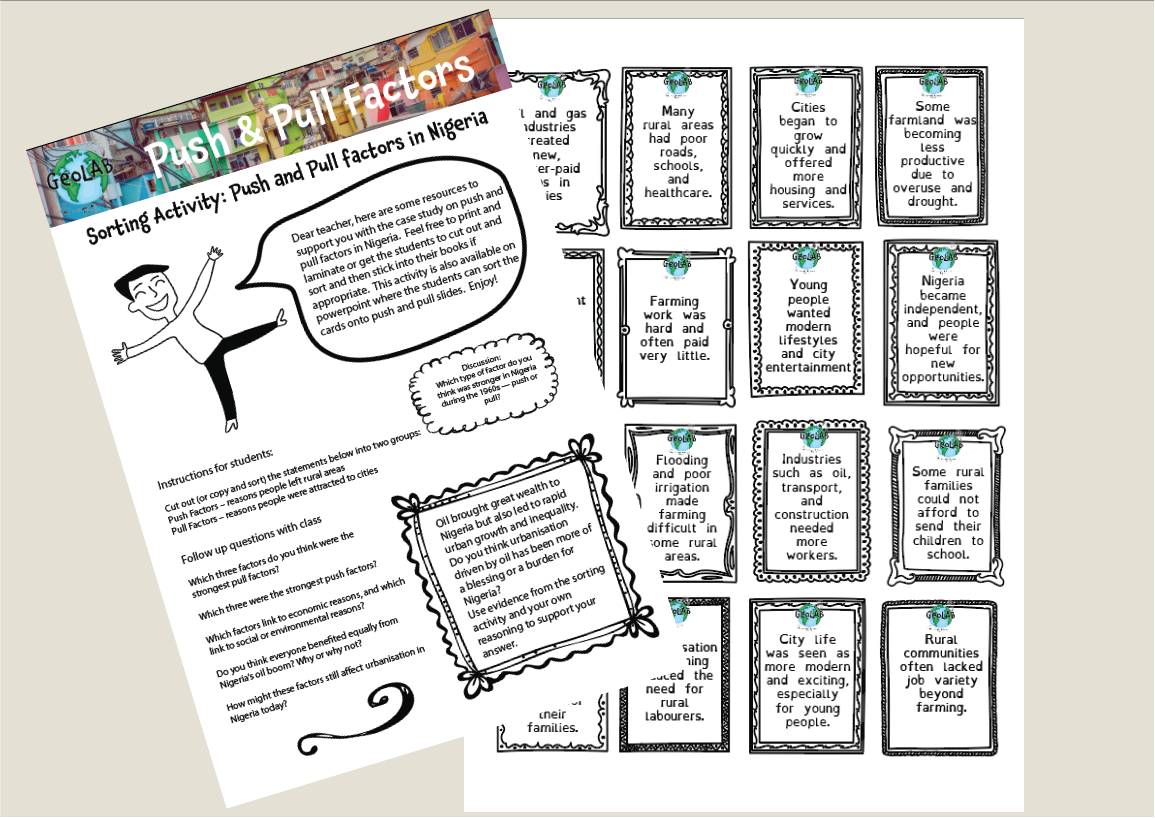
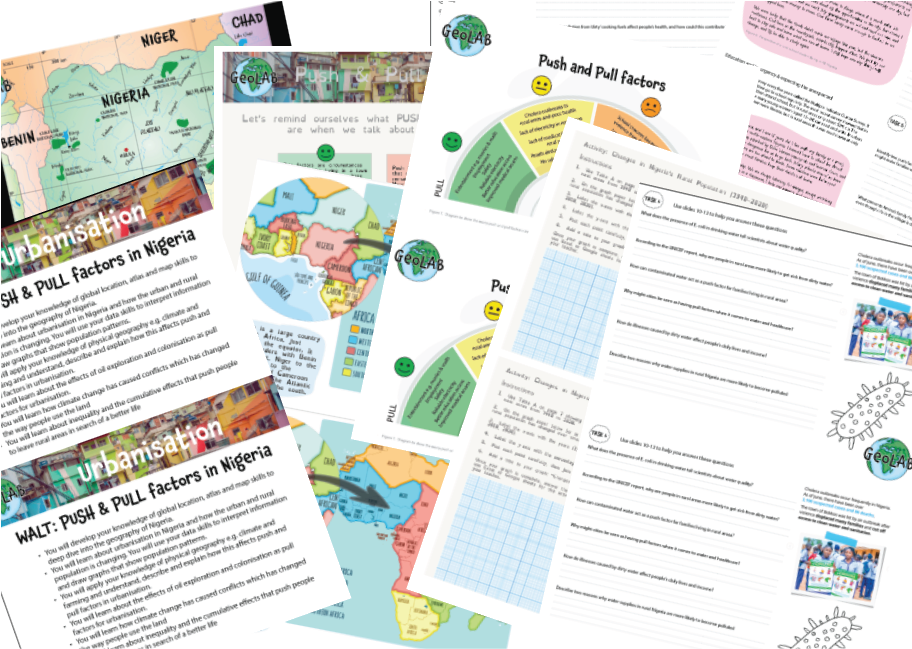
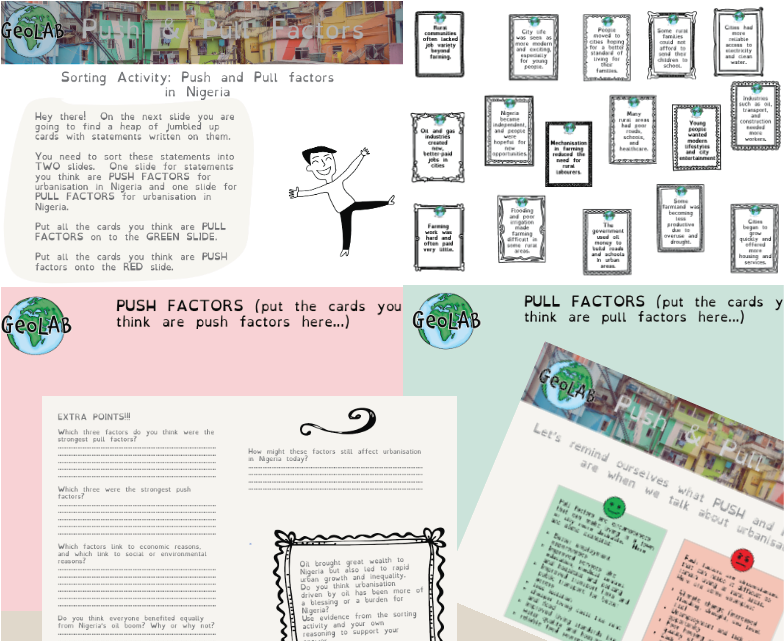
This resource is jam packed full of excellent examples of push and pull factors relating to urbanisation Nigeria. It includes a printable pdf with activities, an e-workbook version (powerpoint) to upload to Google Classroom, a set of quick printables for sticking into books and a fun sorting activity. The slides support students with visual impairments and dyslexic learners with audio of the slides. There is also a separate dyslexic friendly resource pack that can be downloaded.
There are multiple push and pull factors in Nigeria which influence urbanisation. Students are encouraged to think about the cumulative impacts of the following issues.
This resources includes:
-
MAP SKILLS:
Global location, map/atlas skills, geographical summary of Nigeria and where it is located. This in itself is a nice global location activity.= -
POPULATION CHANGE, OIL AND COLONISATION:
Population data for urban Nigeria - reading graphs and charts from 1700-2023. Information taken from “Our World in Data” shows a significant change in urbanisation around the time of independence from colonial rule and the start of oil exploration as pull factors. Guided tasks and questions. -
FARMER Vs HERDER CONFLICT:
Changes in the rural economy and the impact of climate change on the Fulani nomadic pastoral system. Students study how climate change and pressure on resources has caused conflict between Fulani herdsmen and sedentary farmers creating PUSH factors for urbanisation. -
MECHANISATIO OF FARMING:
Modernisation of farming has created rural unemployment forcing young people to leave rural farms in search of employment in urban areas. Students study the push factors and consider the implications of aging populations left behind in rural areas. Did government schemes like ‘Operation Feed the Nation’ work? -
SOIL DEGRADATION:
The impact of modern farming methods on soil fertility, desertification and food production is studied through POVs and push factors relating to soil degradation is considered. -
NATURAL HAZARDS:
The impact of natural hazards such as flooding has significantly affected rural farming communities: soil erosion, loss of equipment and stock and the health impacts of polluted drinking water. -
HEALTH IMPACTS & E.COLI:
Water quality and E.coli - the differences between urban and rural water quality are considered and reasons for this creating push and pull factors. Health impacts of cholera outbreaks following floods are studied. Students consider differences in infrastructure between urban and rural locations and this impact on quality of life. -
VIOLENCE, INSECURITY The impact of insurgency on education and the differences in literacy and attendance rates for rural and urban settings are considered. Students study the impact of instability and safety creating push factors.
-
ACCESS TO ELECTRICITY - students study how the lack of infrastructure and access to the electric grid impacts quality of life in rural areas.
Something went wrong, please try again later.
The most excellent case study for push and pull factors in urbanisation. The worksheets are fabulous and the supporting e-workbook on powerpoint is colourful, detailed and perfect for my students in both KS3 and GCSE. Love this resource.
Very thorough. I'll be able to use this resource throughout the key stages as there are parts you can select and develop upon. A VERY thorough case study and excellent examples of push/pull factors in action. Uploading the PowerPoint to google classroom as the students will be able to work through at their own pace. The powerpoint gives more visuals which complements the pdf really well.
Report this resourceto let us know if it violates our terms and conditions.
Our customer service team will review your report and will be in touch.
£0.00