


OCR Cambridge National Child Development (R057) – Chapter 1.3: Types of Contraception Methods and Their Advantages and Disadvantages
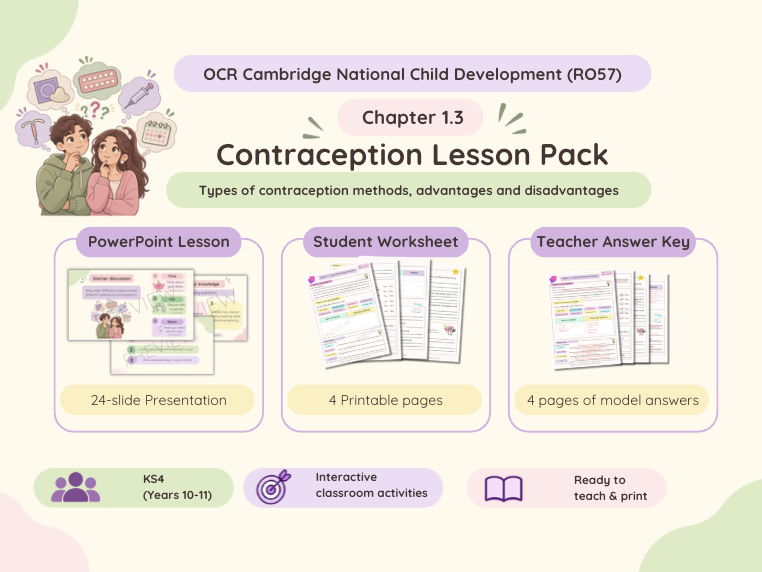
A colourful and engaging teaching resource designed for the OCR Cambridge National Level 1/2 Child Development qualification (R057 – Health and Well-being for Child Development).
This resource provides a structured lesson covering different methods of contraception, how they work, their effectiveness, advantages and disadvantages.
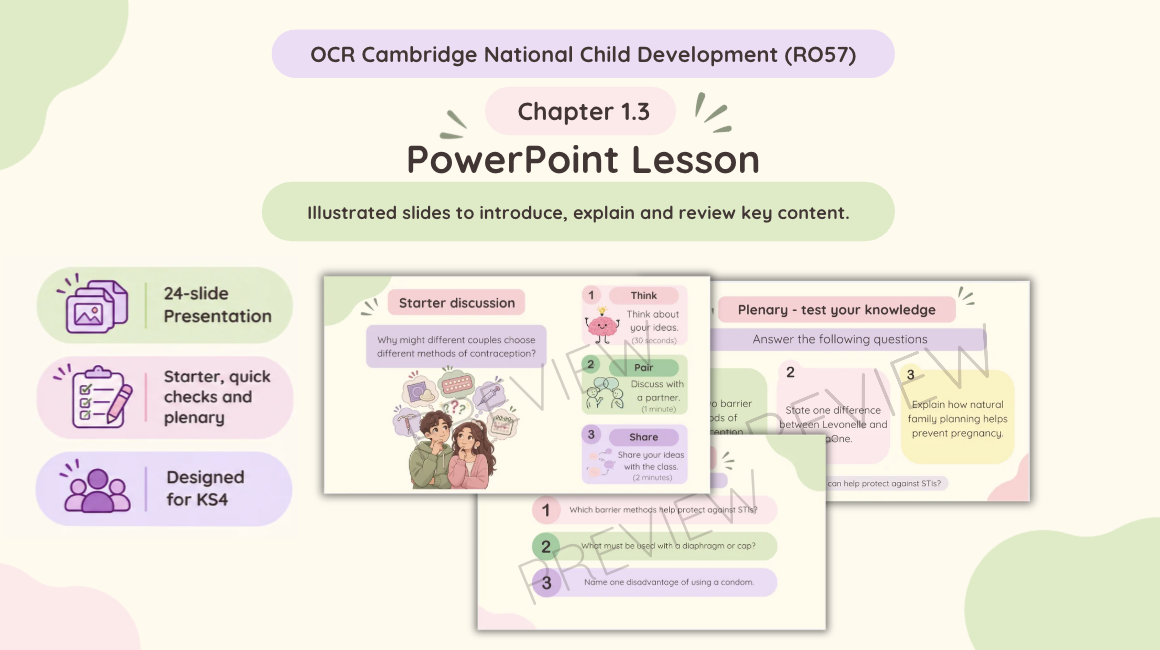
The PowerPoint features clear explanations, pastel-themed illustrations, discussion questions and interactive classroom activities to support student understanding and encourage active participation.
Topics covered:
- What is contraception?
- Barrier methods: male and female condoms, diaphragm and cap
- Hormonal methods: combined pill, progestogen-only pill, injection, implant and patch
- Intrauterine devices and systems (IUD/IUS)
- Emergency contraception: Levonelle and ellaOne
- Natural family planning
- Effectiveness, advantages and disadvantages of contraceptive methods
- Protection against sexually transmitted infections (STIs)
What’s included:
- PowerPoint lesson with colourful illustrations and clear explanations
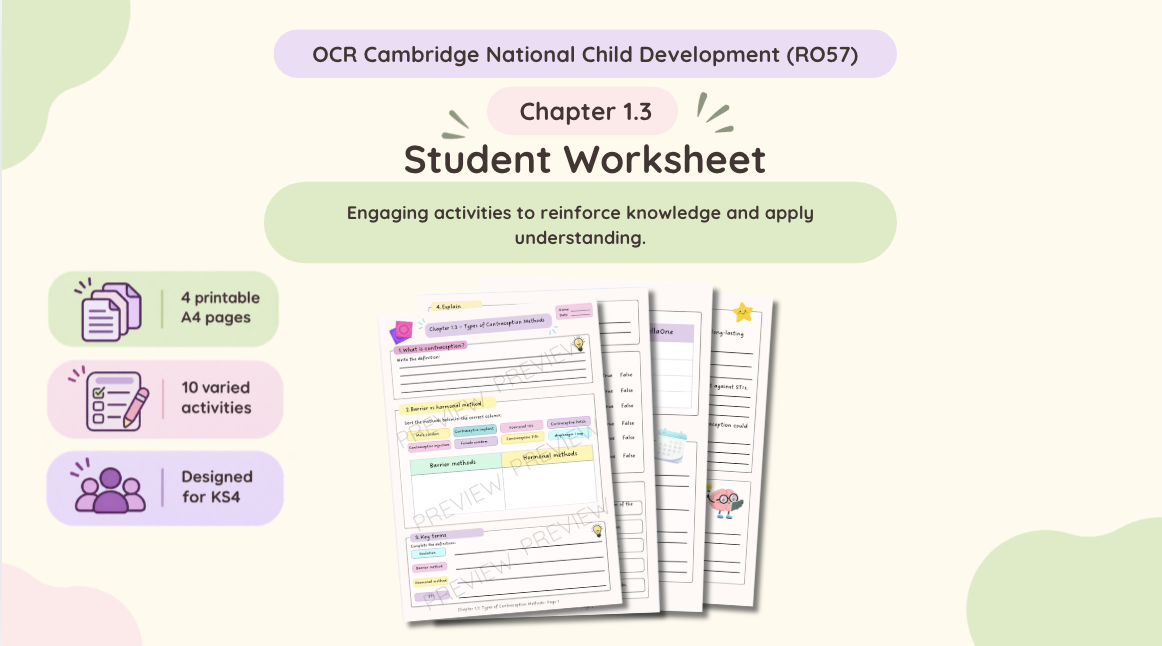
- 4-page student worksheet
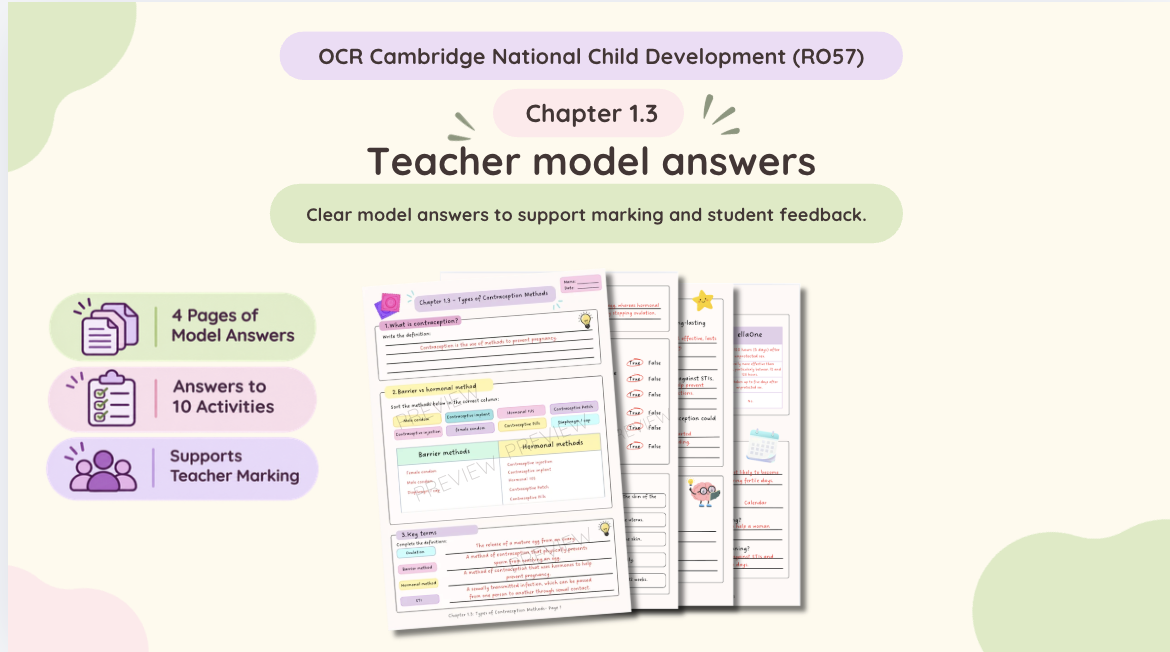
- 4-page teacher answer key with model answers
- Think–Pair–Share starter activity
- Quick-check questions and answers
- True or False and matching activities
- Comparison and knowledge-recall questions
- Scenario-based application questions
- End-of-lesson plenary and exit ticket
Suitable for:
- OCR Cambridge National Level 1/2 Child Development
- R057 – Health and Well-being for Child Development
- KS4 / Years 10 and 11
- Classroom teaching, revision and independent learning
The resource follows the course textbook content and is designed to make a detailed topic accessible, visually engaging and straightforward to teach.
Please note: Contraceptive guidance and product durations may change over time. The resource should be used alongside current guidance where appropriate.
Something went wrong, please try again later.
This resource hasn't been reviewed yet
To ensure quality for our reviews, only customers who have purchased this resource can review it
Report this resourceto let us know if it violates our terms and conditions.
Our customer service team will review your report and will be in touch.
£4.00