


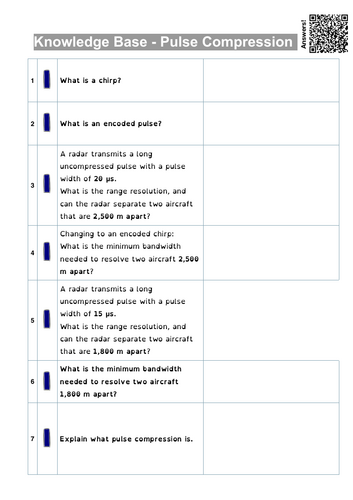
A complete stand-alone STEM lesson introducing students to the science and technology behind radar systems, with a focus on pulse compression, range resolution, and how radar can detect objects at long distances.
Originally designed for a technical teaching interview, this lesson has been adapted into a clear and engaging classroom resource suitable for GCSE Physics, GCSE Electronics, Computer Science enrichment, STEM clubs, engineering tasters, or careers-based lessons.
Students are introduced to the key problem radar engineers face:
How can a radar system send enough energy to detect distant objects, while still keeping enough detail to tell two nearby targets apart?
The lesson explains the difference between short and long radar pulses, why long pulses provide more energy, why short pulses give better resolution, and how pulse compression helps solve this problem. It also includes a simple calculation using the range resolution equation, making the topic accessible without overwhelming students with advanced maths.
Suitable for:
Physics
Electronics
Computer Science enrichment
STEM clubs
Engineering / defence technology lessons
Post-16 taster sessions
Careers lessons linked to radar, communications, electronics, aviation, defence and engineering
Includes:
Clear explanation of how radar works
Visual examples of transmitted and reflected pulses
Explanation of pulse length and range resolution
Introduction to pulse compression and chirp signals
Student-friendly worked calculation
Real-world context linked to aircraft detection and radar systems
Discussion prompts and questioning opportunities
A stand-alone structure that can be used without prior radar knowledge
Why this lesson works well
This is a high-interest lesson because students can immediately see the real-world purpose of the technology. It connects physics, electronics, maths and computing in a way that feels practical and modern. The lesson is ideal for showing students how classroom concepts such as waves, signals, timing, distance and calculations are used in real engineering systems.
It can be used as a one-off cover lesson, an enrichment lesson, a STEM club activity, or as part of a wider unit on waves, electronics, communication systems or defence technology.
Something went wrong, please try again later.
This resource hasn't been reviewed yet
To ensure quality for our reviews, only customers who have purchased this resource can review it
Report this resourceto let us know if it violates our terms and conditions.
Our customer service team will review your report and will be in touch.
£2.99