


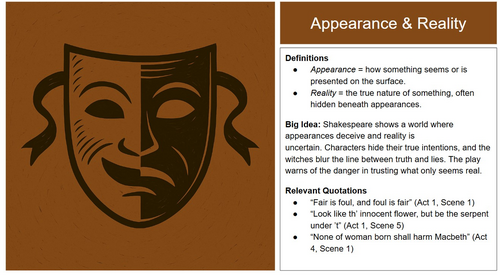
This lesson pack is part of a 5 Big Ideas series on Macbeth, created to help students connect their analysis to Shakespeare’s wider messages. The five Big Ideas are:
- Ambition and Power (resource available here)
- Fate and Free Will (resource available here)
- Violence and Masculinity (resource available here)
- Guilt and Conscience (resource available here)
- Appearance and Reality
__
Or buy the entire BIG Ideas Bundle here
__
As an AQA examiner, one of the most common issues I see is students focusing on single quotations without linking their ideas to Shakespeare’s bigger, philosophical themes. This resource is designed to fix that.
__
What’s included?
-
A full PowerPoint on the Big Idea of Appearance and Reality in Macbeth.
-
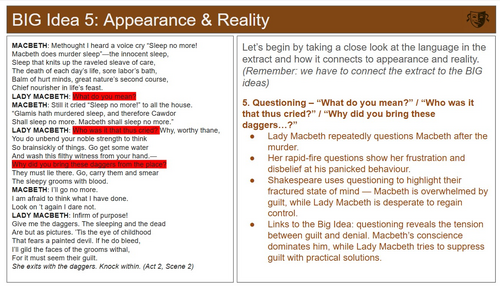
A brand new exam-style question, with the Act 2 Scene 2 extract, where Macbeth hallucinates a voice crying “Sleep no more!” while Lady Macbeth tries to manage appearances.
-
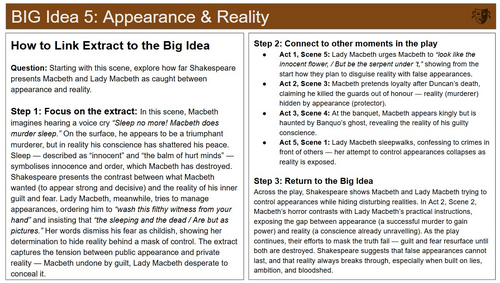
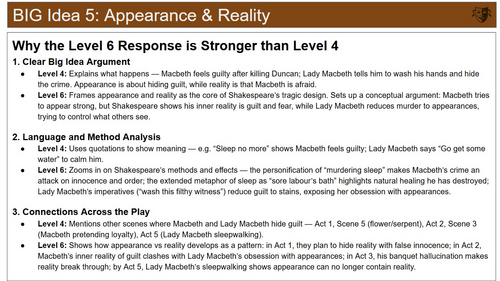
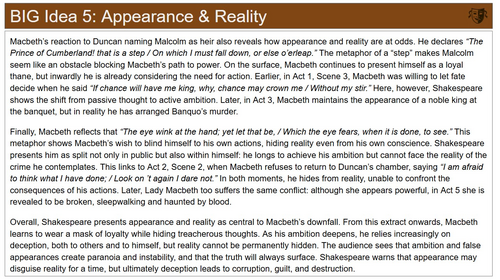
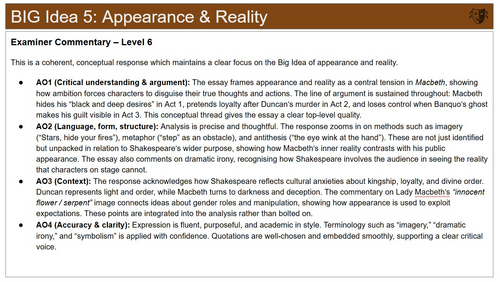
Two model answers (Level 4 and Level 6), showing the difference in depth, analysis, and connections across the play.
-
A modern rewording of the extract to support accessibility and comprehension.
-
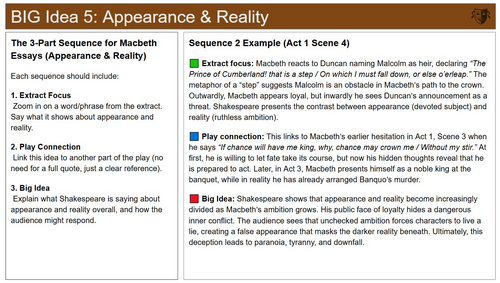
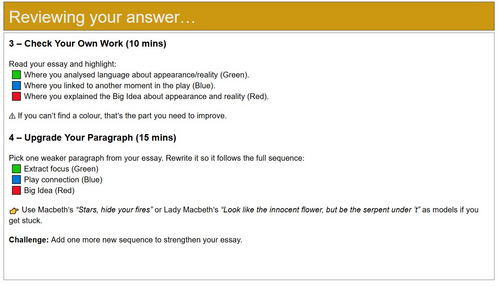
A “3-Part Sequence” structure (Extract focus → Play connection → Big Idea) to help students build exam-ready paragraphs.
-
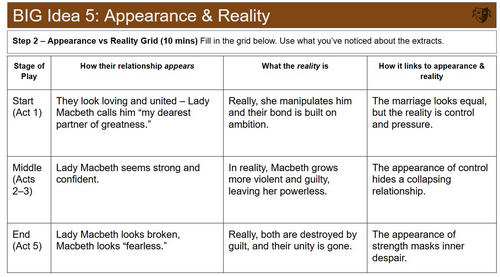
Activities that explore how the theme runs across the play: Macbeth’s loyalty vs hidden ambition (Act 1), Lady Macbeth’s “innocent flower / serpent” disguise, the false loyalty after Duncan’s death, Banquo’s ghost breaking through at the banquet, and Lady Macbeth’s sleepwalking when reality can no longer be hidden.
__
How can it be used? -
As a 3-lesson mini scheme, introducing appearance and reality, analysing extracts, and practising exam responses.
-
As a flexible revision resource, focusing on one extract or one sequence at a time depending on student need.
-
As a comparison tool, showing students how to move from a secure Level 4 to a top-level 6 response.
__
Why this resource?
This lesson pack helps students link close analysis to the Big Ideas that examiners want to see. By following the sequencing method, they learn how to balance detailed reading with thematic and conceptual discussion — the key to moving into the higher levels of the mark scheme.
Something went wrong, please try again later.
This resource hasn't been reviewed yet
To ensure quality for our reviews, only customers who have purchased this resource can review it
Report this resourceto let us know if it violates our terms and conditions.
Our customer service team will review your report and will be in touch.
£1.50