


AQA GCSE Biology respiration workbook for Year 10 and 11: a 23-page marathon wall data analysis and CER resource on exercise, with full mark scheme.
Why do marathon runners suddenly hit the wall after about 30 km? Students use original data on blood glucose, running speed and endurance to explain aerobic and anaerobic respiration, glycogen stores and the body’s response to exercise. Along the way they practise the graph, maths and extended-writing skills that GCSE Biology exams reward.
What’s included (23-page A4 PDF)
- Contents page and teacher guide with AQA 8461 specification links (4.4.2.1, 4.4.2.2, 4.4.2.3, 4.5.3.2)
- Phenomenon page, respiration equations and key vocabulary table
- Marathon data questions in SI units (km, km/h, mmol/L)
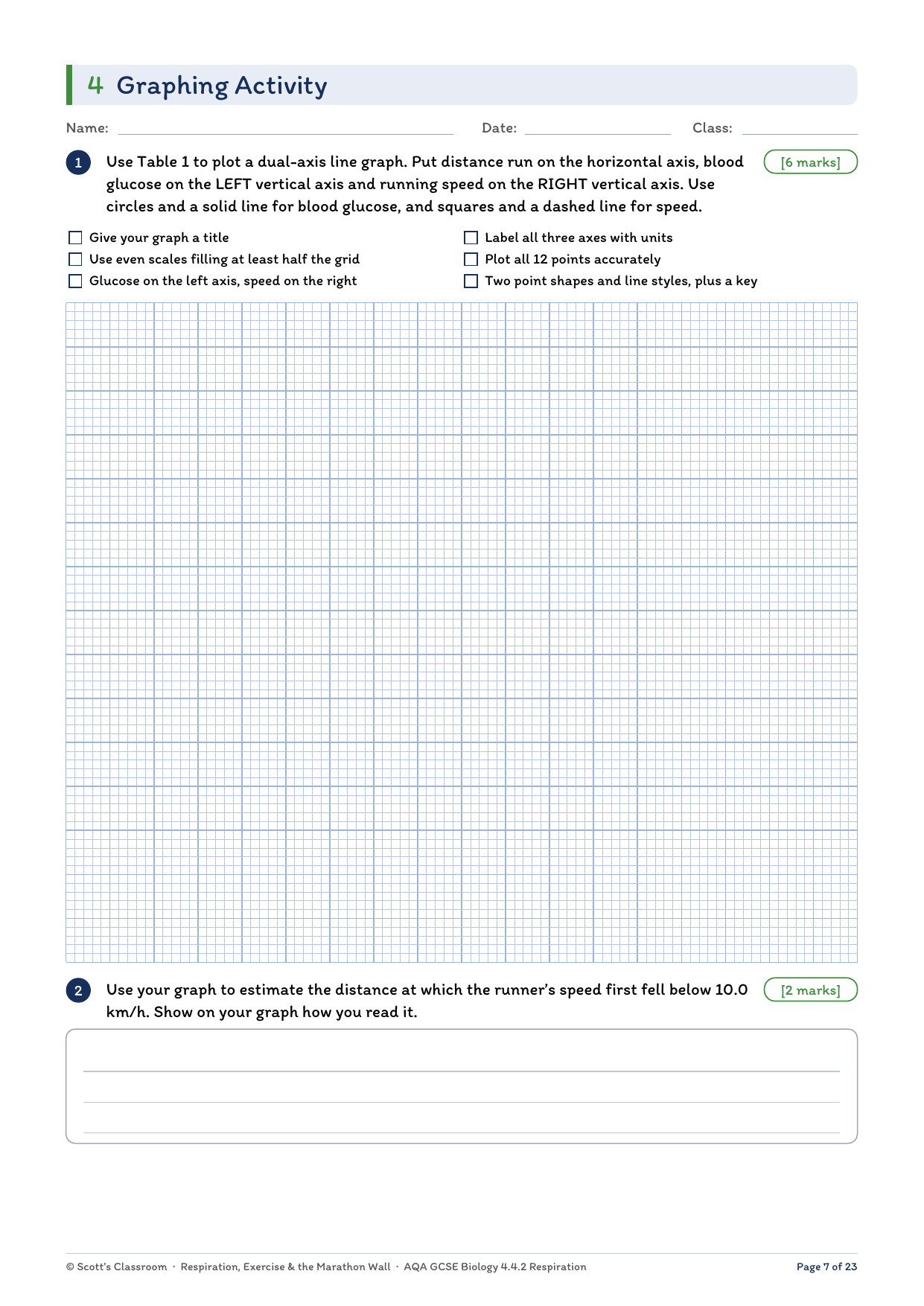
- Graphing activity: dual-axis line graph on a full-size 2 mm grid
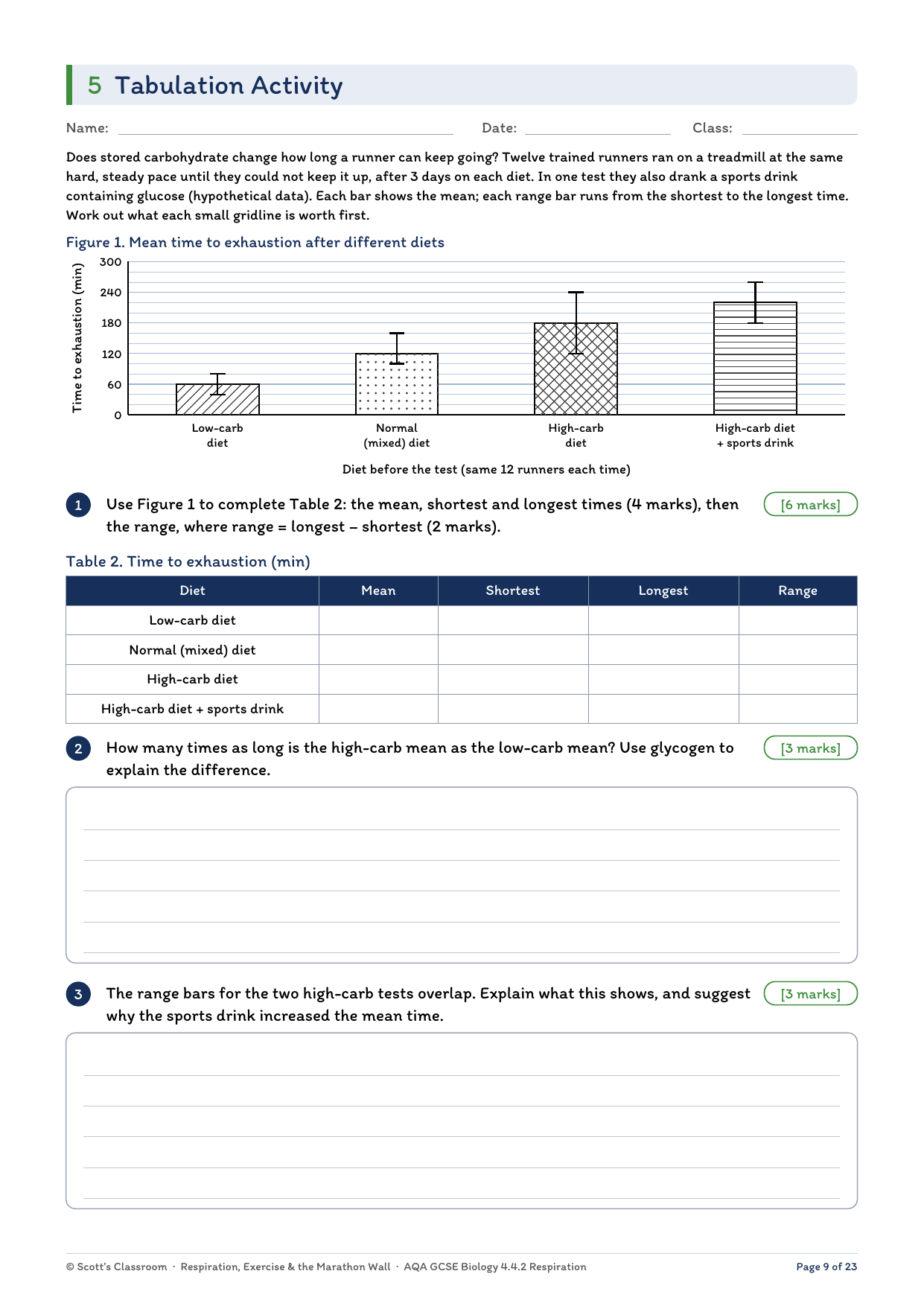
- Tabulation activity: reading a patterned bar chart with range bars
- Analysing the evidence questions using GCSE command words
- Scaffolded Claim-Evidence-Reasoning (CER) and a full CER response
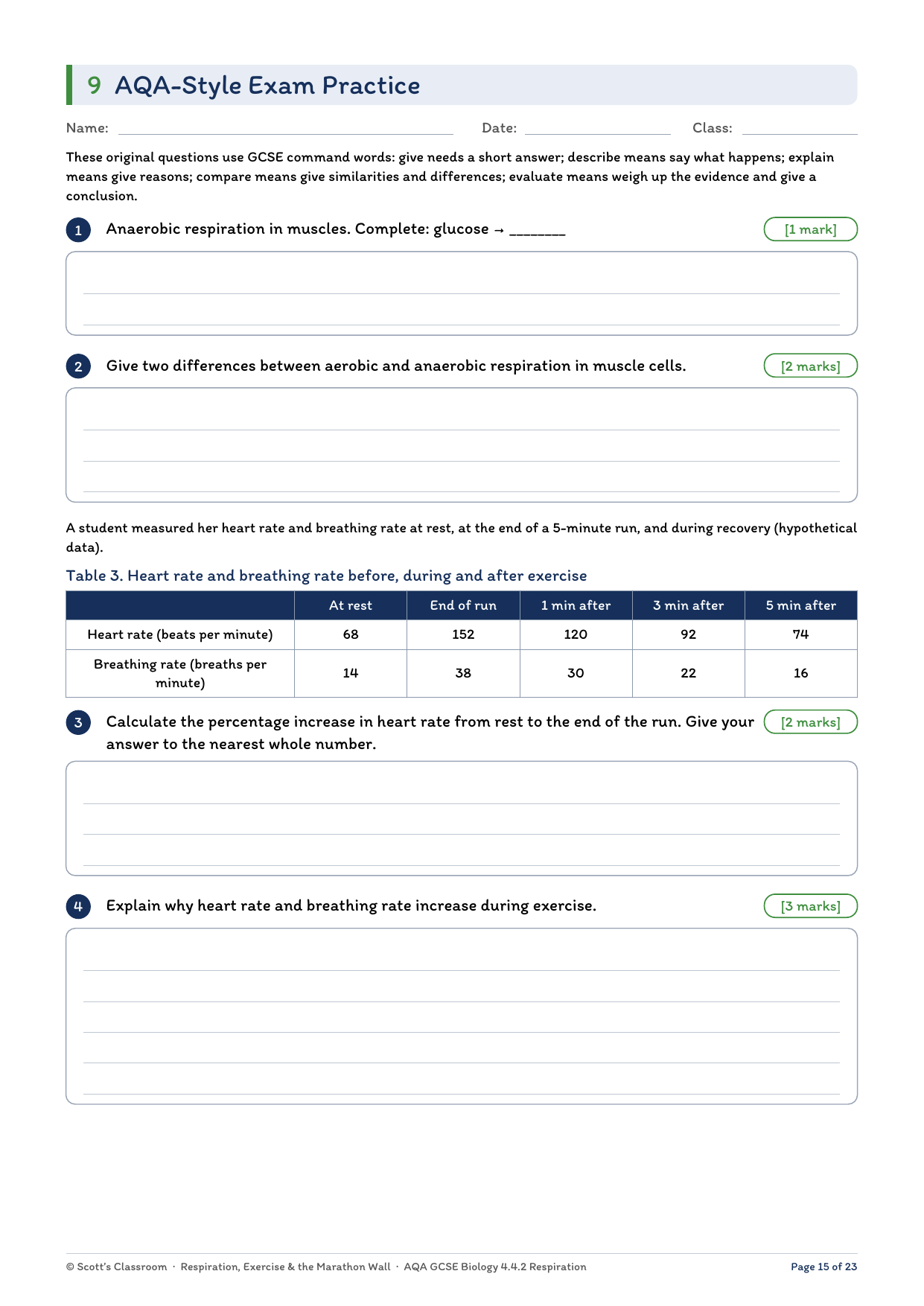
- AQA-style exam practice: heart rate and breathing data, percentage change, oxygen debt (HT), a 6-mark compare question and a 4-mark evaluate question
- Extension questions on carb-loading, glycogen and muscle fatigue
- Student CER rubric and teacher CER rubric
- Full mark scheme with model graph, level-of-response guidance and a model answer
- 121 marks in total, with mark allocations on every question
How to use it
Use it as a three-lesson respiration sequence, or teach Sections 1-8 in class and set the exam practice and extension as homework. The graphing and tabulation sections work well as a Working Scientifically lesson. The exam practice makes a strong revision or retrieval task before mocks, and the 6-marker suits a timed starter or plenary.
Key features
- Mapped to AQA GCSE Biology (8461) 4.4.2 Respiration; also suits Combined Science: Trilogy (8464)
- Higher-tier content (oxygen debt, lactic acid and the liver) clearly labelled HT
- Builds maths skills: differences, percentage change, ratio, range, mean and reading graphs
- Covers Working Scientifically: trends, sample size, variation, sampling interval and evaluating a claim
- Differentiated: sentence starters and scaffolds for support, challenge prompts for higher attainers
- No prep: print and go on A4; graphs and tables print clearly in black and white
- Answer spaces sized to the marks, with 7 mm writing lines
- Original questions and hypothetical classroom data; British English and SI units throughout
This resource is not endorsed by, affiliated with or produced by AQA.
If this workbook helps your students, please take a moment to rate it and leave a short review on Tes. It helps other teachers find it, and it helps me keep making new resources.
Something went wrong, please try again later.
This resource hasn't been reviewed yet
To ensure quality for our reviews, only customers who have purchased this resource can review it
Report this resourceto let us know if it violates our terms and conditions.
Our customer service team will review your report and will be in touch.
£3.50