


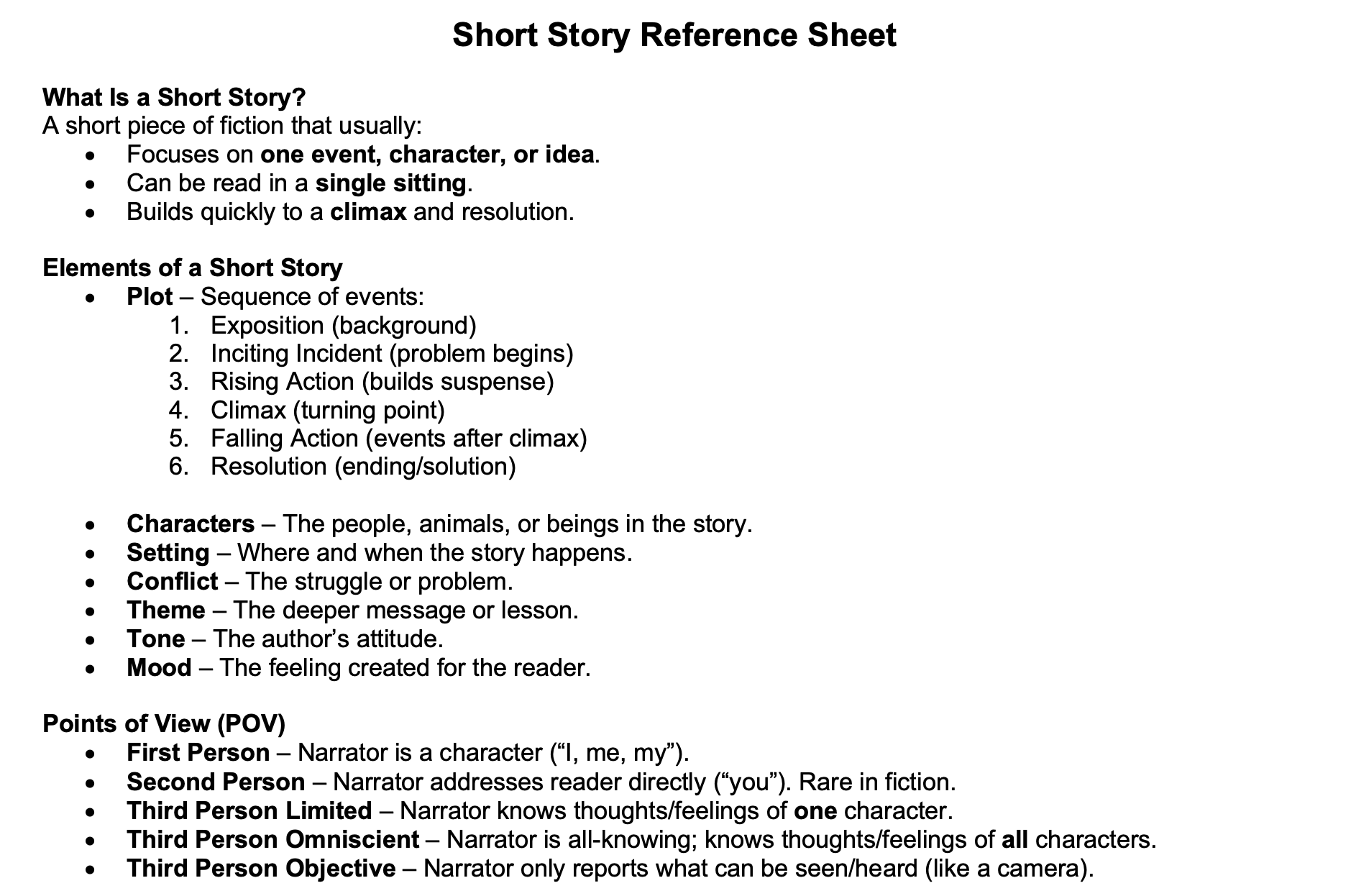
Give your students the tools to unlock fiction with this Short Story Reference Guide — a one-page, student-friendly resource that covers everything they need to analyze and understand short stories. Perfect for middle school, high school, and AP English, this guide makes literary analysis approachable and effective.
What’s Inside:
- Definition of a Short Story – what makes the genre unique.
- Plot Structure – exposition, inciting incident, rising action, climax, falling action, resolution.
- Core Elements – character, setting, conflict, theme, tone, mood.
- Point of View (POV) – first person, second person, third person (limited, omniscient, objective).
- Types of Conflict – man vs. man, self, nature, society, fate/supernatural.
- Characterization (STEAL) – speech, thoughts, effect on others, actions, looks.
- Character Types – protagonist, antagonist, foil, flat, round, static, dynamic, stock.
- Literary Devices – foreshadowing, flashback, irony, symbolism, imagery, allegory, motif, epiphany.
- Narrative Techniques – in medias res, frame story, unreliable narrator, stream of consciousness, minimalism.
- Common Themes – identity, coming of age, love, isolation, corruption, fate vs. free will, prejudice.
- Types of Short Stories – fable, folktale, parable, tall tale, realistic fiction, science fiction, fantasy, mystery, horror, flash fiction.
- Famous Writers – Poe, Hawthorne, Chekhov, O. Henry, de Maupassant, Joyce, Hughes, O’Connor, Munro, Borges.
- Freytag’s Pyramid – visual aid for mapping plot.
Teacher Directions Included:
- Explicit introduction strategies, modeling tips, and extension ideas (pair quizzes, exit tickets, annotation practice).
- Suggestions for binder inserts, classroom posters, and portfolio collections.
Why Teachers Love It:
- Comprehensive yet concise — a perfect quick-reference tool.
- Builds a common academic vocabulary for analysis and essays.
- Reinforces classroom instruction and supports AP-level literary analysis.
- Works as a study guide, classroom poster, or writing workshop support.
With this Short Story Reference Guide, students will be able to confidently analyze plot, character, theme, and style — while connecting to some of the greatest short story writers in literary history.
Something went wrong, please try again later.
This resource hasn't been reviewed yet
To ensure quality for our reviews, only customers who have purchased this resource can review it
Report this resourceto let us know if it violates our terms and conditions.
Our customer service team will review your report and will be in touch.
£2.00